• Advert Rates
  • Careers
  • About Us
  • Contact Us
  • Digital Store
Tuesday, July 21, 2026
The Trumpet Newspaper Nigeria
No Result
View All Result
  • Home
  • News
    • Breaking News
    • Headlines
    • Metro
    • Health
  • Politics
  • Business
    • Ecommerce
    • Economy
    • Start-up
  • Entertainment
  • Sports
  • Opinion
    • Religion
    • Columnists
    • Contributors
    • Editorial
  • Global
    • Climate
    • Culture
    • Tourism
    • Technology
    • Weather
    • Social Media
  • e-Edition
  • Home
  • News
    • Breaking News
    • Headlines
    • Metro
    • Health
  • Politics
  • Business
    • Ecommerce
    • Economy
    • Start-up
  • Entertainment
  • Sports
  • Opinion
    • Religion
    • Columnists
    • Contributors
    • Editorial
  • Global
    • Climate
    • Culture
    • Tourism
    • Technology
    • Weather
    • Social Media
  • e-Edition
No Result
View All Result
The Trumpet Newspaper Nigeria
No Result
View All Result
ADVERTISEMENT
Home News

How NRS E-Invoicing Compliance Affects Revenue Generation

Obah Sylva by Obah Sylva
July 20, 2026
in News
Reading Time: 3 mins read
0
How NRS E-Invoicing Compliance Affects Revenue Generation
0
SHARES
4
VIEWS
Share on FacebookShare on TwitterShare on LinkedinShare on WhatsAppShare on Pinterest

Nigeria’s Nigerian Revenue Service (NRS) is rolling out a mandatory electronic invoicing (e-invoicing) system to modernize tax administration, boost transparency, and strengthen revenue collection. The phased implementation targets businesses by size, with large taxpayers (annual turnover of ₦5 billion and above) facing earlier deadlines, followed by medium and smaller entities.

 

ADVERTISEMENT

What is NRS E-Invoicing?

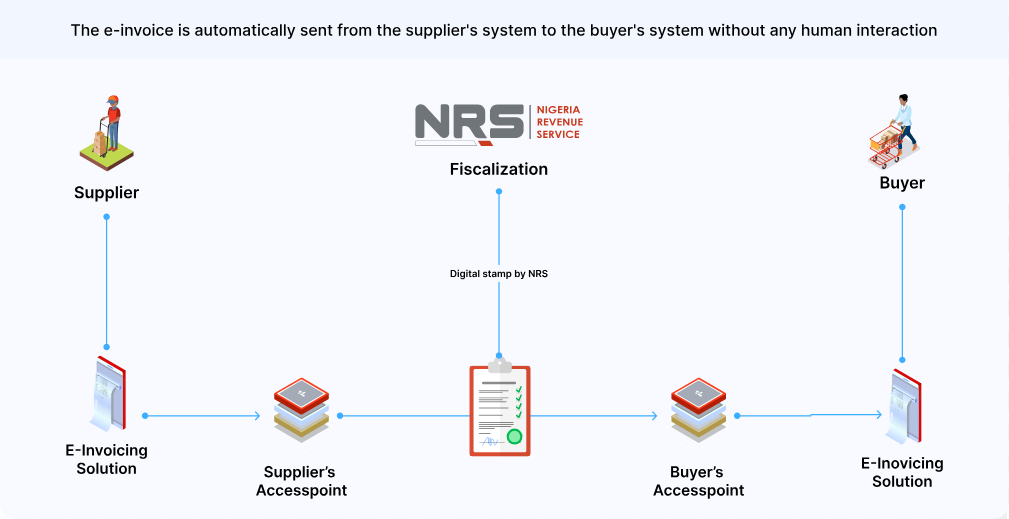
NRS e-invoicing requires businesses to generate, validate, and report invoices in real-time through approved platforms, such as the Merchant Buyer Solution (MBS). Invoices must follow standardized formats (e.g., JSON, XML, or Peppol BIS) and integrate with NRS systems for immediate validation.


This replaces or supplements traditional paper and PDF invoicing with a digital process that enables the tax authority to monitor transactions as they occur.


Positive Impacts on Revenue Generation for the Government

1. Enhanced Compliance and Reduced Tax Evasion:
Real-time reporting makes it harder to under-report sales, issue fake invoices, or omit transactions. By capturing data automatically, NRS can cross-verify returns against actual invoices, closing loopholes that previously led to revenue leakage.


2. Improved Transparency and Audit Efficiency
E-invoicing creates a digital audit trail, reducing the need for lengthy manual audits and allowing data-driven risk assessments. This efficiency helps authorities focus resources on high-risk cases, increasing overall collections without proportionally raising administrative costs.

3. Broader Tax Base and Faster Revenue Mobilization
Better visibility into business activities can bring informal or partially compliant sectors into the tax net. Governments implementing similar systems globally have reported measurable increases in VAT/GST and income tax collections due to higher voluntary compliance driven by the perception of fairness and inevitability.

4. Reduced Fraud and Illicit Activities
The system curbs practices like VAT carousel fraud or inflated input credits by validating invoices instantly. This protects government revenue that would otherwise be lost to fraudulent claims.

Impacts on Businesses and Indirect Effects on Revenue

Compliance Costs vs. Long-Term Savings
Initial investments in software integration, training, and system upgrades can strain smaller businesses. Non-compliance risks penalties, which may affect cash flow. However, compliant companies often see operational efficiencies: reduced printing/postage costs, faster invoice processing, and lower error rates. Studies on e-invoicing show potential cost savings of 50-80% in invoice management.

Read also:

    • CS-SUNN urges Adamawa to approve six-month maternity leave, commit N9bn to nutrition
    • Capital importation increased by 380% to $6bn in Q3 2025 – NBS
    • Nigeria Tax Act 2025: NRS debunks 25% Tax on building materials, says law already in effect

Improved Cash Flow and Business Revenue
Automated invoicing typically speeds up payment cycles, reducing Days Sales Outstanding (DSO). Faster payments improve liquidity, enabling businesses to reinvest, expand, and ultimately generate more taxable profits — indirectly supporting government revenue growth.

Competitive Dynamics
Early adopters may gain advantages through better data analytics and customer trust. Conversely, businesses that delay compliance could face disruptions, lost contracts (if buyers demand compliant invoices), or sanctions, impacting their revenue contribution to the economy.

Challenges That Could Affect Revenue Outcomes

Implementation Hurdles: Technical integration issues, especially for SMEs with legacy systems, might slow rollout and temporarily affect reporting accuracy.

Resistance and Evasion Adaptation: Some taxpayers may initially seek workarounds, requiring strong enforcement.

Phased Rollout Effects: With deadlines extending into 2026 and 2027 for medium and emerging taxpayers, full revenue benefits will materialize gradually.

Global Lessons and Expected Outcomes in Nigeria

Countries that have implemented mandatory e-invoicing (e.g., in Latin America, Europe, and parts of Asia) often see VAT revenue increases of 5-20% in the initial years, depending on prior compliance levels. Nigeria’s initiative aligns with this trend, aiming to diversify revenue sources and reduce reliance on oil.


For businesses, viewing compliance as a strategic investment rather than a burden can unlock efficiency gains that support sustainable revenue growth.


NRS e-invoicing compliance represents a significant shift toward a more efficient, transparent tax ecosystem. For the government, it promises higher and more predictable revenue generation through better compliance and reduced leakages. For businesses, while presenting short-term challenges, it offers opportunities for cost savings, faster cash flows, and digital transformation that can enhance their own revenue performance.


Successful outcomes will depend on clear guidance, accessible support for taxpayers, and balanced enforcement. As more businesses onboard — with reports already showing rapid early adoption among large taxpayers — Nigeria is poised to strengthen its fiscal position through this digital reform.

Businesses are advised to assess their readiness early, engage approved service providers, and integrate e-invoicing into broader digital strategies to turn regulatory compliance into a competitive advantage.


Previous Post

Court Grants Miyetti Allah President N2bn Bail In Alleged Money Laundering Case

Next Post

Oil Prices Ease After One-Month High as Iran Signals Diplomatic Talks With US

Obah Sylva

Obah Sylva

Next Post
Oil Prices Ease After One-Month High as Iran Signals Diplomatic Talks With US

Oil Prices Ease After One-Month High as Iran Signals Diplomatic Talks With US

About The Trumpet

The Trumpet is a Nigerian based national news media, owned, trademarked and operated by Elomaz Communications Limited with headquarters in FCT-Abuja and regional offices in Lagos and Delta States

Follow Us

Resources

  • Home
  • News
    • Breaking News
    • Headlines
    • Metro
    • Health
  • Politics
  • Business
    • Ecommerce
    • Economy
    • Start-up
  • Entertainment
  • Sports
  • Opinion
    • Religion
    • Columnists
    • Contributors
    • Editorial
  • Global
    • Climate
    • Culture
    • Tourism
    • Technology
    • Weather
    • Social Media
  • e-Edition

Recent News

Religious Sentiment In Nigerian Politics

LCCN Pastor Sparks Fresh Debate Over Role Of Religious Sentiment In Nigerian Politics

July 20, 2026
ICPC questions Gbajabiamila

ICPC questions Tinubu’s Chief of Staff Gbajabiamila Over PFIPC Scandal

July 20, 2026
  • Cookie Policy
  • Disclaimer
  • Contact us
  • About Us
  • Cookie Policy
  • Disclaimer
  • Contact us
  • About Us

© 2025 The Trumpet News Papers - Developed by VIS Nigeria.

No Result
View All Result
  • Home
  • News
    • Breaking News
    • Headlines
    • Metro
    • Health
  • Politics
  • Business
    • Ecommerce
    • Economy
    • Start-up
  • Entertainment
  • Sports
  • Opinion
    • Religion
    • Columnists
    • Contributors
    • Editorial
  • Global
    • Climate
    • Culture
    • Tourism
    • Technology
    • Weather
    • Social Media
  • e-Edition

© 2025 The Trumpet News Papers - Developed by VIS Nigeria.

We use cookies on our website to give you the most relevant experience by remembering your preferences and repeat visits. By clicking “Accept All”, you consent to the use of ALL the cookies. However, you may visit "Cookie Settings" to provide a controlled consent.
Cookie SettingsAccept All
Manage consent

Privacy Overview

This website uses cookies to improve your experience while you navigate through the website. Out of these, the cookies that are categorized as necessary are stored on your browser as they are essential for the working of basic functionalities of the website. We also use third-party cookies that help us analyze and understand how you use this website. These cookies will be stored in your browser only with your consent. You also have the option to opt-out of these cookies. But opting out of some of these cookies may affect your browsing experience.
Necessary
Always Enabled
Necessary cookies are absolutely essential for the website to function properly. These cookies ensure basic functionalities and security features of the website, anonymously.
CookieDurationDescription
cookielawinfo-checkbox-analytics11 monthsThis cookie is set by GDPR Cookie Consent plugin. The cookie is used to store the user consent for the cookies in the category "Analytics".
cookielawinfo-checkbox-functional11 monthsThe cookie is set by GDPR cookie consent to record the user consent for the cookies in the category "Functional".
cookielawinfo-checkbox-necessary11 monthsThis cookie is set by GDPR Cookie Consent plugin. The cookies is used to store the user consent for the cookies in the category "Necessary".
cookielawinfo-checkbox-others11 monthsThis cookie is set by GDPR Cookie Consent plugin. The cookie is used to store the user consent for the cookies in the category "Other.
cookielawinfo-checkbox-performance11 monthsThis cookie is set by GDPR Cookie Consent plugin. The cookie is used to store the user consent for the cookies in the category "Performance".
viewed_cookie_policy11 monthsThe cookie is set by the GDPR Cookie Consent plugin and is used to store whether or not user has consented to the use of cookies. It does not store any personal data.
Functional
Functional cookies help to perform certain functionalities like sharing the content of the website on social media platforms, collect feedbacks, and other third-party features.
Performance
Performance cookies are used to understand and analyze the key performance indexes of the website which helps in delivering a better user experience for the visitors.
Analytics
Analytical cookies are used to understand how visitors interact with the website. These cookies help provide information on metrics the number of visitors, bounce rate, traffic source, etc.
Advertisement
Advertisement cookies are used to provide visitors with relevant ads and marketing campaigns. These cookies track visitors across websites and collect information to provide customized ads.
Others
Other uncategorized cookies are those that are being analyzed and have not been classified into a category as yet.
SAVE & ACCEPT