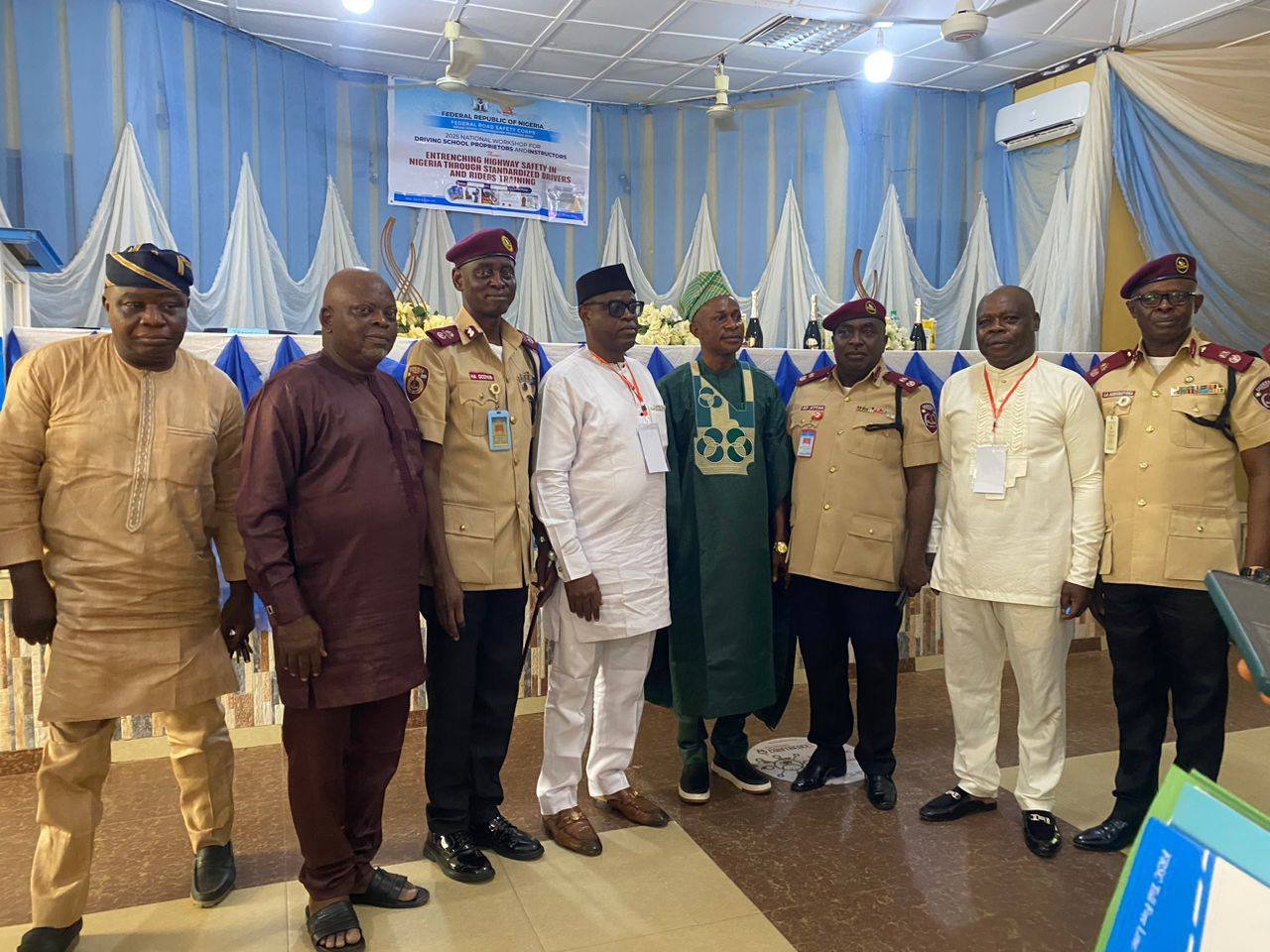
The Federal Road Safety Corps has commenced a specialised training programme on innovative technologies for driving school operators in Rivers State as part of efforts to improve driver education, road safety, and reduce traffic fatalities across the country.
The two-day workshop, currently holding at the FRSC South-South Zonal Office in Port Harcourt, is designed to equip driving school proprietors and instructors with modern training models, evolving vehicle technologies, and contemporary road safety practices.

Key Highlights
- FRSC begins innovative technology training for driving school operators in Rivers.
- Workshop focuses on modern driver education and road safety improvement.
- Participants drawn from Rivers, Bayelsa, Imo, Abia, and Akwa Ibom states.
- FRSC says training is mandatory for driving school proprietors and instructors.
- Agency seeks to reduce road crashes through improved driver behaviour.
- Participants commend FRSC for promoting safer driving standards.
Declaring the workshop open, FRSC Corps Marshal Shehu Muhammad said the programme forms part of the agency’s broader strategy to modernise driver training and strengthen the regulatory framework for driving schools nationwide.
Represented by Assistant Corps Marshal Felix Theman, who heads the Driving School Standardization Programme (DSSP) at the FRSC national headquarters in Abuja, the Corps Marshal noted that the workshop would help operators adapt to changing vehicle technologies and increasing complexities on modern roads.
Read Also:
- Court restrains Police, FRSC from imposing fines over third-party insurance
- Easter: FRSC bars 3 drivers over high alcohol levels in Calabar
- Easter: FRSC deploys 569 personnel, Patrol Vehicles to manage traffic, ensure safety in Enugu
The workshop, themed “Professional Driver Education: Using Innovative Training Models to Improve Road Safety and Reduce Fatalities in Nigeria,” attracted participants from five states, including Rivers, Bayelsa, Imo, Abia, and Akwa Ibom.
According to Muhammad, the FRSC has recorded significant progress since the introduction of the DSSP through improved driving school regulations, enhanced training curriculum, and greater professionalism among driving instructors.
“The training has also enhanced the credibility of the driver licensing process and strengthened collaboration with state governments and relevant stakeholders,” he stated.
The Corps Marshal, however, acknowledged that continuous innovation in vehicle technology and emerging mobility trends require constant improvement in driver education systems to sustain road safety gains.
He urged participants to fully engage in the lectures and practical demonstrations to improve training standards and positively influence driver behaviour across Nigeria.
Some participants at the workshop praised the FRSC for sustaining annual capacity-building programmes for driving school operators.
One of the participants, Samuel Oye, described the workshop as an important platform through which the FRSC introduces new driver education methods and road safety strategies.
Mrs Ruth Uke also commended the agency’s commitment to safety advocacy and warned against informal driving lessons conducted outside certified training centres.
“Some people prefer teaching their spouses and relatives how to drive instead of enrolling them in accredited driving schools. This is dangerous and undermines road safety,” she said.
The FRSC has continued to intensify campaigns aimed at reducing road crashes and improving compliance with traffic regulations through education, enforcement, and institutional reforms.