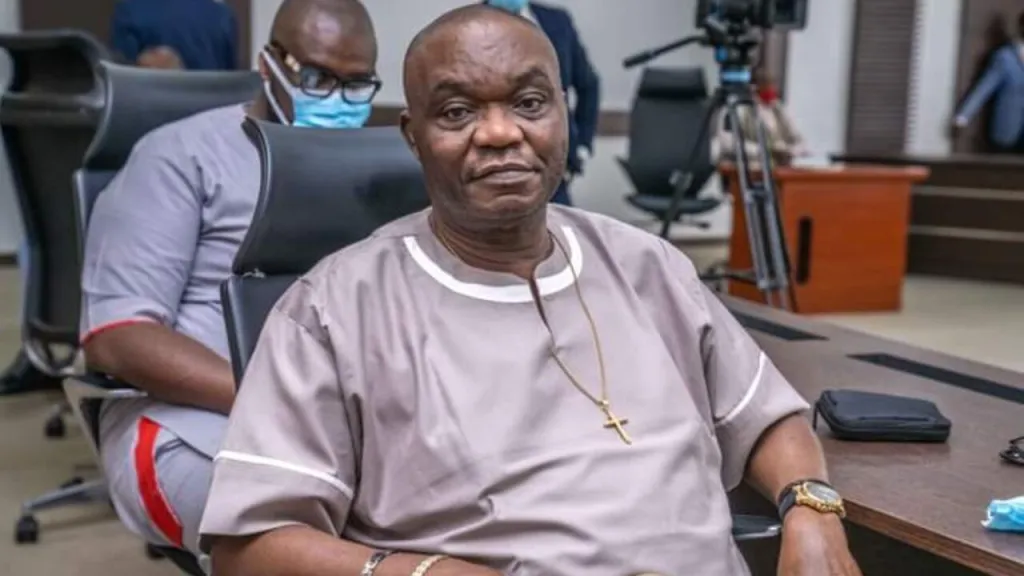
Edo State politics has been thrown into mourning following the death of Charles Idahosa, a former Commissioner for Information and Orientation and one of the most outspoken political figures the state has produced in recent decades. Popularly known as Charlie Tempo or Akakasiaka, Idahosa died on Saturday, December 20, 2025, in Benin City after a brief illness. He was 72.
His passing has triggered an emotional wave of tributes from politicians, party leaders, and residents across Edo State, many describing him as a fearless advocate who never shied away from controversy and never diluted his opinions for convenience.
Born in Uhunmwonde Local Government Area of Edo South Senatorial District, Idahosa built his political career from the grassroots. He first came to prominence as Chairman of Uhunmwonde Local Government Council, where his energetic leadership style and sharp communication skills quickly set him apart.

He rose to statewide prominence during the administration of former Governor Lucky Igbinedion between 1999 and 2007, serving as Commissioner for Information and Orientation under the Peoples Democratic Party. In that role, Idahosa became the public face of the government, known for his combative media engagements, rapid responses to criticism, and unapologetic defence of government policies. His fast-paced delivery and blunt language earned him the nickname Charlie Tempo, a name that followed him for the rest of his public life.
Beyond his role as commissioner, Idahosa also served as Chief of Staff to Governor Igbinedion, placing him at the centre of executive decision-making during a defining period in Edo State politics. His influence extended across party lines and administrations. During the tenure of former Governor Adams Oshiomhole, he served as Political Adviser, helping to shape the messaging and political direction of the government at a time of intense reforms and confrontations.
Never content with remaining behind the scenes, Idahosa also contested for the governorship of Edo State on the platform of the defunct Democratic Peoples Party, reinforcing his image as a politician driven by conviction rather than caution.
His career was marked by shifting alliances and high-profile rifts, reflecting both the fluid nature of Nigerian politics and his refusal to remain silent when disagreements arose. His public fallout with former Governor Godwin Obaseki after the 2020 governorship election became one of the most talked-about political feuds in the state. Once allies, Idahosa turned into one of Obaseki’s fiercest critics, accusing the administration of betrayal and poor governance. The clash eventually saw him realign fully with the All Progressives Congress, where he became a vocal party chieftain.
In the build-up to the 2024 Edo governorship election, Idahosa played a visible role in the APC campaign that produced Governor Monday Okpebholo. He was widely credited with helping to energise Edo South voters, releasing campaign messages and jingles that carried his trademark flair and blunt political messaging.
Despite his national profile, Idahosa remained deeply connected to his roots in Ehor, Uhunmwonde. He was known for supporting youth initiatives, community causes, and cultural activities, maintaining close ties with ordinary residents even while operating at the highest levels of politics.
Read also:
- Auchi Inferno: Edo Govt assures victims of support, begins assessment for preventive measures
- Edo concessions Okomu South, Gele-gele forest reserves for 30 years
- Obaseki hails German govt’s support for Edo skills devt drive
Reactions to his death cut across party lines. Governor Monday Okpebholo described Idahosa as a committed leader whose contributions to Edo State would not be forgotten. Former Governor Godwin Obaseki, despite their past disagreements, also paid tribute, describing him as an illustrious son of Edo State and acknowledging the personal bond they once shared.
Social media platforms were flooded with messages mourning his death, with many users describing him as bold, original, and irreplaceable. For supporters, he was a truth-teller who spoke for the people. For critics, he was a relentless opponent who never pulled his punches.
As funeral arrangements are awaited, Charles Idahosa is being remembered as a political maverick whose voice shaped debates, challenged authority, and defined an era of Edo politics. Though Charlie Tempo has taken his final bow, his influence on political discourse in the state remains firmly etched in memory.