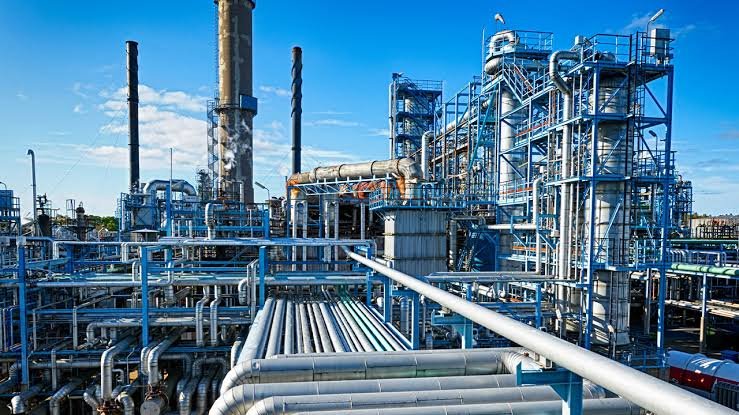
The Ebenco Refinery is set to reshape Nigeria’s downstream oil and gas industry as its developers move toward completing the country’s first fully locally fabricated modular refinery. The project is expected to strengthen domestic refining capacity, reduce dependence on imported petroleum products and help lower fuel costs for consumers.

Key Highlights
- Ebenco Refinery expected to commence operations after completion this year.
- Project described as Nigeria’s first fully locally fabricated modular refinery.
- Refinery has a planned capacity of 30,000 barrels per day (bpd).
- Facility aims to reduce fuel imports, improve energy security and lower petroleum prices.
- Federal Government backs the project as part of efforts to tackle crude oil theft and illegal refining.
- Refinery located in Koko, Delta State, with production expected to begin in phases.
Chairman and Chief Executive Officer of Ebenco Global Link Limited, Dr. Ebenezer Oluwagbemiga, described the refinery as a landmark indigenous project capable of transforming Nigeria’s oil and gas sector.
“When the new Ebenco refinery is completed this year, it will help bring down the cost of petroleum products and revolutionise Nigeria’s oil and gas industry. My refinery is the first fully locally fabricated refinery in Nigeria’s history,” he said.
Indigenous Technology Drives Local Content
Located in Koko, Delta State, the 30,000-barrel-per-day modular refinery was designed and fabricated entirely using indigenous engineering expertise and locally developed technology.
According to Dr. Oluwagbemiga, the decision to rely on local engineering was aimed at strengthening Nigeria’s technical capacity, creating employment opportunities and reducing dependence on imported refinery technology.
The project has received commendation from the Federal Government, which views it as a strategic initiative capable of supporting local refining, reducing crude oil theft and discouraging illegal refining activities across the Niger Delta.
The refinery is expected to commence operations in phases, with initial production projected at about 5,000 barrels per day before gradually expanding to its full installed capacity.
Industry experts believe the facility will complement existing private refineries, including the Dangote Refinery, while offering operational flexibility and easier maintenance through locally available expertise.
Addressing Nigeria’s Refining Challenges
Nigeria’s state-owned refineries in Port Harcourt, Warri and Kaduna, with a combined installed capacity of about 445,000 barrels per day, have struggled for years with low production due to ageing infrastructure, maintenance challenges and operational inefficiencies.
As a result, the country has remained heavily dependent on imported refined petroleum products, exposing the economy to foreign exchange pressures and fluctuations in global fuel prices.
Read Also:
- Dangote Refinery reaches 700,000 Barrels per day milestone in record performance test
- Dangote Refinery IPO: Why investors are rushing to buy into Africa’s biggest Refinery listing
- Dangote Refinery cuts aviation fuel price to N1,650 per litre
Analysts believe projects such as the Ebenco Refinery will help improve domestic refining capacity, strengthen energy security and stabilise the supply of petroleum products.
Some industry projections suggest that increased local refining could contribute to lower pump prices as more domestically refined products enter the Nigerian market.
Wider Economic Benefits
Beyond petroleum refining, Ebenco Global Link Limited plans to develop a multi-industrial complex around the refinery to stimulate manufacturing, industrialisation and job creation in Delta State.
The project is also expected to support ancillary industries and deepen local participation across Nigeria’s oil and gas value chain.
Government Support
Federal Government officials have inspected the refinery project and expressed support for its development, describing it as a model for indigenous participation in Nigeria’s petroleum industry.
Government officials believe the project aligns with national efforts to combat illegal artisanal refining while increasing local refining capacity.
Dr. Oluwagbemiga has also called for additional government incentives, including pioneer status recognition, to encourage further private investment in locally developed refining projects.
Future Outlook
With commissioning expected in the coming months, the Ebenco Refinery represents another milestone in Nigeria’s drive towards energy security and industrial self-reliance.
Industry stakeholders believe the successful delivery of the project could inspire greater indigenous investment in refining, strengthen Nigeria’s position as a regional energy hub and accelerate the country’s transition from a crude oil exporter to a major producer of refined petroleum products.