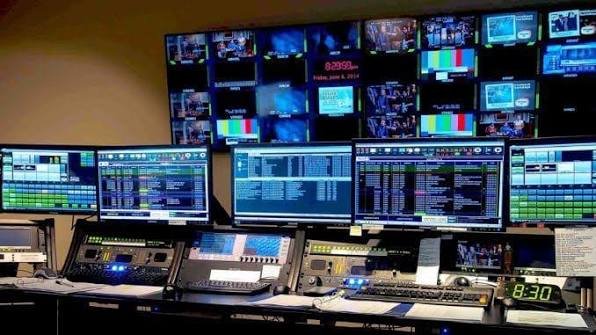
The Federal Government has confirmed that December 31, 2028, has been set as the target date to completely switch off analogue television broadcasting nationwide, as Nigeria intensifies the rollout of its long-awaited Digital Switch Over (DSO) programme aimed at modernising the country’s broadcasting industry.

Key Highlights:
- December 31, 2028 set as target date to switch off analogue TV nationwide.
- Federal Government launches Digital Switch Over (DSO) platform and FreeTV.
- Nigerians to enjoy over 100 free-to-air television channels without monthly subscription fees.
- Digital broadcasting promises better picture quality, improved sound and wider coverage.
- Affordable set-top boxes expected to cost between ₦15,000 and ₦25,000.
- Government projects over ₦605 billion in advertising revenue and more than $1 billion from digital spectrum opportunities.
The renewed push follows the official launch of the Digital Switch Over (DSO) platform and FreeTV on June 17, 2026, by the Federal Government through the Ministry of Information and National Orientation, in collaboration with the National Broadcasting Commission (NBC) and the Nigerian Communications Satellite Limited (NIGCOMSAT).
The initiative forms part of the Federal Government’s strategy to migrate Nigeria from analogue to digital television broadcasting after years of delays caused by funding, infrastructure and implementation challenges.
Nigerians to Enjoy Better Television Experience
The transition to digital broadcasting is expected to significantly improve television services across the country.
Under the new platform, Nigerians will have access to more than 100 free television channels without paying monthly subscription fees. The channels will cover news, sports, entertainment, education, children’s programming and indigenous language content in Yoruba, Hausa and Igbo.
The digital platform will also deliver superior picture and sound quality, including support for high-definition (HD) broadcasting.
Read Also:
- What To Know About Free CAC Registration Under FG’s 250,000 MSME Programme
- FG, UN Launch Nigeria’s Transition Plan To Locally-Led Humanitarian Response
- FG Reaffirms Commitment To SDGs, Strengthens Partnership With UN On Poverty Reduction
Hybrid Platform to Reach Every Nigerian
According to the government, the new broadcasting model combines Digital Terrestrial Television (DTT), Direct-to-Home (DTH) satellite transmission through NIGCOMSAT and mobile application services to ensure coverage in both urban and rural communities.
The initiative is also expected to strengthen broadcasting infrastructure while improving access to quality television services across the country.
Economic Benefits Beyond Broadcasting
Officials believe the Digital Switch Over programme will stimulate Nigeria’s economy through increased investment in broadcasting, local manufacturing and content production.
The government estimates that improved audience measurement and digital advertising could unlock approximately ₦605 billion in advertising revenue.
In addition, spectrum released through the analogue switch-off, known as the digital dividend, could generate more than $1 billion for telecommunications and digital infrastructure development.
The transition is also expected to create thousands of jobs in broadcasting, technology, equipment manufacturing and the creative industry.
Tinubu Administration Backs Digital Transformation
Minister of Information and National Orientation, Mohammed Idris, described the Digital Switch Over programme as a major milestone in Nigeria’s digital transformation agenda.
He said the initiative goes beyond improving television broadcasting, noting that it aligns with President Bola Ahmed Tinubu’s Renewed Hope Agenda for economic growth, technological advancement and digital inclusion.
According to the minister, the migration will modernise Nigeria’s broadcasting sector while supporting local content development and innovation.
What Nigerians Should Do
The Federal Government has advised television viewers to begin preparing for the transition by:
Confirming that their television sets or decoders support DVB-T2 or DVB-S2 technology.
Purchasing approved digital set-top boxes where necessary.
Downloading the FreeTV mobile application.
Following updates from the National Broadcasting Commission (NBC) and the official FreeTV platform.
Authorities also indicated that subsidy arrangements may be introduced to make digital decoders more affordable for low-income households.
Lessons from Other Countries
Director-General of the National Broadcasting Commission, Charles Ebuebu, said Nigeria’s approach reflects lessons learnt from successful digital migration programmes in countries including the United Kingdom, Kenya and South Africa.
He explained that the government is focused on delivering a practical and sustainable digital broadcasting system that serves every Nigerian regardless of location.
With the analogue switch-off now officially targeted for December 31, 2028, the Federal Government says the Digital Switch Over programme will position Nigeria among leading African nations in digital broadcasting while expanding opportunities for the country’s creative economy and media industry.