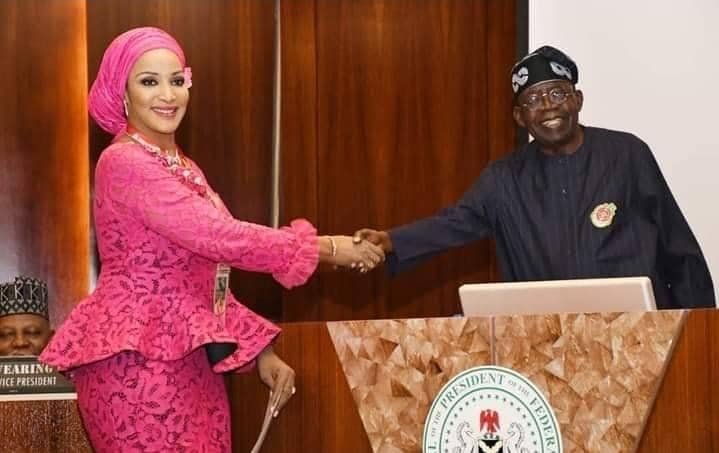
President Bola Tinubu’s newly appointed Minister of Foreign Affairs, Bianca Odumegwu-Ojukwu, has publicly pledged allegiance to the Tinubu administration, expressing gratitude for what she described as a “privilege” appointment, while promising to advance the administration’s foreign policy agenda.
In a statement posted on her verified X (formerly Twitter) account on Thursday, the former diplomat confirmed her appointment and signalled readiness to align Nigeria’s international engagements with the government’s “Renewed Hope” framework.
“Yesterday, April 29, 2026, I was appointed as Minister of Foreign Affairs of the Federal Republic of Nigeria by His Excellency, President Bola Ahmed Tinubu,” she wrote.

“I am truly honoured to step into this new role and express my profound appreciation to the President. I am deeply humbled by your trust and confidence in my abilities.”
Her remarks come amid heightened political calculations ahead of the 2027 elections, with critics already questioning whether the reshuffle is driven more by electoral strategy than diplomatic necessity.
Odumegwu-Ojukwu, however, insisted her focus would be on strengthening Nigeria’s global standing, particularly through what she described as the administration’s “4D Foreign Policy priorities” and an expansion of citizen diplomacy.
“I look forward to contributing to the continued success of the 4D Foreign Policy priorities under the Renewed Hope Agenda and strengthening our citizen diplomacy efforts,” she stated.
Read also:
- Tinubu appoints Bianca Ojukwu as foreign affairs minister after Tuggar’s exit
- Nnamdi Kanu: Bianca Ojukwu calls for calm, says its time for “constructive dialogue”
- Why I slapped Obiano’s wife, by Bianca Odumegwu-Ojukwu
She further assured Nigerians of her commitment to national interest, saying, “I reaffirm to the good people of Nigeria my unwavering commitment to advancing our national interests on the global stage.”
Her appointment follows the exit of former minister Yusuf Tuggar, who is reportedly preparing to contest the 2027 governorship election in Bauchi State, another move analysts say underscores the deepening intersection between governance and political ambition within the current administration.
While the Presidency has framed the appointment as part of efforts to reposition Nigeria’s foreign policy, observers note that the real test will lie in addressing persistent diplomatic challenges, including strained regional relations, economic diplomacy gaps, and Nigeria’s waning influence in multilateral spaces.