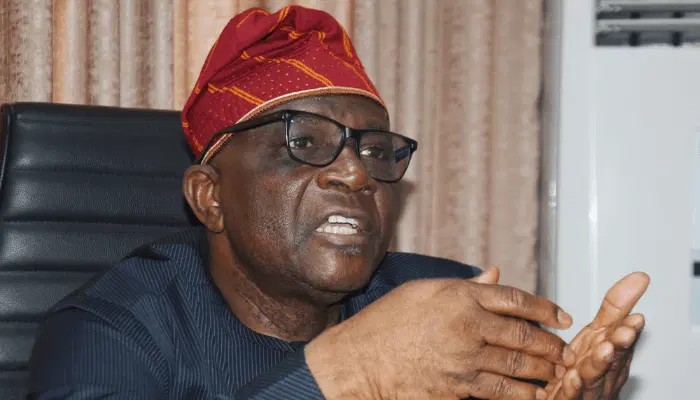
Presidential spokesman Bayo Onanuga has defended Tinubu’s Policies, arguing that the widespread narrative of severe hunger across Nigeria does not fully reflect the realities being experienced by many citizens benefiting from government reforms and intervention programmes.
Key Highlights:
- Bayo Onanuga says hunger narrative does not reflect the experience of all Nigerians.
- Presidential spokesman defends Tinubu’s Policies and ongoing economic reforms.
- Highlights infrastructure projects, student loans, and worker credit schemes.
- Says government programmes are beginning to improve livelihoods.
- Remarks spark debate over inflation, food prices, and cost of living.
- Critics insist economic hardship remains a major challenge nationwide.
Speaking during an interview on Arise Television, Onanuga maintained that while economic challenges exist, many Nigerians are already benefiting from the reforms introduced by President Bola Ahmed Tinubu’s administration.

According to him, public discussions about the economy often focus on negative developments while overlooking progress being made in critical sectors.
The presidential aide cited infrastructure development projects, student loan initiatives, and credit facilities for workers as examples of programmes designed to improve living standards and stimulate economic growth.
Read Also:
- ADC South-East Rejects Tinubu’s Endorsement, Says Ndigbo Will Not Reward Failure In 2027
- Minister hails Remi Tinubu’s empowerment drive for vulnerable Nigerians
- Tinubu’s Anniversary speech sparks nationwide backlash as Nigerians reject reform claims, cite hardship
He argued that these interventions are gradually yielding positive results across the country.
“We have been pigeonholed into certain assumptions, certain conclusions,” Onanuga said during the interview.
Defending Tinubu’s Policies, he noted that visible improvements can be seen in several parts of the country, particularly in road infrastructure.
Onanuga recalled a recent trip from Ibadan to Lagos, during which he observed significant improvements along major transport corridors, including the Ijebu-Ode axis.
According to him, many Nigerians have become accustomed to focusing solely on negative narratives, often ignoring developmental achievements and government efforts to address economic challenges.
The presidential spokesman also referenced a viral video that circulated shortly after President Tinubu assumed office. The video showed the President leaving a mosque in Lagos while a voice-over repeatedly stated, “Ebi n pawa o,” a Yoruba expression meaning “we are hungry.”
Onanuga suggested that the viral clip contributed significantly to shaping public perception regarding the country’s economic situation.
“I think the President went to Lagos, he was coming from the Central Mosque, and somebody now did a voice-over saying ‘Ebi n pawa o,’ and that means we are hungry. Since then, people have been saying that,” he stated.
While acknowledging that many Nigerians continue to face economic hardship, Onanuga said his personal observations do not support claims that severe hunger is affecting every household across the country.
“I’m a Nigerian. I have people working for me privately. I don’t see the level of hunger people are talking about because I see them, and I keep asking them questions: how are things, how are they adjusting, what are the problems?” he said.
The comments have generated widespread reactions on social media, with supporters arguing that Tinubu’s Policies are beginning to produce measurable results, while critics maintain that rising inflation, soaring food prices, and increasing living costs continue to place enormous pressure on millions of Nigerians.
Economic reforms introduced by the Tinubu administration, including fuel subsidy removal and foreign exchange policy adjustments, have remained subjects of intense public debate since the President assumed office.
Onanuga’s remarks have once again brought discussions about economic recovery, inflation, household purchasing power, and the overall impact of government reforms to the forefront of national discourse.