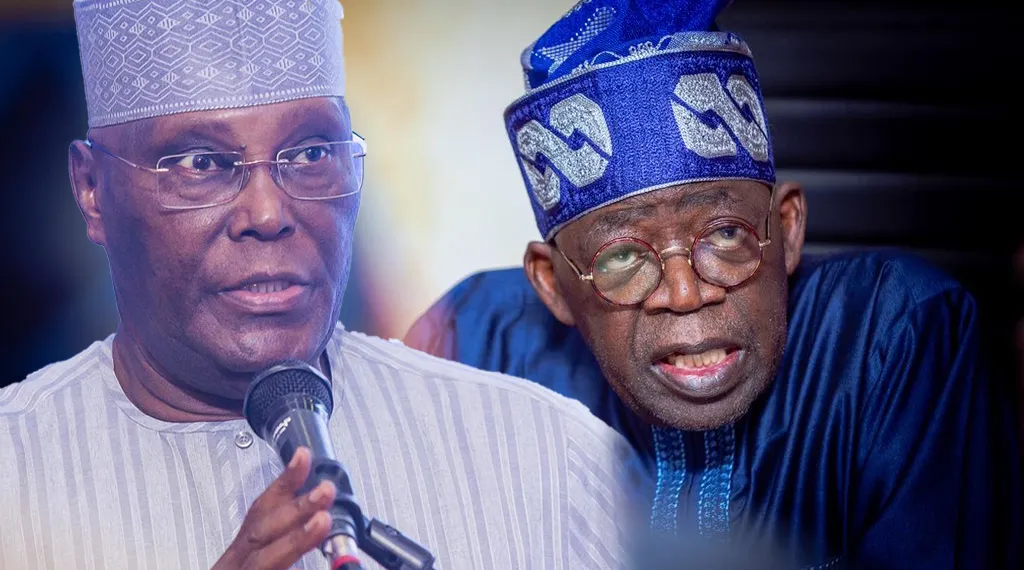
Former Vice President Atiku Abubakar has criticised President Bola Tinubu over his recent comparison of fuel prices between Nigeria and other African countries, insisting that the analysis does not reflect the economic realities facing Nigerians.
In a statement issued in Abuja through his aide Phrank Shaibu on Saturday, Atiku described the comparison as misleading, arguing that focusing solely on petrol prices ignores more critical indicators such as income levels, purchasing power, and overall cost of living.
Tinubu had, during a visit to Bayelsa State, urged Nigerians to appreciate that petrol remains cheaper locally than in countries like Kenya, despite acknowledging prevailing economic hardship and promising relief measures.

Responding, Atiku maintained that while fuel may appear cheaper in Nigeria, the broader economic context paints a different picture.
He noted that Nigerians face higher living costs relative to their income, making daily survival more difficult.
The ex-vice president further highlighted disparities in earnings, stating that Kenya’s Gross Domestic Product (GDP) per capita is significantly higher than Nigeria’s, with minimum wage earners in Nairobi reportedly earning far more than their counterparts in Nigeria.
Read also:
- Atiku condemns rising terror attacks, backs U.S. role in global Anti-terror efforts
- Tinubu’s tyranny, INEC’s partisanship target of ADC protest – Atiku
- Atiku signs $1.2m US lobbying deal to boost international profile
According to him, affordability should not be judged by price alone but by the relationship between income and expenditure. On that basis, he argued, Nigerians are worse off despite lower nominal fuel prices.
Also, Atiku criticised Nigeria’s wage structure, saying it fails to reflect current economic realities and regional differences.
He warned that relying on selective comparisons risks portraying the government as disconnected from the struggles of ordinary citizens.
Atiku concluded by urging the administration to adopt more holistic economic policies that address inflation, declining purchasing power, and rising poverty levels.