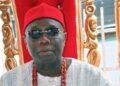
The Asagba of Asaba, Professor Epiphany Azinge, has called on President Bola Tinubu to issue a public apology for the 1967 Asaba Massacre, insisting that forgiveness cannot bring closure without an acknowledgement from a sitting Nigerian president. Speaking at the 59th anniversary memorial on October 7, 2026, Azinge said the community could forgive those responsible for the killings but would not consider the painful chapter closed until the Nigerian government formally acknowledged the tragedy.
Key Highlights
- The Asagba of Asaba, Professor Epiphany Azinge, has demanded a public apology from President Bola Tinubu over the 1967 massacre.
- Azinge said forgiveness does not automatically mean closure or healing for the victims’ families.
- Former President Olusegun Obasanjo urged survivors and families to embrace forgiveness during the anniversary memorial.
- Federal troops killed unarmed men and boys in Asaba on October 7, 1967, during the Nigerian Civil War.
- Estimates of the death toll vary, with some accounts reporting hundreds killed and others placing the figure above 1,000.
- Retired Major-General Ahmed Ibrahim Taiwo expressed regret on behalf of his late father, Colonel Ibrahim Taiwo, and the Asaba community publicly forgave the Taiwo family.
- Azinge also referenced the 1999 Odi killings while questioning how often Nigeria has promised that such violence would never happen again.
Asaba Massacre: Asagba Says Forgiveness Is Not Closure
Addressing the anniversary gathering, Azinge responded to former President Olusegun Obasanjo, who chaired the memorial virtually and urged survivors and affected families to embrace forgiveness.

Obasanjo told those assembled to remember the importance of forgiveness, repeating the appeal for the community to let go of the tragedy.
However, Azinge maintained that Asaba could forgive without forgetting the events of October 1967.
“We may not forget, but certainly, we have to forgive,” the Asagba said.
He stressed that forgiveness alone would not bring closure, insisting that a public apology must come from a president still in office.
“There will be no closure, there will be no healing until a sitting President — not an ex-President, but a sitting President — publicly apologises to us,” he said.
The statement places renewed attention on calls for official acknowledgement of the massacre and recognition of the suffering endured by survivors and their families.
Why the Asagba Wants Tinubu to Apologise
Azinge acknowledged that former military Head of State General Yakubu Gowon had apologised for the tragedy after leaving office.
However, he argued that an apology from a former leader was not sufficient to meet the community’s demand for closure.
According to the Asagba, an apology from the sitting president would represent an acknowledgement by the Nigerian state of the killings and their lasting consequences.
President Bola Tinubu is therefore at the centre of the community’s current demand for a formal presidential apology.
Azinge also challenged Obasanjo’s appeal for Nigeria to ensure that such violence never happens again, referring to the 1999 killings in Odi, Bayelsa State, during Obasanjo’s presidency.
“How long do we say ‘never again’? But it happened at Odi,” he said.
His remarks highlighted the continuing debate over accountability for civilian deaths during military operations in Nigeria.
What Happened During the 1967 Asaba Massacre?
The Asaba Massacre took place on October 7, 1967, during the early months of the Nigerian Civil War, which lasted from 1967 to 1970.
Asaba, located on the western bank of the River Niger, was outside the territory controlled by the secessionist Republic of Biafra.
According to accounts of the tragedy, residents came out wearing white akwa-ocha traditional clothing and singing in an apparent demonstration of peace as federal troops entered the town.
Men and older boys were subsequently separated from women and children and taken to Ogbe-Osowa, where many were shot.
The reported killings devastated families and left widows and children to cope with the loss of relatives for decades.
Accounts differ on the precise death toll. At the 2026 memorial, Delta State Governor Sheriff Oborevwori, represented by Secretary to the State Government Kingsley Emu, said researchers had put the number of people killed at more than 1,000. Other accounts describe hundreds killed at the execution site, alongside additional deaths during the wider violence.
Some victims were reportedly buried in mass graves, while others were thrown into the River Niger.
The massacre remains a painful chapter in Asaba’s history, with survivors and descendants continuing to seek recognition and accountability.
Retired General Seeks Forgiveness for His Father’s Role
One significant moment at the anniversary memorial was the expression of regret by retired Major-General Ahmed Ibrahim Taiwo on behalf of his father, Colonel Ibrahim Taiwo, who was with the army at the time of the tragedy.
The retired general expressed regret for any act or omission that contributed to the suffering associated with the massacre.
In response, Azinge publicly declared that the Asaba community had forgiven the Taiwo family.
“On behalf of the Asaba community, and as the prescribed authority, the Asagba of Asaba, I hereby publicly proclaim that we have forgiven the Taiwo family,” he said.
The exchange illustrated the distinction Azinge drew between personal reconciliation and the wider demand for official acknowledgement by the Nigerian government.
While the community accepted the apology directed at the Taiwo family, the Asagba maintained that the demand for a presidential apology remained unresolved.
Read also:
- Gowon reveals Obasanjo refused to serve under Murtala during Civil War
- Nigeria/Biafra Civil war: You’re used to execute an unjust war against lgbos, Ohanaeze replies Gowon
- Why People Take to Crimes: Asagba of Asaba challenges criminologists to investigate rising criminal tendencies among youths
Asaba Massacre Anniversary Sparks Reactions on Social Media
The 59th anniversary also prompted renewed discussion on social media, with users sharing accounts and photographs to remember the victims.
One user, Ifeoma Igbotic, recalled how unarmed civilians wearing white were reportedly separated and executed, leaving families devastated. She argued that the massacre should not be excluded from Nigeria’s historical memory simply because it remains uncomfortable to discuss.
“Remembering Asaba is not about hatred or revenge,” she wrote, adding the Igbo prayer, “Ka ndị anyị nwụrụ anwụ zuru ike n’udo,” meaning “May our people who died rest in peace.”
Another social media post challenged the attribution of responsibility for the massacre to Obasanjo, arguing that Major-General Murtala Mohammed was the responsible commander. The post also referred to Obasanjo’s reported account of crying after reading documents about the killings, while still urging the families to forgive.
These reactions reflect continuing public debate about military responsibility, historical memory and the role of former national leaders in addressing the tragedy.
Asaba Community Still Awaits Presidential Apology
The anniversary memorial brought together two different approaches to addressing the legacy of the Asaba Massacre: personal forgiveness and formal political accountability.
The community’s public forgiveness of the Taiwo family demonstrated a willingness to pursue reconciliation at a personal level. Obasanjo’s appeal also renewed the conversation about forgiveness after decades of pain.
However, Azinge insisted that the community’s demand for an apology from a sitting president remained separate from those gestures.
For the Asagba, a presidential apology would represent an official acknowledgement of the suffering inflicted on Asaba residents and their descendants during the Nigerian Civil War.
Fifty-nine years after the killings, the community’s position remains that forgiveness is possible without forgetting history, while healing and closure require the Nigerian government to confront the tragedy publicly.
Asaba’s message is clear: the community is willing to forgive, but it continues to await a public apology from the sitting president.
For more Delta news and history, follow us on X.