• Advert Rates
  • Careers
  • About Us
  • Contact Us
  • Digital Store
Thursday, February 26, 2026
The Trumpet Newspaper Nigeria
No Result
View All Result
  • Home
  • News
    • Breaking News
    • Headlines
    • Metro
    • Health
  • Politics
  • Business
    • Ecommerce
    • Economy
    • Start-up
  • Entertainment
  • Sports
  • Opinion
    • Religion
    • Columnists
    • Contributors
    • Editorial
  • Global
    • Climate
    • Culture
    • Tourism
    • Technology
    • Weather
    • Social Media
  • e-Edition
  • Home
  • News
    • Breaking News
    • Headlines
    • Metro
    • Health
  • Politics
  • Business
    • Ecommerce
    • Economy
    • Start-up
  • Entertainment
  • Sports
  • Opinion
    • Religion
    • Columnists
    • Contributors
    • Editorial
  • Global
    • Climate
    • Culture
    • Tourism
    • Technology
    • Weather
    • Social Media
  • e-Edition
No Result
View All Result
The Trumpet Newspaper Nigeria
No Result
View All Result
ADVERTISEMENT
Home News

Archaeologists say first writing may be 40,000 years older than thought

The Trumpet by The Trumpet
February 26, 2026
in News
Reading Time: 2 mins read
0
Archaeologists say first writing may be 40,000 years older than thought
0
SHARES
0
VIEWS
Share on FacebookShare on TwitterShare on LinkedinShare on WhatsAppShare on Pinterest

The history of writing down thoughts and feelings could be tens of thousands of years older than previously believed, surprising archaeologists who made the discovery.

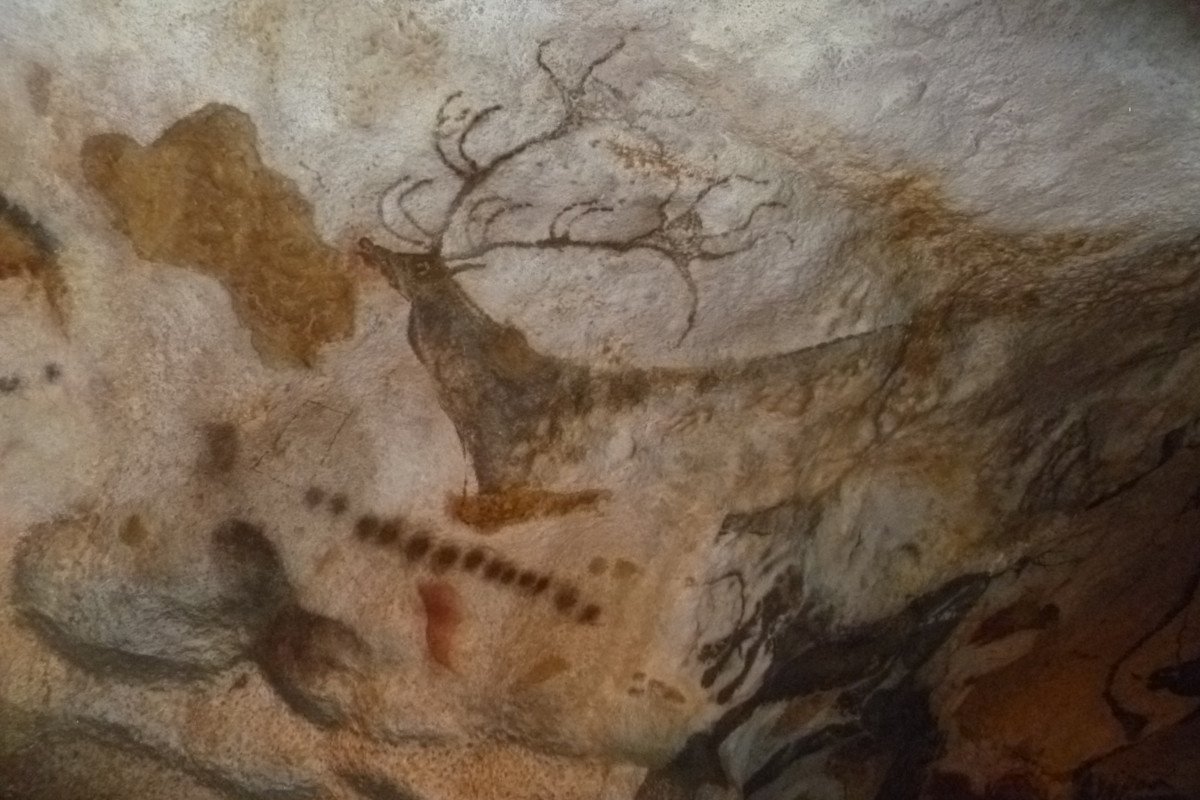
The researchers discerned patterns of meaning in lines, notches, dots, and crosses on objects like mammoth tusks as old as 45,000 years in caves in Germany.

ADVERTISEMENT

Traditionally, historians date the first written words to proto-cuneiform scripts made around 5,000 years ago in ancient Iraq, or Mesopotamia.

The precise meaning of the symbols in Germany remains a mystery.

The objects are from just before Homo sapiens moved to Europe from Africa, where they interacted with Neanderthals.

Until now, it was thought that writing developed in Mesopotamia around 3,000 BCE, followed by hieroglyphics in Egypt and later in China and Mesoamerica.

“The Stone Age sign sequences are an early alternative to writing,” says Prof. Christian Bentz from Saarland University, an author of the new research.

The work suggests that Stone Age people were as clever as modern-day humans, according to researcher Ewa Dutkiewicz from Berlin’s Museum of Prehistory and Early History.

Read also:

  • World’s tennis No.1 Sinner ventures into music
  • Bright Chimezie: The evergreen voice of Zigima sound, Africa’s musical treasure
  • Highlife musician Mike Ejeagha dies at 95

“So far, we’ve only scratched the surface of what can be found in terms of symbol sequences on a wide variety of artifacts,” she says.

The team analysed more than 3,000 characters on 260 objects to uncover what they call the DNA of writing.

Some of the objects are from a 37-km-long cave system called the Lonetal in Baden-Württemberg, southern Germany.

On a small mammoth carved from tusk, the researchers analysed carefully engraved rows of crosses and dots.

And on an artefact called “adorant” from the Geißenklösterle cave in the Achtal valley, they identified rows of dots and notches on an ivory plaque showing a lion-human creature.
They believe the arrangement of the marks, in particular the dots on the back, shows that the patterns acted as communication.

The researchers believe that Stone Age people deliberately carved these symbols to communicate messages, meaning, and convey thoughts.

“Our results also show that the hunter-gatherers of the Paleolithic era developed a symbol system with a statistically comparable information density to the earliest proto-cuneiform tablets from ancient Mesopotamia – a full 40,000 years later,” says Bentz.

The clue to finding meaning is in the density of the symbols. They found high repetition of the signs and predictability in the subsequent symbols that is “comparable to much later proto-cuneiform,” according to Bentz.

They found denser patterns on figurines than on tools.

The team says that it shows that communicating information was very important for Paleolithic people.


 

Previous Post

Lagos agency asks police to investigate Simi’s tweets on alleged child abuse

Next Post

Russia, Ukraine exchange more than 1,000 soldiers’ bodies

The Trumpet

The Trumpet

Next Post
Russia, Ukraine exchange more than 1,000 soldiers' bodies

Russia, Ukraine exchange more than 1,000 soldiers' bodies

About The Trumpet

The Trumpet is a Nigerian based national news media, owned, trademarked and operated by Elomaz Communications Limited with headquarters in FCT-Abuja and regional offices in Lagos and Delta States

Follow Us

Resources

  • Home
  • News
    • Breaking News
    • Headlines
    • Metro
    • Health
  • Politics
  • Business
    • Ecommerce
    • Economy
    • Start-up
  • Entertainment
  • Sports
  • Opinion
    • Religion
    • Columnists
    • Contributors
    • Editorial
  • Global
    • Climate
    • Culture
    • Tourism
    • Technology
    • Weather
    • Social Media
  • e-Edition

Recent News

First lady’s visit to Warri aligns with Gov. Oborevwori’s agenda-Otuaro

First lady’s visit to Warri aligns with Gov. Oborevwori’s agenda-Otuaro

February 26, 2026
Inquest into Chimamanda Adichie's son’s death to begin April 14

Inquest into Chimamanda Adichie’s son’s death to begin April 14

February 26, 2026
  • Cookie Policy
  • Disclaimer
  • Contact us
  • About Us
  • Cookie Policy
  • Disclaimer
  • Contact us
  • About Us

© 2025 The Trumpet News Papers - Developed by VIS Nigeria.

No Result
View All Result
  • Home
  • News
    • Breaking News
    • Headlines
    • Metro
    • Health
  • Politics
  • Business
    • Ecommerce
    • Economy
    • Start-up
  • Entertainment
  • Sports
  • Opinion
    • Religion
    • Columnists
    • Contributors
    • Editorial
  • Global
    • Climate
    • Culture
    • Tourism
    • Technology
    • Weather
    • Social Media
  • e-Edition

© 2025 The Trumpet News Papers - Developed by VIS Nigeria.

We use cookies on our website to give you the most relevant experience by remembering your preferences and repeat visits. By clicking “Accept All”, you consent to the use of ALL the cookies. However, you may visit "Cookie Settings" to provide a controlled consent.
Cookie SettingsAccept All
Manage consent

Privacy Overview

This website uses cookies to improve your experience while you navigate through the website. Out of these, the cookies that are categorized as necessary are stored on your browser as they are essential for the working of basic functionalities of the website. We also use third-party cookies that help us analyze and understand how you use this website. These cookies will be stored in your browser only with your consent. You also have the option to opt-out of these cookies. But opting out of some of these cookies may affect your browsing experience.
Necessary
Always Enabled
Necessary cookies are absolutely essential for the website to function properly. These cookies ensure basic functionalities and security features of the website, anonymously.
CookieDurationDescription
cookielawinfo-checkbox-analytics11 monthsThis cookie is set by GDPR Cookie Consent plugin. The cookie is used to store the user consent for the cookies in the category "Analytics".
cookielawinfo-checkbox-functional11 monthsThe cookie is set by GDPR cookie consent to record the user consent for the cookies in the category "Functional".
cookielawinfo-checkbox-necessary11 monthsThis cookie is set by GDPR Cookie Consent plugin. The cookies is used to store the user consent for the cookies in the category "Necessary".
cookielawinfo-checkbox-others11 monthsThis cookie is set by GDPR Cookie Consent plugin. The cookie is used to store the user consent for the cookies in the category "Other.
cookielawinfo-checkbox-performance11 monthsThis cookie is set by GDPR Cookie Consent plugin. The cookie is used to store the user consent for the cookies in the category "Performance".
viewed_cookie_policy11 monthsThe cookie is set by the GDPR Cookie Consent plugin and is used to store whether or not user has consented to the use of cookies. It does not store any personal data.
Functional
Functional cookies help to perform certain functionalities like sharing the content of the website on social media platforms, collect feedbacks, and other third-party features.
Performance
Performance cookies are used to understand and analyze the key performance indexes of the website which helps in delivering a better user experience for the visitors.
Analytics
Analytical cookies are used to understand how visitors interact with the website. These cookies help provide information on metrics the number of visitors, bounce rate, traffic source, etc.
Advertisement
Advertisement cookies are used to provide visitors with relevant ads and marketing campaigns. These cookies track visitors across websites and collect information to provide customized ads.
Others
Other uncategorized cookies are those that are being analyzed and have not been classified into a category as yet.
SAVE & ACCEPT