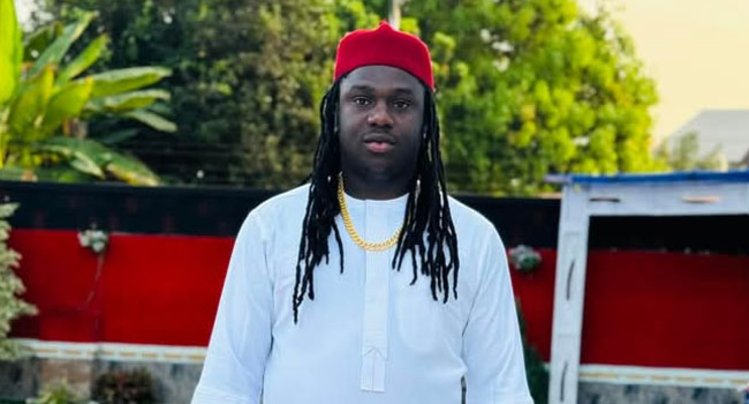
A High Court sitting in Awka, Anambra State, has sentenced popular native doctor, Chidozie Nwangwu, widely known as “Akwa Okuko Tiwaraki”, to 11 months in prison over ritual practices linked to and related offences.
Justice Jude Obiora delivered the judgment on Friday, bringing to a close a high-profile case that stemmed from the state government’s crackdown on alleged ritual activities.
Nwangwu was arraigned alongside two other native doctors, Eke Hit and Onye Eze, following their arrest in February 2025.

The arrest came shortly after Governor Charles Soludo signed the Anambra State Homeland Security Law and launched new security outfits aimed at tackling insecurity across the state.
The state government had accused some native doctors of fueling crime by preparing charms and performing money rituals for suspected criminals.
Out of the 10 charges filed against Nwangwu, the court struck out six and upheld four.
Justice Obiora initially handed down a six-year prison sentence with an option of a N60 million fine.
However, following a plea bargain agreement reached between his legal team and the Anambra State government, the sentence was reduced to two years.
As Nwangwu had already spent 13 months in detention under the Agunechemba Security Squad, the court further reduced the term to 11 months.
Read also:
- Court sentences 4 kidnappers to death over murder of Businessman
- Court allows Chris Ngige to retain EFCC bail, sets fresh surety conditions
- Over 300 suspects nabbed, 2,000 weapons seized as Anambra police post 2025 security scorecard
In addition to the custodial sentence, the court ordered the destruction of his shrine and the confiscation of items recovered from him.
He was also banned from practising or preparing related charms in the future.
The judge further directed that after serving his sentence at the Awka Correctional Centre, Nwangwu must publicly denounce ritual practices through videos on his social media platforms.
He is also to serve as a youth entrepreneurship ambassador for the state, creating content to discourage young people from engaging in ritual-related activities.
His lawyer, Ogwuedom Iwuoba, described the ruling as a consent judgment reached through a plea bargain arrangement, adding that there would be no appeal.