Make The Trumpet part of your daily experience.Follow us on Google News
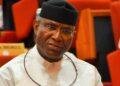
A wave of public criticism and spirited debate has erupted following the graduation of the son of Dr. Yusuf Datti Baba-Ahmed, founder and Pro-Chancellor of Baze University, Abuja, from the prestigious Queen Mary University of London.
Photos and videos from the graduation ceremony, which surfaced online earlier this week, show the proud father celebrating with family members in the UK. But what was expected to be a quiet moment of personal celebration has instead drawn intense scrutiny from Nigerians, who question why the owner of a private university in Nigeria would choose to educate his child abroad.
The development has sparked a nationwide conversation on the perceived double standards of Nigeria’s political and academic elite—many of whom establish private schools in the country but send their own children overseas for education.
Nigerians online are deeply divided, with some defending Datti’s decision, pointing out that such choices are often made for strategic or societal reasons, not necessarily as a condemnation of Nigerian education. Others, however, condemned it as part of a larger problem of elitism and neglect of local institutions.
One user on Facebook wrote: “Why open a university in Abuja if your own children won’t attend it? Even the owners don’t trust what they built.”
Read also:
Another added: “Dr. Datti is a respected education advocate. But this shows that even he believes his son is better off studying abroad than in Nigeria. That says a lot.”
Another user stated: “This is not just about Datti. It’s symbolic of a wider issue. Nigerian elites frequently invest in local education but still send their kids abroad. It undermines public confidence and exposes deep hypocrisy.”
A Facebook user argued: “On the other hand, he may desire a better society and environment for his son, which Nigeria may not offer. Education goes beyond the classroom. The society around it matters too.”
Another added: “There would have been a conflict of interest if his son had attended Baze University. Imagine the pressure on lecturers to give him good grades just because of who his father is.”
A user wrote: “Tell me, who among the lecturers would dare give him anything less than an A if he studied at Baze?”
Another said: “He’s a prominent member of a coalition that claims to want to rescue Nigeria, yet he can’t trust the very institutions they claim to be building. It’s hypocrisy.”
A user also posted: “Our elites don’t trust the quality of our education or our hospitals. That’s why they go abroad for everything—even paracetamol.”
Another wrote: “Let there be a law banning politicians and their families from schooling and receiving treatment abroad. That way they’ll be forced to fix what they’ve destroyed.”
Others took a more pragmatic view: “If he attended Baze, the same critics would accuse him of benefiting unfairly. Either way, people would talk.”
The criticism, while not universal, reflects growing frustration over the state of Nigeria’s education sector, particularly as many public institutions continue to suffer from underfunding, frequent strikes, and poor infrastructure.
Dr. Yusuf Datti Baba-Ahmed, a former senator and 2023 Labour Party vice-presidential candidate, has positioned Baze University as a model of academic excellence in Nigeria’s struggling tertiary education system. The university is often cited for its solid infrastructure, stable academic calendar, and efforts to rival international standards.
However, his son’s graduation abroad has raised questions about the credibility and purpose of such private institutions, especially when their founders appear to lack personal confidence in them.
Queen Mary University of London, a member of the elite Russell Group, is ranked among the top global institutions and is a favored destination for children of Nigeria’s wealthy and political class. It offers world-class facilities, international exposure, and a stable academic environment—factors often lacking in Nigeria’s own institutions.

ADVERTISEMENT