By Obah Sylva
The Nigeria Customs Service (NCS) and the Federal Customs Service of Russia have signed a cooperation agreement to strengthen bilateral trade facilitation, intelligence sharing and customs enforcement, while exploring mutual recognition of their Authorised Economic Operator (AEO) programmes.

The agreement, known as the Agreement on Cooperation and Mutual Assistance in Customs Matters (CMAA), provides a framework for collaboration in customs procedures, information exchange, financial integrity, border security and personnel capacity development.
Key Highlights
- Nigeria and Russia have signed a customs cooperation agreement.
- The agreement covers intelligence sharing, trade facilitation and customs enforcement.
- Both countries are exploring mutual recognition of their AEO programmes.
- The two administrations plan to exchange customs statistics and trade data.
- Cooperation will target illicit financial flows, smuggling, tax evasion and counterfeit goods.
Adeniyi Describes Agreement as Strategic for Trade Security
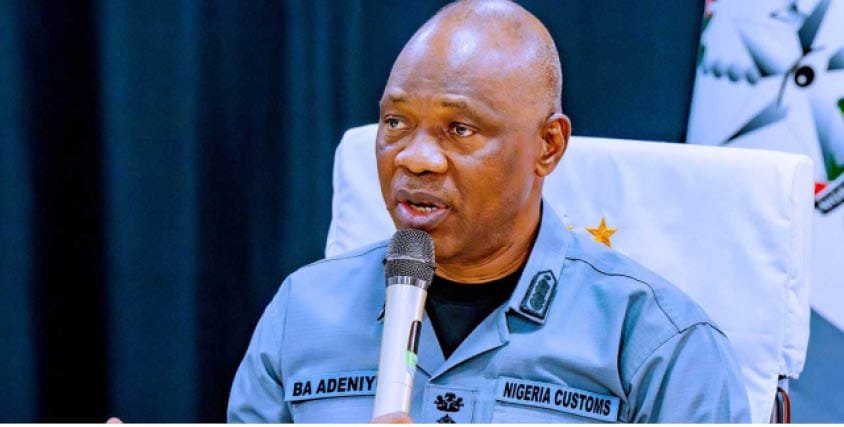
Speaking at the signing, Comptroller-General of Customs, Adewale Adeniyi, who led the Nigerian delegation, described the agreement as a strategic instrument for protecting economic integrity, securing supply chains and strengthening trade governance.
He explained that the agreement followed months of technical consultations, legal reviews and constructive engagements between the two customs administrations.
Adeniyi said the Nigeria Customs Service had accelerated its digital transformation through the adoption of electronic systems for customs declarations, payments and the submission of supporting documents.
According to him, the reforms demonstrate that revenue generation and trade facilitation can complement each other, in line with the World Customs Organisation’s SAFE Framework of Standards.
Nigeria, Russia Target Mutual Recognition of AEO Programmes
On the implementation of the agreement, Adeniyi identified cooperation between the two countries’ Authorised Economic Operator programmes as a major priority.
He said both administrations would exchange experiences on their respective frameworks and operational procedures, with the long-term objective of achieving mutual recognition.
Such an arrangement is expected to facilitate cargo movement and provide benefits to traders that comply with established customs requirements.
The two sides also explored arrangements for exchanging customs statistics and trade data to improve the analysis of bilateral trade flows.
Customs Administrations Consider Data-Sharing Arrangement
Adeniyi disclosed that Nigeria was participating in the World Customs Organisation’s data initiative.
Russia’s Head of Customs, Valery Pikalyov, explained that his administration was authorised to collect and exchange customs statistics derived from customs declarations.
Pikalyov expressed his administration’s readiness to explore a dedicated data-sharing arrangement with Nigeria to strengthen information exchange and improve understanding of trade activities between both countries.
Agreement Targets Smuggling, Tax Evasion and Illicit Trade
The cooperation agreement also provides for joint efforts against customs-related offences, illicit financial flows, grey-market importations, tax evasion, counterfeit goods, narcotics and other prohibited or hazardous materials.
It further establishes a framework for direct operational assistance, personnel training and the exchange of professional expertise between the two customs administrations.
The agreement is expected to strengthen institutional cooperation between Nigeria and Russia while providing a basis for improved customs operations, trade security and the movement of legitimate goods.