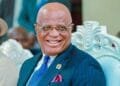
Minister of Aviation and Aerospace Development, Festus Keyamo, has given the National Leader of the Nigeria Democratic Congress (NDC), Senator Seriake Dickson, 48 hours to clarify whether the opposition party officially supports the singing of Nigeria’s former national anthem, “Arise, O Compatriots”.
Latest: 2027 presidential election: candidates, running mates and campaign updates (live tracker)

Latest: Lagos news today: latest updates from Lagos State
Keyamo issued the ultimatum following controversy over the singing of the old anthem at an NDC town hall meeting in Lagos, warning that the party must clarify its position on a national symbol prescribed by law.
Key Highlights
- Festus Keyamo has given NDC leader Seriake Dickson 48 hours to clarify the party’s position on Nigeria’s former national anthem.
- The controversy followed the singing of “Arise, O Compatriots” at an NDC town hall meeting in Lagos.
- Peter Obi was among those seen participating in the singing.
- NDC governorship candidate Funso Doherty described the incident as a spontaneous reaction by some attendees.
- Keyamo argued that rejecting the legally recognised anthem could raise concerns about national unity.
- Nigeria reinstated “Nigeria, We Hail Thee” as its national anthem in May 2024.
Keyamo Questions NDC Over Singing of Former National Anthem
The minister made the demand in a post on his X account on Saturday, reacting to the singing of “Arise, O Compatriots” at the party’s town hall meeting in the Oregun area of Lagos State on Thursday.
Some participants at the gathering sang the former anthem instead of the current national anthem, “Nigeria, We Hail Thee”.
The NDC presidential candidate, Peter Obi, was among those seen participating in the singing and making the party’s two-finger gesture.
Reacting to the incident, Keyamo argued that a national anthem represents a country’s identity, history, values and sovereignty, insisting that it should serve as a unifying symbol for citizens.
He warned that an organised group deliberately rejecting the anthem recognised by law in favour of another could raise questions about its commitment to national unity.
“A national anthem is one of a country’s national symbols. It represents a country’s history, values and sovereignty. It is meant to unite citizens,” he wrote.
The minister further argued that when a group deliberately defies the legally prescribed anthem, the action could be interpreted as laying the foundation for secession.
Keyamo Challenges Dickson to State NDC’s Official Position
Keyamo subsequently challenged Dickson, whom he described as a former schoolmate and friend, to publicly clarify whether the NDC had adopted the former anthem as an official party symbol.
“I am therefore officially calling on the original ‘Countryman’, my classmate, my friend and a man of considerable courage from our school days, Senator Seriake Dickson, the official leader of the NDC, to within 48 hours speak up as to whether the NDC officially endorses a proscribed anthem as its own national symbol. The world is waiting,” he said.
The minister maintained that the party’s leadership should clarify whether the incident reflected an official position or the actions of individual participants.
NDC Distances Party from Anthem Controversy
However, the NDC has sought to distance itself from suggestions that the singing represented an official party position.
The party’s Lagos State governorship candidate, Funso Doherty, described the incident as a spontaneous reaction by some attendees in an emotionally charged atmosphere.
Doherty also maintained that the current national anthem was performed at the gathering, stressing that Nigeria had only one officially recognised national anthem.
Keyamo Criticises Peter Obi and NDC Members
The controversy has also generated further political exchanges involving Keyamo and opposition figures.
In a separate interview with Eagle 102.5 FM on Friday, the minister accused Obi and other NDC members of disrespecting Nigeria’s national symbols, the law and the office of the President.
He questioned whether Nigerians should entrust political leadership to individuals he accused of disregarding national symbols and constitutional authority.
“For me, it is left for the Nigerian people to decide whether these human beings you have now seen disregarding national symbols, disrespecting the law and disrespecting the office of the President that they so crave are responsible enough to aspire to that office,” he said.
Keyamo also criticised Nigerians who might support the party despite the incident, arguing that the controversy could affect the NDC’s appeal to moderate voters.
Read also:
- Wike Accuses Peter Obi of Threatening Nigeria’s Unity Over National Anthem Controversy
- NDC to Inaugurate Presidential Campaign Council October 20 Ahead of 2027 Elections
- Imo Government Marks Peter Obi’s Town Hall Venue For Demolition Days After NDC Meeting
Keyamo Acknowledges No Specific Penalty for Singing Old Anthem
Despite his criticism, Keyamo acknowledged that he was unaware of any specific punishment prescribed by law for singing the former national anthem.
“There’s no penalty that is prescribed by law. No penalty. The law just says this is our new national anthem and then you should think we should all abide by it. It becomes a crime when there’s a penalty attached to it,” he said.
Why Nigeria Changed Its National Anthem in 2024
The Federal Government reinstated “Nigeria, We Hail Thee” in May 2024, replacing “Arise, O Compatriots”, which had served as the country’s national anthem since 1978.
The National Assembly passed the National Anthem Bill, which President Bola Tinubu signed into law on May 29, 2024.
“Nigeria, We Hail Thee” was originally adopted when the country gained independence in 1960 but was replaced 18 years later.
The latest controversy has renewed public discussion about Nigeria’s national symbols, the legal status of the former anthem and the responsibilities of political parties and their leaders.
For more political updates, follow us on X.