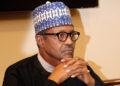
Former President Muhammadu Buhari initially favoured deploying the full strength of the Nigerian military against the Niger Delta Avengers when the militant group intensified attacks on oil infrastructure, according to an excerpt from his authorised biography. The account reveals the internal debate within his administration over whether to pursue military action or dialogue to address the security crisis in the oil-producing region.
Key Highlights
- Buhari’s first instinct was reportedly to order a full military response against the Niger Delta Avengers.
- Former Minister of State for Petroleum Resources, Ibe Kachikwu, warned that military escalation could worsen the crisis and disrupt oil production.
- Buhari initially resisted dialogue with the militants, describing their actions as “ransom politics”.
- The former President eventually agreed to engage with the Pan-Niger Delta Forum after persuasion.
- The account is contained in a three-volume biography written by Dr Udu Yakubu.
- The biography is scheduled for public presentation in Abuja on November 19, 2026.
Buhari initially favoured military response against Niger Delta Avengers
The revelation is contained in Muhammadu Buhari: The Authorised Biography, a three-volume publication by Dr Udu Yakubu.

According to the excerpt, the account is based on the recollections of former Minister of State for Petroleum Resources, Dr Ibe Kachikwu, who described Buhari’s initial response as one driven by his military background.
Kachikwu said Buhari’s instinct “was command”, explaining that the former military general felt compelled to use the armed forces to defend the country and protect critical oil infrastructure.
However, Kachikwu reportedly cautioned that relying solely on military force could create further complications. He argued that federal security forces were already stretched and that an escalation could severely disrupt the oil industry.
Buhari reluctant to engage Niger Delta Avengers
The biography also recounts tensions surrounding a proposed meeting with the Pan-Niger Delta Forum (PANDEF).
According to Kachikwu’s account, Buhari was unhappy with developments in the Niger Delta and initially reluctant to approve dialogue with the militants. The former President reportedly viewed their actions as “ransom politics”. Following persuasion, however, Buhari agreed to engagement, allowing the peace process to move forward.
Kachikwu also recalled a moment after the meeting when Buhari, who had appeared tense beforehand, finally smiled. Describing one of his favourite photographs of the late President, Kachikwu said he teased him after the meeting, saying: “See, it’s not so bad after all.”
Read also:
- PANDEF Condemns Asaba Killings as Delta Govt, Omo-Agege Trade Blame; Okada Riders Protest at Police HQ
- NDC Accuses Tinubu Of Repackaging Buhari-Era Approval For $4.6bn Ibom Deep Sea Port
- 2027 Election: Bayelsa Rainbow Coalition Pledges 300,000 Votes for Tinubu, Challenges APC to Deliver 500,000
Buhari’s authorised biography to be presented November 19
The account appears in Muhammadu Buhari: The Authorised Biography, which is scheduled for public presentation on Thursday, November 19, 2026, at the Nigerian Army Conference Centre and Suites in Abuja.
Former Minister of Water Resources, Engr Suleiman Adamu, who chairs the biography’s planning committee, announced the event during a press conference in Abuja on Wednesday, November 11.
Author Dr Udu Yakubu said Buhari authorised and cooperated with the biography project, providing access to sources and contributing his perspective. However, he maintained that the former President did not control the book’s contents.
“The subject has had his voice in the biography, while the biographer has had or retained his independence,” Yakubu said.
Niger Delta Avengers attacks disrupted oil production in 2016
The Niger Delta Avengers emerged in 2016 and carried out attacks on oil pipelines and other critical infrastructure in the Niger Delta. The attacks disrupted oil production and affected government revenue, placing pressure on the Buhari administration to restore security and stability in the region.
The account in the biography highlights the policy debate within the administration over how to respond to the group, particularly the tension between military intervention and political engagement. Buhari’s eventual acceptance of dialogue, as recalled by Kachikwu, illustrates how persuasion helped shape the administration’s response to the crisis.
For more Niger Delta and political news, follow us on X.