
By Obah Sylva
Five telecommunications operators and their industry association have asked the Federal High Court in Abuja to stop a House of Representatives committee from investigating persistent poor network service and compelling company executives to appear. They argue that telecommunications service quality is regulated by the Nigerian Communications Commission (NCC).

The suit follows the House committee’s summonses and threat of arrest warrants against telecom executives. The Trumpet previously reported on the committee’s demand for the operators’ personal appearance.
Key Highlights
- ALTON, MTN Nigeria, Airtel, Globacom and 9mobile’s operator have sued the House of Representatives.
- The operators want the court to determine whether lawmakers can investigate service quality at private telecom companies under Sections 88 and 89 of the Constitution.
- The suit seeks to nullify committee summonses and block enforcement through arrest warrants or other measures.
- The companies argue that the NCC has statutory responsibility for telecom service standards.
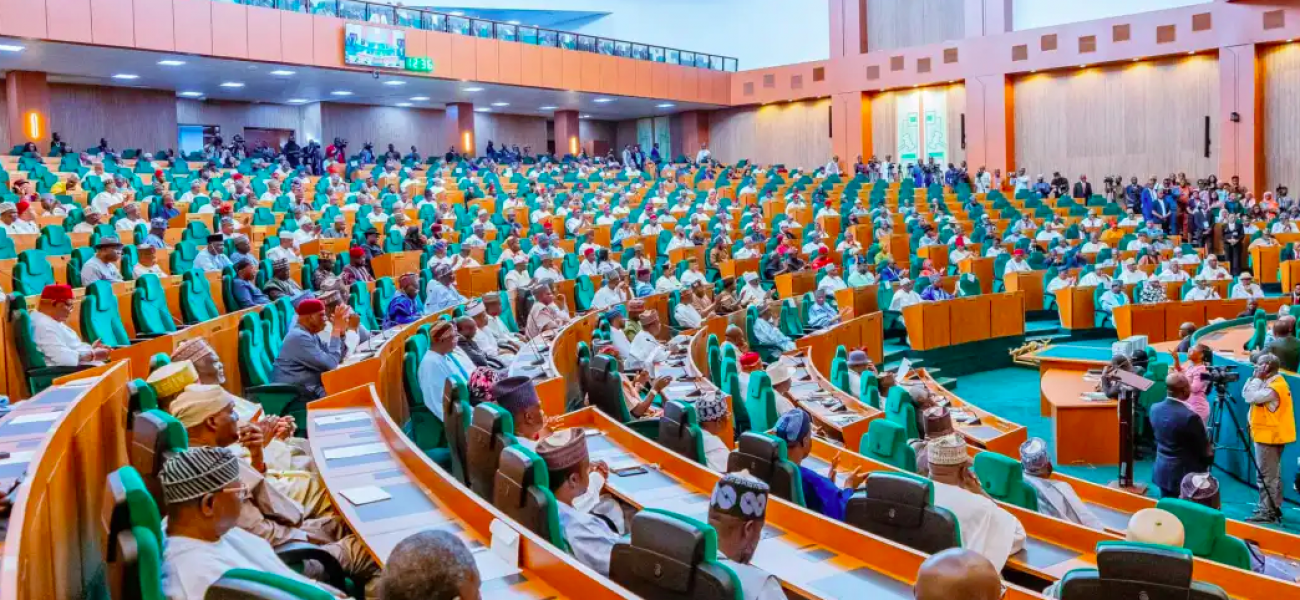
- The House says its inquiry is part of its constitutional oversight role and is intended to address subscriber complaints.
- NCC figures cited in the article show 413,587 complaints in the first half of 2026, with 406,938 recorded as resolved.
Telecom operators file suit against the House of Representatives
The Registered Trustees of the Association of Licensed Telecommunications Operators of Nigeria (ALTON), MTN Nigeria Communications Plc, Airtel Networks Limited, Globacom Limited and Emerging Markets Telecommunication Services Limited, which operates 9mobile, filed the suit on November 4, 2026.
Marked FHC/ABJ/CS/2713/2026, the case names the House of Representatives, the Speaker, the Clerk of the National Assembly and the Inspector-General of Police as defendants.
The operators are challenging summonses issued on October 29 by the House ad hoc committee on quality of service. The committee directed the companies’ chief executives to appear and provide documents concerning their operations.
The plaintiffs are asking the court to interpret Sections 88 and 89 of the 1999 Constitution and determine whether those provisions empower the National Assembly to investigate telecommunications service quality at private companies. Their argument is that the provisions concern matters connected to legislation, exposing corruption, inefficiency or waste in the execution of laws, and examining public funds appropriated by the legislature.
Operators say the NCC is responsible for network quality
The companies cite Sections 4, 70 and 105 of the Nigerian Communications Act, 2003, together with the Nigerian Communications (Quality of Service) Regulations, 2024. They argue that the law and regulations give the NCC authority to establish, monitor and enforce service quality standards across the industry. The NCC’s published regulations include its Quality of Service Regulations.
The operators also say the proposed inquiry could interfere with two pending cases concerning telecommunications service quality: HCS/261/2025, filed by Fatokunboh Fagun and another on behalf of themselves and MTN subscribers, and FHC/ABJ/CS/1886/2026, filed by Kaatruths Podcast Limited.
Among other reliefs, the plaintiffs want the court to nullify the summonses and restrain lawmakers from compelling their executives to appear or submit documents through arrest warrants or other measures. They also seek an injunction against an investigation they say falls outside the constitutional provisions or intrudes on the NCC’s statutory responsibilities.
House threatens arrest warrants over poor network services
The suit followed a House threat to issue arrest warrants against the chief executives of MTN Nigeria, Airtel Nigeria, Globacom, Mafab Communications and other operators over complaints about persistent poor network services.
The lawmakers had directed the companies to appear before the ad hoc committee on November 4 to explain recurring service failures, including dropped calls, slow internet, failed airtime and data transactions, weak coverage and unreliable service in some communities.
At an earlier sitting, the committee, chaired by Olumide Osoba, rejected ALTON’s attempt to represent the operators through its chairman, Gbenga Adebayo. The lawmakers said the companies’ executives and senior managers must personally account for their performance, noting that each operator holds an individual licence.
Committee member Sunday Umeha criticised ALTON’s letter questioning the House’s authority to compel the companies to appear. House spokesman Akin Rotimi, who seconded the motion, cited Section 88 of the Constitution as the basis for the committee’s inquiry.
Rotimi also raised concerns about poor network coverage in parts of his Ekiti State constituency, saying signal gaps in communities and along roads could create security risks. He alleged that two traditional rulers in his constituency were killed in an ambush along a road where mobile signals were unavailable for about 20 minutes.
The committee questioned Adebayo about a reported ₦8.46 billion fine imposed on Globacom, asking whether an association representative could address operational and regulatory issues relating to an individual operator.
Read also:
- Reps Threaten To Arrest Telecom CEOs Over Poor Network, Demand Personal Appearance
- NCC Survey Finds Only 2 Telecom Operators Ready For Internet Code
NCC reports compensation and subscriber complaints
The NCC has introduced measures intended to improve service and address consumer complaints. Its consumer compensation framework provides for automatic airtime credits to eligible subscribers in areas where operators fall short of prescribed quality standards.
The article reports that the commission said operators had compensated 75 million subscribers in 2026. It also cites nearly three million refunds for failed airtime and data purchases and more than 6,500 network interventions through equipment upgrades and additional capacity.
Subscribers continue to report dropped calls, unstable internet connections, billing disputes, rapid data depletion and failed transactions. Figures attributed to the NCC for January to June 2026 show 413,587 complaints across four major operators, with 406,938 recorded as resolved. Airtel accounted for 228,992 complaints, MTN for 124,405, Globacom for 56,810 and T2mobile for 3,885.
Court to determine scope of legislative oversight
The case puts the constitutional responsibilities of the National Assembly alongside the NCC’s sector-specific regulatory role. Lawmakers maintain that they can investigate issues affecting Nigerians, while the operators say service quality monitoring and enforcement are assigned to the telecommunications regulator.
The Federal High Court will determine the scope of the legislature’s powers in this dispute and whether the committee’s summonses fall within its constitutional authority. The eventual decision could shape how legislative oversight and sector regulation apply to private telecom operators.
For millions of subscribers, the central issue remains reliable mobile networks, stable internet connections and better customer service. For more technology and business news, follow us on X.