By Omotayo Edubi
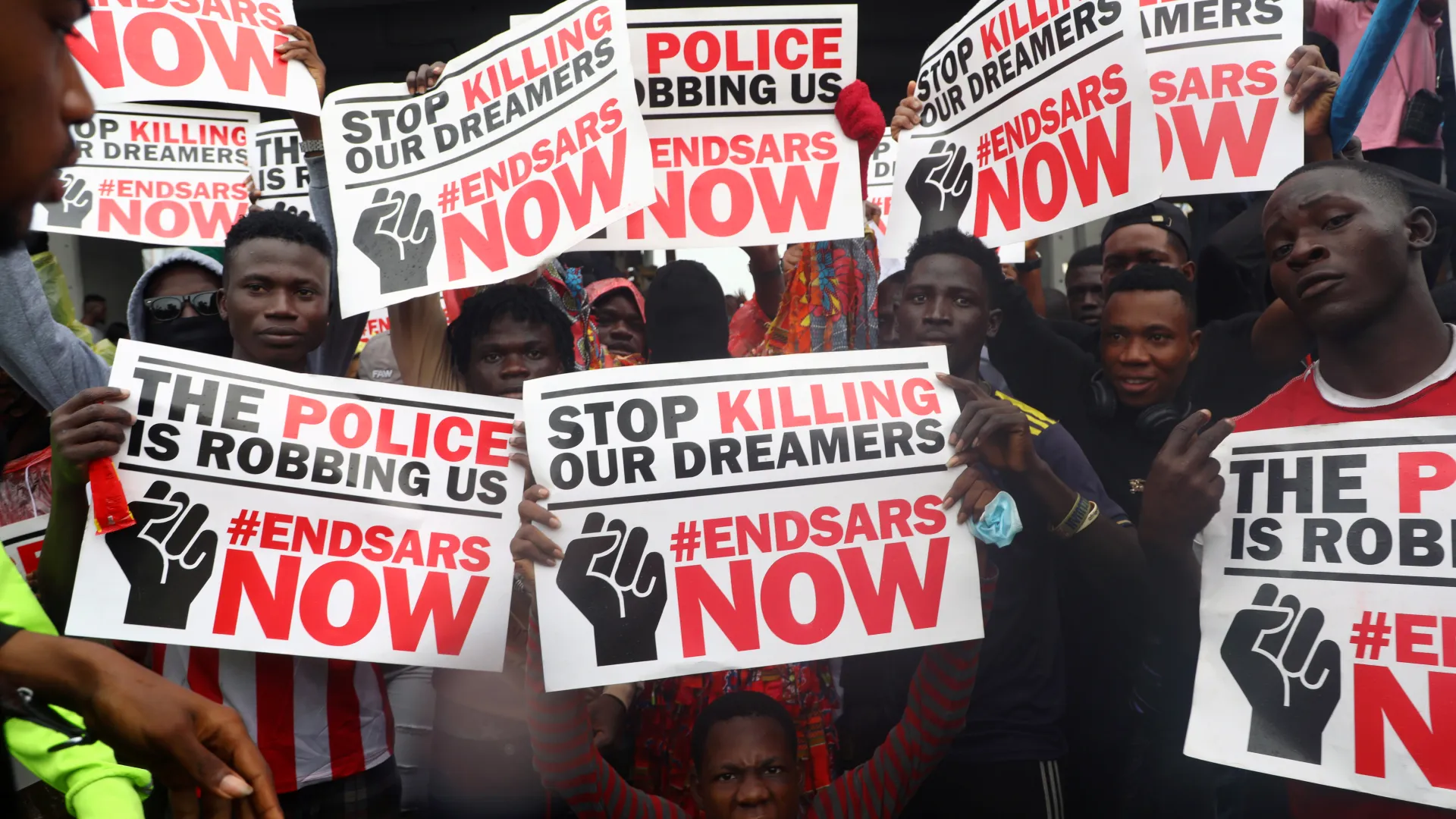
Police officers on Tuesday fired tear gas to disperse activists and other Nigerians who gathered at the Lekki toll gate in Lagos State to commemorate the sixth anniversary of the #EndSARS protests against police brutality.

Key Highlights
- Police fire tear gas to disperse #EndSARS anniversary gathering at the Lekki toll gate on October 20.
- NDC governorship candidate Funso Doherty and ADC candidate Gbadebo Rhodes-Vivour were present.
- Activists vow to keep demanding justice and police reform.
- Police also fired tear gas at commemorations in 2021 and 2024.
- Amnesty International says at least 12 protesters were killed on October 20, 2020.
The gathering, held on October 20, 2026, was organised to honour Nigerians who lost their lives during the demonstrations in 2020 and renew calls for justice, police accountability and comprehensive reforms of the country’s security agencies.
The police action disrupted the commemoration as participants fled the area amid tear gas.
Among those present were the Lagos State governorship candidates of the Nigeria Democratic Congress (NDC), Funso Doherty, and the African Democratic Congress (ADC), Gbadebo Rhodes-Vivour.
Despite the disruption, activists vowed to continue demanding justice for victims of police brutality and the implementation of reforms that inspired the nationwide demonstrations.
The incident has also renewed concerns about citizens’ constitutional rights to peaceful assembly and freedom of expression.
Six Years After The Lekki Shooting
The latest confrontation occurred six years after the #EndSARS protests began in October 2020, when thousands of young Nigerians took to the streets to demand an end to abuses associated with the now-disbanded Special Anti-Robbery Squad, a police unit accused of extortion, torture, unlawful arrests and extrajudicial killings.
The movement spread across several states, with the Lekki toll gate becoming one of its most prominent protest locations.
On October 20, 2020, soldiers opened fire on protesters at the toll gate in an incident that triggered national and international condemnation and remains a subject of controversy over casualties and accountability.
Human rights organisation Amnesty International reported that its investigations found that at least 12 protesters were killed by security forces at the Lekki toll gate and the Alausa protest ground in Lagos on the night of October 20, 2020.
However, accounts of the incident and the number of casualties have remained contested, with government officials disputing aspects of reports documenting the shootings.
The Lagos State Judicial Panel of Inquiry, established to investigate police brutality and the Lekki incident, subsequently documented deaths, injuries and other casualties connected to the shootings.
Its findings intensified calls for accountability, compensation for victims and action against security personnel implicated in human rights violations.
Read also:
- #EndSARS: Nigerians Recall Lekki Toll Gate Shooting 6 Years After, Demand Justice
- Ikorodu Police-Youth Clash Sparks Outrage As Nigerians Raise Extortion, #EndSARS Concerns
- Lai Mohammed stirs fresh outrage with claim that no one has been reported missing since Lekki Toll Gate shooting
For families who lost loved ones during the protests, the anniversary remains a reminder of the lives cut short and the questions surrounding the circumstances of their deaths.
Several investigations and eyewitness accounts have documented the experiences of protesters who were shot, injured or reported missing during the demonstrations.
However, the identities and circumstances of some alleged victims have remained difficult to establish conclusively.
The demands for justice have continued despite the Federal Government’s announcement in October 2020 that SARS had been disbanded.
Activists have argued that disbanding the unit was not enough without broader police reforms, accountability for alleged abuses and compensation for affected families.
Not The First Time
Tuesday’s confrontation was not the first time security operatives had dispersed people who gathered at the toll gate to commemorate the protests.
In October 2021, police fired tear gas during a memorial procession organised by young Nigerians and celebrities to honour victims of police brutality.
The then Lagos State Commissioner of Police, Hakeem Odumosu, said officers were dispersing people he described as miscreants rather than participants in the procession.
In 2024, police again deployed tear gas against protesters marking the fourth anniversary of the demonstrations.
Participants had called for the full implementation of recommendations made by judicial panels established after the 2020 protests, while the police said the action followed the protesters’ refusal to disperse.
The repeated confrontations have continued to raise questions about the handling of peaceful commemorations and the extent to which Nigerians can exercise their rights to protest.
Six years after the movement began, the demands that brought thousands of Nigerians to the streets remain central to public discussions about police accountability, human rights and institutional reform.
For activists and families of victims, the annual commemoration is not merely an occasion to remember the past but also an opportunity to press for answers about the deaths, injuries and alleged abuses associated with the protests.
As the sixth anniversary unfolded at the Lekki toll gate, the dispersal of participants with tear gas once again placed the relationship between security agencies and citizens under scrutiny, while renewed calls for justice underscored the unresolved issues left by the #EndSARS movement.
For more breaking news and updates, follow us on X.