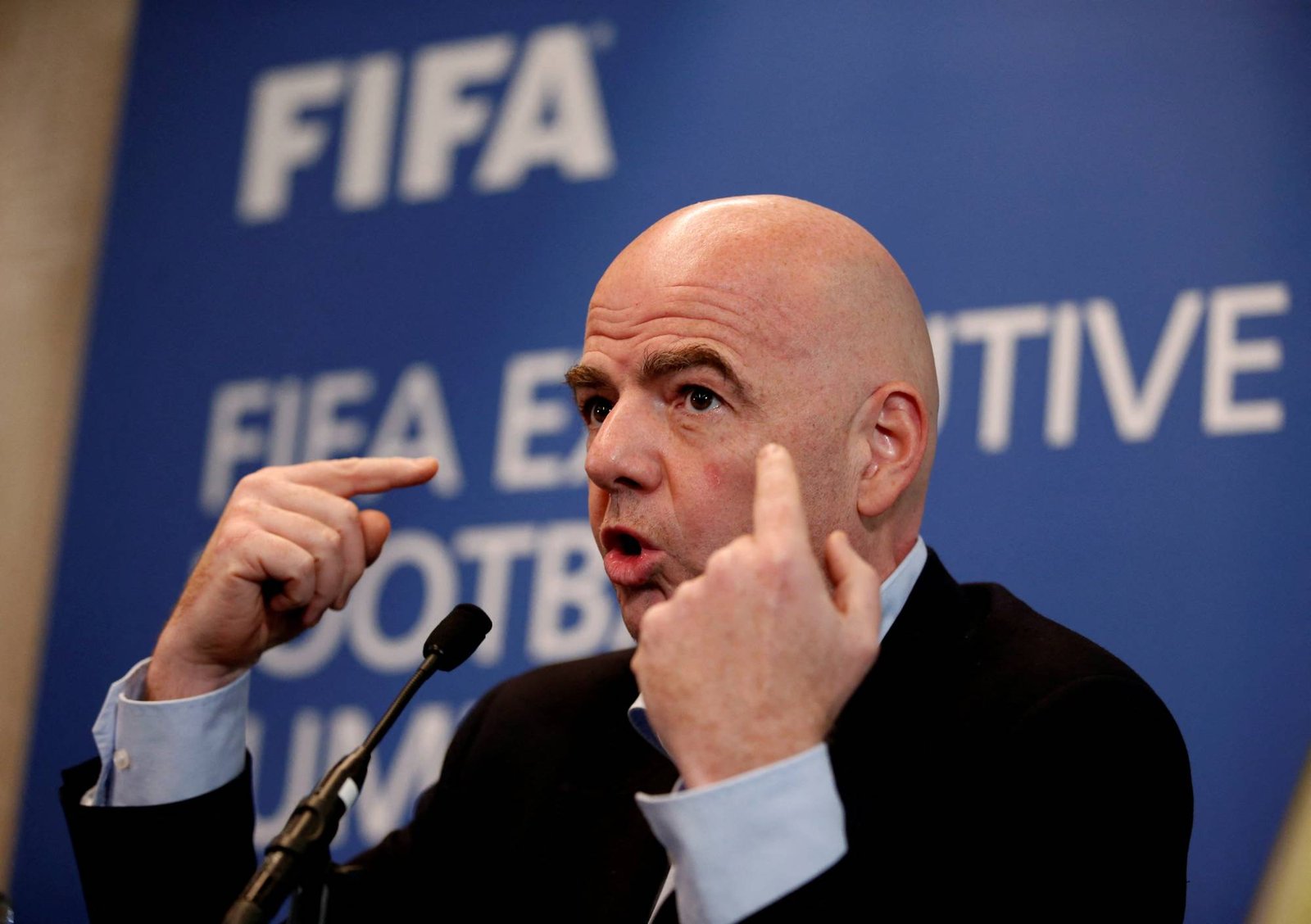
FIFA President Gianni Infantino is facing fresh scrutiny over allegations that world football’s governing body allowed an allegedly ineligible player to represent the Democratic Republic of Congo (DR Congo) during its successful 2026 World Cup qualifying campaign.
Key Highlights
- FIFA President Gianni Infantino faces fresh scrutiny over the alleged eligibility controversy.
- DR Congo goalkeeper Lionel Mpasi reportedly featured despite questions over his international switch from France.
- Nigeria and Jamaica were eliminated by DR Congo and have raised concerns over the player eligibility issue.
- FIFA reportedly rejected Nigeria’s complaint on the grounds that it was submitted after the deadline.
- Nigeria and Jamaica are considering their legal options, including potential claims for compensation.
- The controversy comes as Infantino faces political pressure ahead of the FIFA presidential election.
According to a report by The New York Times, FIFA was aware of an alleged administrative failure involving Mpasi but did not impose sporting sanctions, fines or disqualification on DR Congo.

The goalkeeper, 32, reportedly featured prominently for the Leopards during their qualifying campaign, including matches against Nigeria and a decisive play-off victory over Jamaica.
The allegations have triggered anger among rival nations that were eliminated by DR Congo, raising questions about the integrity of the World Cup qualification process and potentially opening the door to legal challenges.
FIFA Under Pressure Over Lionel Mpasi Eligibility
Mpasi reportedly played for DR Congo despite allegedly failing to complete the necessary paperwork required to switch his international allegiance from France.
The goalkeeper subsequently played in four matches for DR Congo at the World Cup, helping the country advance from Group K before a 2-1 defeat to England, managed by Thomas Tuchel, in the round of 32.
The controversy has intensified criticism from Nigeria and Jamaica, both of whom were eliminated by DR Congo during the qualification process.
Nigeria’s football authorities reportedly raised the eligibility issue after the Super Eagles’ preliminary-round exit. FIFA, however, dismissed the complaint, stating that it had been submitted after the prescribed deadline.
The decision left Nigeria without an immediate sporting remedy and has prompted renewed questions over FIFA’s handling of player eligibility complaints.
Nigeria Considers Legal Action Against FIFA
The Nigerian camp has expressed frustration over the financial and sporting consequences of its failure to qualify for the World Cup.
An official of the Nigerian National Sports Commission (NSC) told ESPN that Nigeria could consider seeking compensation from FIFA for losses allegedly connected to its failure to participate in the tournament.
The official cited potential losses involving World Cup revenue, player exposure, transfer opportunities, sponsorship income and the wider economic benefits associated with Nigeria’s participation.
The official said Nigeria was exploring all available options and had not ruled out legal action.
Jamaica Demands Fair Application of FIFA Rules
The Jamaican Football Federation (JFF) has also expressed concern over the handling of player eligibility matters.
The federation said eligibility regulations should be applied consistently and fairly across international competitions, particularly where a decision could affect the integrity of a tournament or the interests of a member association.
Jamaica called for concerns regarding player eligibility to be thoroughly reviewed through FIFA’s established governance and disciplinary procedures.
FIFA Defends Decision on Nigeria Complaint
FIFA has defended its handling of Nigeria’s initial complaint, maintaining that the protest was dismissed because it was submitted late.
The governing body also said its committees operate independently and determine cases based on applicable regulations and the facts presented before them.
The response has done little to ease concerns among those questioning whether FIFA applied its rules consistently in the DR Congo case.
Read also:
- FA Chair Demands Infantino Release World Cup Deal Documents
- FIFA Accuses UEFA Of Smear Campaign Against Infantino Over World Cup Investment Plan
- Infantino Asked To Stay Away From Youth Tournament Amid FIFA Crisis
Infantino Faces Pressure Ahead of FIFA Election
The latest controversy adds to the political pressure facing Infantino ahead of the next FIFA presidential election.
Infantino has faced criticism over several issues surrounding the organisation and its handling of major football controversies.
The latest dispute could be particularly significant because of the importance of African football associations within FIFA’s electoral system.
With UEFA reportedly seeking to challenge Infantino’s position, maintaining strong support among African football stakeholders could be crucial to his bid to remain FIFA president.
Nigeria, Jamaica Legal Options Could Widen FIFA Dispute
Nigeria and Jamaica are expected to assess their legal options in the coming weeks as they consider the implications of the alleged player eligibility breach.
Any successful legal challenge could have wider consequences for FIFA’s disciplinary and eligibility procedures and potentially lead to calls for greater transparency in the handling of international player registration disputes.
The controversy has therefore moved beyond the eligibility of one player, with questions now being raised about the consistency of FIFA’s disciplinary process and the potential sporting and financial consequences for countries affected by such decisions.
For more football and sports updates, follow us on X.