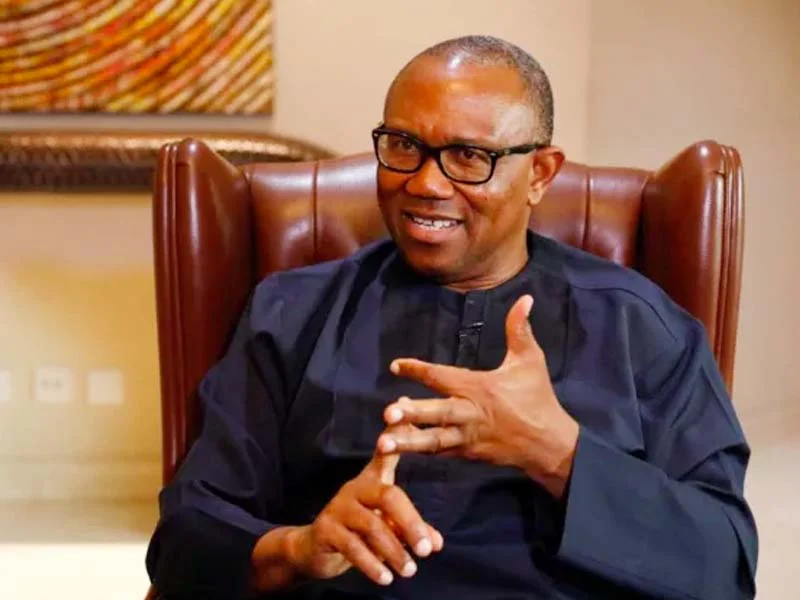
The NDC 2027 campaign is gathering momentum as presidential candidate Peter Obi and his running mate, Rabiu Kwankwaso, intensify town-hall meetings and grassroots engagements across Nigeria, while questions remain over opposition unity, internal party structures and the strength of their challenge to President Bola Tinubu. Recent engagements in Kaduna and Sokoto have placed the Obi-Kwankwaso ticket at the centre of the opposition debate ahead of the 2027 presidential election.
Key Highlights
- Peter Obi and Rabiu Kwankwaso are intensifying their NDC 2027 grassroots campaign.
- The duo recently held town-hall engagements in Kaduna and Sokoto.
- Obi says Nigerians should determine the issues politicians campaign on rather than accept “glossy manifestos.”
- The NDC ticket has made insecurity, jobs, education, agriculture and the cost of living central campaign issues.
- Kwankwaso has said Obi is committed to serving one four-year term if elected, followed by a return of the presidency to the North in 2031.
- The NDC’s legal status faced a setback in June, but the Court of Appeal later reversed the Federal High Court decision.
- Obi has said any future alliance with Atiku Abubakar must be negotiated between political parties rather than individual candidates.
- The NDC is still working to finalise its campaign council and grassroots structures.
- Supporters see the Obi-Kwankwaso ticket as a stronger national coalition, while critics question its internal cohesion and electoral structure.
Obi and Kwankwaso Take NDC 2027 Campaign to Kaduna
Peter Obi and Rabiu Kwankwaso have stepped up their direct engagement with voters as part of the NDC 2027 campaign.

At a town-hall meeting in Kaduna in September, Obi called for issue-based and demand-driven politics, arguing that Nigerians should determine the issues politicians campaign on.
He criticised the practice of presenting voters with what he described as “glossy manifestos” and urged political leaders to engage directly with citizens about the problems affecting their communities.
The Kaduna engagement followed an earlier town hall in Port Harcourt, with the NDC presidential team presenting insecurity, poverty, healthcare, education and economic hardship as major areas of concern.
NDC Ticket Pushes Security, Jobs and Economic Reform
Obi has continued to present the NDC ticket as a platform focused on practical solutions to Nigeria’s economic and security challenges.
During the Kaduna engagement, he said an NDC administration would prioritise national unity, poverty reduction, healthcare and education while taking stronger action against insecurity.
He also addressed the issue of fuel costs, arguing for reforms to address corruption and inefficiencies associated with the fuel subsidy system and reduce the burden of petrol prices on Nigerians.
The emphasis on the economy, agriculture, employment and security forms a major part of the ticket’s attempt to build support beyond its traditional political base.
Obi-Kwankwaso One-Term Agreement
One of the most closely watched aspects of the NDC 2027 ticket is the reported agreement between Obi and Kwankwaso over the length of an Obi presidency.
Kwankwaso has said the two men signed agreements under which Obi would serve only one four-year term if elected in 2027, after which the NDC would support a return of the presidency to Northern Nigeria in 2031.
The arrangement has become an important part of political discussions surrounding the ticket, particularly because of the regional support networks associated with both politicians.
NDC chieftain Buba Galadima also said in September that Obi and Kwankwaso were “on the same page” and were working to harmonise areas where differences remained.
NDC Legal Battle Over Party Registration
The NDC’s legal journey has also featured prominently in the party’s preparations for 2027.
In June, the Federal High Court in Lokoja set aside its earlier judgment directing the Independent National Electoral Commission to register the NDC, following a challenge by the Peace Movement Party over its exclusion from the earlier proceedings.
The development triggered uncertainty around the party’s position ahead of the election, with NDC leaders rejecting the ruling and announcing plans to appeal.
However, the situation subsequently changed when the Court of Appeal in Abuja reversed the Federal High Court ruling in a 2–1 decision in September 2026. The development removed the immediate setback created by the Lokoja ruling, although the broader legal dispute surrounding the party remains part of the political landscape.
Obi Keeps Door Open to Opposition Alliance
Despite leading the NDC ticket, Obi has continued to face questions about whether opposition parties could eventually reach an agreement ahead of the 2027 election.
His former political ally, Atiku Abubakar, is the presidential candidate of the African Democratic Congress, while other opposition figures, including Oyo State Governor Seyi Makinde, remain on separate political platforms.
Obi has clarified that any possible alliance with Atiku should be negotiated between political parties rather than between individual presidential candidates.
In September, he said the discussion was no longer simply about whether one candidate would step down for another because both men were already candidates of separate parties.
The position leaves the opposition landscape fragmented, despite repeated calls for greater cooperation against the ruling All Progressives Congress.
NDC Campaign Council Still Taking Shape
The party is also working to build the organisational structure needed for a nationwide campaign.
In September, the NDC announced that Obi and Kwankwaso would play central roles in selecting key officers for the party’s Presidential Campaign Council.
The positions include the Director-General, Deputy Director-General for the North, campaign spokesperson, Head of New Media and finance officials.
The party has also begun preparations for the selection and training of polling agents across the country.
The development suggests that the party is attempting to move from high-profile political engagements towards a more structured electoral operation.
Read also:
- Peter Obi’s One-Year Promise Sparks Mixed Reactions Ahead of 2027 Election
- Bello El-Rufai Thanks Peter Obi, Atiku, Amaechi, Kwankwaso For Checking On Detained Father
- 2027: Deji Adeyanju Accuses Obi, Kwankwaso of Working for Tinubu
Supporters See Obi-Kwankwaso Momentum
Supporters of the NDC ticket have interpreted the recent town halls and public engagements as evidence that Obi and Kwankwaso are building a broader national coalition.
The combination brings together Obi’s support base, particularly among younger voters and supporters associated with the 2023 election, and Kwankwaso’s established political network in Northern Nigeria.
The September Kaduna town hall attracted substantial attention, with supporters presenting the event as evidence that the ticket is making inroads into areas outside Obi’s strongest traditional base.
The visit to the Sultan of Sokoto also placed emphasis on national unity, security, poverty reduction and employment as central issues ahead of 2027.
Critics Question NDC Structure and Political Stability
Opponents, however, have questioned whether the energy surrounding Obi and Kwankwaso can be converted into a nationwide electoral structure.
Some critics have pointed to Obi’s movement between political platforms since 2023, while others have questioned whether the NDC can maintain internal cohesion as the election approaches.
The debate has also extended to the relationship between Obi and Kwankwaso, with political observers examining their respective support bases, the one-term understanding and the future direction of the party.
However, claims that the ticket is already divided remain political interpretations rather than established facts. NDC leaders have publicly maintained that Obi and Kwankwaso are working together and have been given important roles in shaping the campaign structure.
NDC 2027: The Bigger Opposition Challenge
The central question for the NDC 2027 campaign is whether the Obi-Kwankwaso partnership can transform growing public visibility into a durable nationwide electoral organisation.
The ticket has already established a strong public presence through town halls, political engagements and grassroots mobilisation. At the same time, the wider opposition remains divided, with Atiku and other political figures pursuing separate platforms.
The NDC must therefore navigate three major challenges before the 2027 election: maintaining internal unity, strengthening its nationwide political structure and converting public enthusiasm into votes.
For now, the Obi-Kwankwaso ticket has made itself one of the major stories in Nigeria’s 2027 political contest. Whether that momentum becomes a successful national campaign will ultimately depend on organisation, alliances, voter turnout and the party’s ability to sustain its message until election day.
For more updates on the 2027 race, follow us on X.