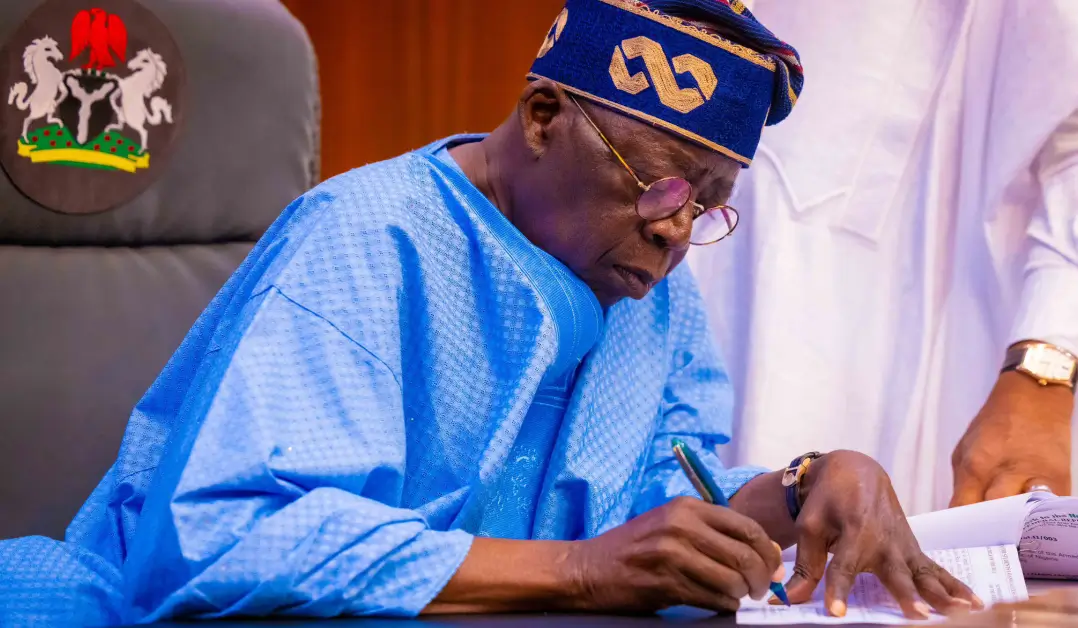
President Bola Tinubu has defended his administration’s economic reforms, saying previous Nigerian governments chose the “morphine” of temporary relief instead of confronting the country’s underlying economic problems, as he delivered his 66th Independence Day address on October 1, 2026.
Key Highlights
- Tinubu compared Nigeria’s pre-2023 economic condition to a cancer patient being given morphine instead of treatment.
- He defended the removal of the petrol subsidy and foreign-exchange reforms.
- The President acknowledged that the reforms caused significant economic hardship and “side effects.”
- He warned against calls to restore what he described as “addictive subsidies.”
- Tinubu declared that the “age of reform” had ended and an “age of prosperity” had begun.
- Government figures put subsidy savings at ₦15.8 trillion between June 2023 and December 2025.
- The President said Nigeria’s economy had grown by more than four per cent in 2026.
Tinubu Uses Cancer Analogy to Defend Reforms
In his address, Tinubu likened Nigeria’s economic situation before his administration took office in 2023 to that of a cancer patient faced with two choices: endure difficult treatment or use morphine to suppress the pain while the underlying disease continued to worsen.

“For too long, Nigeria’s leaders chose morphine while praying for a miracle that never came,” Tinubu said.
He argued that successive governments had spent heavily on arrangements that were not sustainable while avoiding structural problems within the economy.
“When this Administration assumed office, we resolved to do things differently. We chose to excise the cancer,” he said.
Tinubu Defends Petrol Subsidy Removal, FX Reforms
The President pointed specifically to the removal of the petrol subsidy and reforms to the foreign-exchange market as central measures taken by his administration.
Tinubu acknowledged that the reforms were difficult and that their effects had imposed real costs on Nigerians. He, however, argued that the policies exposed and confronted weaknesses that already existed in the economy rather than creating them.
“The reforms that followed were difficult. The side effects were real. Yet, we must never confuse the medicine with the disease,” he said.
The President also warned against calls to reverse the reforms and restore subsidies, describing such proposals as a “siren song” and referring to subsidies as “addictive.”
Read also:
- Tinubu Independence Day Speech 2026: President Declares End Of Tough Reforms, Promises Prosperity
- Tinubu’s ‘Age of Prosperity’ Speech Sparks Mixed Reactions on X
- Pro-Tinubu Group Says Nigeria’s Reform Gains Must Translate To Relief
- Tinubu Approves Renewal of Nigeria’s National Strategy on Public Service Reforms
Subsidy Removal Generated ₦15.8 Trillion, Government Says
Government figures indicate that the removal of the petrol subsidy mobilised ₦15.8 trillion in resources for the Federation between June 2023 and December 2025.
Finance Minister and Coordinating Minister of the Economy, Taiwo Oyedele, said the Federal Government received ₦5.4 trillion of the amount, while ₦10.4 trillion was shared among state and local governments through the Federation Account.
The government has argued that the additional resources created fiscal space for spending on areas including infrastructure, wages and other public obligations.
However, the economic consequences of the reforms have also included higher petrol, transportation and food costs, placing pressure on household budgets.
Tinubu Says Economic Growth Has Improved
Tinubu said Nigeria’s economic outlook had improved three and a half years after the reforms began, pointing to growth in both the oil and non-oil sectors.
He said the economy had grown by more than four per cent in 2026, while also citing lower inflation from its peak, increased foreign reserves, greater stability in the foreign-exchange market and reduced oil theft.
The President also said Nigeria recorded more than $6 billion in non-oil export revenue in 2025, describing the figure as evidence of increased activity by Nigerian businesses. The full address is available via the State House.
From Economic Reforms to ‘Age of Prosperity’
Tinubu used the Independence Day address to signal a shift in his administration’s emphasis from economic stabilisation to broader prosperity.
“The age of reform has done its work. Now begins the age of prosperity,” he declared.
He said the next phase would focus on reducing the cost of living, creating jobs, expanding industrial production and improving infrastructure.
According to the President, the government plans to support mechanised agriculture, improve storage and transportation, expand digital connectivity, use gas to power industries and provide businesses with infrastructure and financing needed for growth.
Cost of Living Remains a Major Test
While Tinubu presented the reforms as necessary steps toward long-term economic stability, their immediate effects have remained a major issue for Nigerian households.
The removal of petrol subsidies contributed to a sharp increase in fuel prices, with higher transportation and food costs following. The President acknowledged in his address that millions of Nigerians still struggle with food, school fees, medical expenses and transportation costs.
Tinubu said the government’s next priority was to reduce the cost of producing and moving goods so that lower production and transportation costs would eventually translate into lower prices.
He also said the administration would focus on creating productive opportunities for Nigeria’s growing young population.
Tinubu Says Nigeria Has Passed Through Its ‘Red Sea’
Concluding his Independence Day address, Tinubu described the reform period as a difficult phase that Nigeria had now moved beyond.
“Nigeria has corrected its course. We have passed through our own Red Sea,” he said, urging Nigerians to look ahead rather than return to the policies of the past.
The President’s message places the economic reforms of his first years in office at the centre of his administration’s record, while shifting the focus toward whether the promised improvements in living standards, employment, productivity and prosperity will materialise. For more updates on this and other stories, follow us on X.