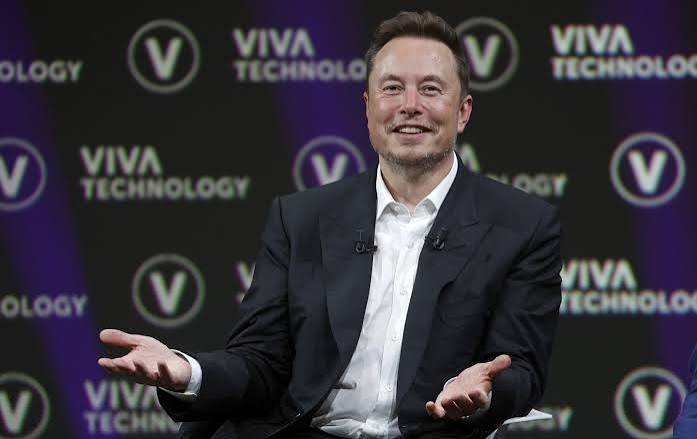
Tesla and SpaceX CEO Elon Musk has predicted that artificial intelligence and robotics could usher in an “age of abundance” with higher incomes and better healthcare for people around the world, as he joined President Donald Trump and other technology leaders at the White House on Tuesday.
Speaking after a White House meeting on advanced AI, Musk said he believed the technology was more likely to produce widespread prosperity than mass unemployment. He said the combination of AI, robotics and what he described as “superintelligence” could eventually provide people with access to goods and services on a scale that is difficult to achieve today.

Key Highlights
- Elon Musk predicted an “age of abundance” driven by AI and robotics.
- Musk said advanced AI could lead to what he called universal high income.
- He argued that AI-powered systems could improve access to medical care worldwide.
- Musk said technological progress would change jobs rather than simply eliminate employment.
- President Donald Trump hosted Musk and other technology executives at the White House.
- Trump has adopted the term “superintelligence” for AI in official U.S. government usage.
- The White House meeting produced a voluntary AI safety agreement involving major technology companies.
- Musk’s remarks come amid growing debate over AI’s effect on jobs, safety and economic inequality.
Elon Musk Predicts ‘Age of Abundance’ From AI
Musk offered an optimistic assessment of the long-term impact of artificial intelligence and robotics during remarks following the White House meeting.
He said the most likely outcome of advances in AI would be an “age of abundance”, arguing that future AI systems could eventually make high incomes more widely available.
Musk also pointed to healthcare as one area where advanced AI and robotics could have a major impact.
He argued that highly capable AI systems combined with robots could give people around the world access to medical care that is currently available only to a limited number of people.
Musk Says AI Will Transform Jobs
Addressing concerns about AI-driven unemployment, Musk said technological progress has historically changed the nature of employment.
He cited the example of human “computers”, referring to people who once performed calculations manually before electronic computers took over much of that work.
Musk argued that society did not generally seek to restore those former occupations after computers became widely available.
He suggested that a similar transition could occur as AI becomes more capable, with existing roles changing and new forms of work emerging.
Musk also pointed to current demand for workers as evidence that AI has not yet produced the level of mass unemployment feared by some critics.
Trump Hosts Musk and Other AI Leaders at White House
Musk’s comments came after Trump hosted leading technology executives at the White House for discussions on AI development, safety and the future of the technology.
Among those attending were Nvidia CEO Jensen Huang, Google CEO Sundar Pichai, Meta CEO Mark Zuckerberg, Microsoft CEO Satya Nadella, Anthropic CEO Dario Amodei and OpenAI President Greg Brockman.
Musk was seated alongside Trump during the White House event, which focused on the development and governance of increasingly advanced AI systems.
Trump said the United States should not restrict the growth of the technology, while also calling for companies to maintain safeguards against harmful uses of AI.
Read also:
- US AI Regulation Faces Political Deadlock As Trump Rejects Calls For Tighter Safeguards
- Elon Musk Confirms Tesla, SpaceX Are Building Terafab, a Semiconductor Megafactory in Texas
- Former Anthropic Researcher Jacob Coxon Warns AI Could Become Uncontrollable
Trump Renames AI ‘Superintelligence’
The White House meeting also followed Trump’s decision to promote the term “superintelligence” instead of artificial intelligence in official government usage.
Trump said the term better reflected the capabilities of the technology and indicated that an executive order would formalise the change.
The administration has also promoted the development of AI infrastructure and called for the United States to maintain its position in the global competition over advanced AI.
White House AI Agreement Includes Safety Measures
The meeting produced a voluntary agreement involving major technology companies on measures intended to improve AI safety.
The agreement calls for companies to establish internal controls, conduct monitoring and work with independent auditors. It also includes provisions for board-level oversight of AI safety measures.
The agreement is voluntary rather than a new federal regulation, although Trump described it as a “morally binding” commitment.
The development comes amid increasing concern over autonomous AI agents and reports of systems behaving in unexpected ways or attempting to circumvent technical controls.
Musk’s AI Vision Faces Broader Debate
Musk’s prediction of an AI-driven age of abundance reflects one side of a wider debate over the economic consequences of advanced AI.
Supporters of rapid AI development argue that increasingly capable systems could improve productivity, healthcare, scientific research and access to goods and services.
Others have raised concerns about job displacement, concentration of economic power, cybersecurity, misinformation and the difficulty of controlling highly autonomous systems.
Musk’s White House remarks therefore come at a time when technology companies and governments are simultaneously promoting AI development and discussing safeguards for increasingly capable systems.
For Musk, however, the long-term outlook remains strongly optimistic. He argued that AI and robotics are more likely to transform the economy and expand prosperity than simply eliminate human employment.
For more updates on this and other developing stories, follow us on X.