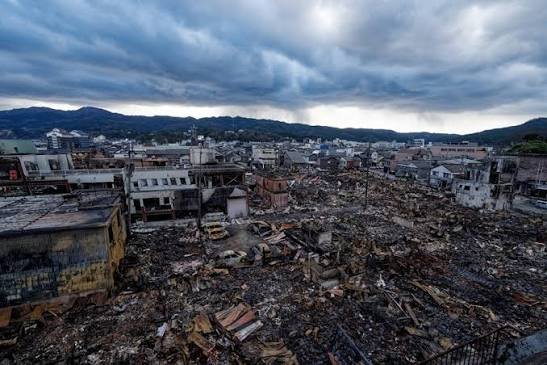
A simple Japanese-style earthquake demonstration is showing why buildings can respond very differently to the same earthquake, with short houses, mid-rise structures and skyscrapers experiencing the strongest movement at different frequencies. The demonstration highlights a key earthquake engineering principle known as resonance, where the frequency of ground motion matches the natural frequency of a building and causes its movement to increase.
Key Highlights
- Buildings do not respond to earthquakes in the same way, even when they are located close to one another.
- Resonance occurs when the frequency of ground motion matches a building’s natural frequency.
- Short, stiff buildings generally respond more strongly to faster shaking.
- Tall, flexible buildings are more affected by slower, long-period ground motion.
- Soil conditions can amplify or prolong certain types of earthquake waves.
- Japan uses seismic resistance, isolation and damping systems to reduce earthquake damage.
- Long-period ground motion can cause skyscrapers to sway for several minutes.
- Furniture and other unsecured objects can become dangerous even when a building’s structural frame survives.
- Large-scale shake-table experiments in Japan have demonstrated how different structures respond to the same earthquake motion.
What the Japanese Earthquake Demo Shows
Imagine three model buildings placed on the same earthquake shake table: a stiff two-storey house, a five- to eight-storey mid-rise building and a tall, flexible tower.

The table is then moved at different frequencies while maintaining a similar level of shaking.
When the table produces fast shaking, typically around 3 Hz and above, the short building can experience violent movement while the taller structures remain relatively calm.
At medium frequencies, the mid-rise building begins to move more dramatically.
When the shaking becomes slow and long-period, below about 1 Hz, the tall tower can begin to sway widely while the short building barely moves.
The reason is resonance.
Every building has a natural frequency at which it prefers to vibrate. When earthquake motion approaches that frequency, each successive movement can add energy to the building’s motion.
The result can be significantly larger movement than would occur at other frequencies.
How Building Height Affects Earthquake Movement
A building’s natural frequency is strongly influenced by its height, stiffness and mass.
As a general engineering rule of thumb, a building’s fundamental frequency can be approximated as about 10 divided by its number of floors. Another simplified relationship puts its natural period at roughly 0.1 seconds multiplied by the number of storeys.
These are only approximations because actual buildings vary considerably in design and construction.
In general, short and stiff structures tend to respond to faster ground motion, while tall and flexible structures tend to respond to slower, longer-period motion.
This explains why two buildings standing beside each other can experience dramatically different movement during the same earthquake.
Why Earthquakes Do Not Shake Every Location the Same Way
Earthquake shaking is not a single frequency.
Real earthquakes produce a combination of different frequencies and wave types. High-frequency energy can be particularly strong near an earthquake source and generally decreases more rapidly with distance than some longer-period components.
Soft soil and deep sedimentary basins can also amplify or prolong certain types of ground motion.
This means a city located far from an earthquake’s epicentre can still experience significant long-period movement.
Tall buildings can be particularly vulnerable to this type of motion because their natural periods are longer.
Read also:
- Death Toll In Colombia’s Biggest Earthquake Rises To 132 As Rescue Operations Intensify
- Devastating Twin Earthquakes Strike Venezuela: 7.5 Magnitude Quake Causes Widespread Destruction, Dozens Confirmed Dead
- 6.0 Magnitude Earthquake hits Japan’s Volcano Islands, no Tsunami warning issued
How the 2011 Tohoku Earthquake Affected Tall Buildings
The 2011 Tohoku earthquake demonstrated the importance of long-period ground motion.
Although Tokyo and other distant locations experienced less severe ground shaking than areas closer to the earthquake source, tall buildings in major cities experienced prolonged swaying.
Skyscrapers can continue moving for several minutes during long-period ground motion.
This creates risks beyond the structural frame itself. Furniture, equipment and other unsecured objects can move or fall, particularly on upper floors.
Japan subsequently strengthened its approach to identifying and communicating long-period ground motion separately from conventional earthquake intensity measurements.
Soil Conditions Can Change Earthquake Damage
The ground beneath a building can significantly influence how earthquake waves behave.
Soft soil and sediment can amplify certain frequencies and extend the duration of shaking.
This creates what engineers sometimes describe as a site effect, where buildings in different locations experience different levels and types of motion even when they are exposed to the same earthquake.
The interaction between earthquake waves, soil conditions and building characteristics can therefore produce highly localised differences in damage.
Two buildings with similar designs can experience different movement if they stand on different ground conditions or if their natural frequencies differ.
How Japan Designs Buildings to Withstand Earthquakes
Japan has developed extensive earthquake engineering practices following major earthquakes, including the 1923 Great Kanto earthquake and the 1995 Kobe earthquake.
The country’s seismic building regulations have evolved significantly over decades. The 1981 revision of Japan’s building standards is widely used as an important dividing line when comparing the seismic performance of older and newer structures.
Modern earthquake protection generally relies on three broad approaches.
Seismic Resistance
Seismic-resistant buildings are designed with structural systems capable of withstanding substantial movement without losing their integrity.
Engineers can use stronger or more ductile frames that allow buildings to deform while reducing the risk of catastrophic collapse.
Seismic Isolation
Seismic isolation separates much of a building’s movement from the ground.
Rubber bearings, sliders and other isolation systems can reduce the transmission of certain ground motions into the structure while increasing the building’s effective vibration period.
Damping Systems
Damping systems are designed to absorb and dissipate earthquake energy.
They include viscous dampers, energy-dissipating braces and tuned mass dampers.
Some tall buildings use enormous pendulum-like tuned mass dampers that move in response to building motion and help reduce sway.
Japan’s E-Defense Shake Table Tests
Japan’s E-Defense facility in Miki, Hyogo, operates one of the world’s largest earthquake shake tables.
The facility has been used to test full-scale structures and structural components against recorded and simulated earthquake motions.
These experiments demonstrate how earthquake movement can be amplified higher up in a building.
They also show that structural survival does not necessarily mean everything inside a building remains safe.
Furniture, equipment and other contents can move violently during strong shaking, creating additional risks for occupants.
Long-period motions are particularly important for high-rise buildings because the upper floors can experience substantially greater movement than the ground.
Why Two Buildings on the Same Street Can React Differently
Two buildings located only a short distance apart can experience very different levels of movement during an earthquake.
The difference can result from the buildings’ height, stiffness, structural design, foundation conditions and natural periods.
The frequency content of the earthquake also matters.
If the dominant period of the ground motion approaches the natural period of a building, resonance can increase the building’s movement.
The phenomenon was dramatically illustrated by the 1985 Mexico City earthquake, when the city’s soft lakebed sediments amplified particular periods of shaking and contributed to severe damage among certain mid-rise buildings.
Japan has also documented cases where long-period basin motion interacts with tall buildings and produces prolonged structural movement.
What Earthquake Resonance Means for Residents
For residents, understanding resonance has practical implications.
A relatively moderate earthquake at street level does not necessarily mean that people on upper floors will experience only mild movement.
Tall buildings can amplify motion toward their upper levels, while unsecured furniture and equipment can become dangerous.
Residents should therefore secure heavy furniture, televisions, shelves and other objects that could fall or move during an earthquake.
People living in high-rise buildings should also understand that long-period earthquake motion can feel very different from the sharp shaking experienced near the ground.
Why Earthquake Frequency Matters
The Japanese TV-style demonstration works because it simplifies a complicated engineering problem into something people can see immediately.
The ground can move at different speeds and frequencies, while buildings have their own natural frequencies.
When those frequencies interact closely, resonance can significantly increase building movement.
That is why a short building may experience violent shaking during one earthquake frequency while a tall tower remains relatively calm, only for the tower to become the dominant mover when the ground motion shifts to a slower, longer period.
The lesson is straightforward: earthquake magnitude alone does not determine how a building will move.
The frequency and duration of the shaking, the building’s design, its height and stiffness, and the soil beneath it all influence the outcome.
For earthquake-prone cities, understanding that interaction is a central part of designing safer buildings and preparing residents for what different types of earthquake motion can actually feel like.
Follow us on X for more science and global news.