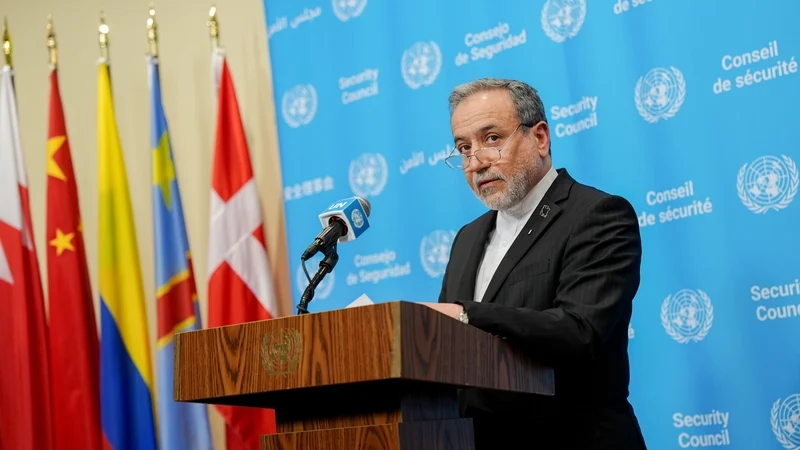
Iran says it has sent Washington a seven-day plan to reopen the Strait of Hormuz and halt fighting across the region, with messages conveyed through Qatar. The Wall Street Journal has reported that President Donald Trump rejected the proposal, citing unnamed U.S. officials, while Tehran says it is awaiting an official U.S. response.
Key Highlights
- Iranian Foreign Minister Abbas Araghchi said the plan was sent to Washington through Qatar.
- The proposed seven-day timeline would begin if the United States accepts Iran’s conditions.
- Iran says the plan would lift the U.S. blockade on Iranian ports, waive oil sanctions, release frozen Iranian funds and pause regional hostilities.
- Iran would reopen the Strait of Hormuz and begin wider talks, including on its nuclear programme.
- The proposal echoes a June memorandum of understanding that collapsed after a brief ceasefire.
- The reported U.S. rejection has not been confirmed in a public response; Iran says it is still waiting for Washington.
Iran Says Hormuz Could Reopen Within Seven Days
Araghchi told reporters in New York during the United Nations General Assembly that Iran had conveyed a “concrete seven-day plan” to the United States through Qatar. He said the countdown would start once Washington accepted the proposal.

Under the timeline described by Araghchi, initial steps would take four to five days, the Strait of Hormuz would reopen on the sixth day and talks on a final agreement would begin on the seventh. The discussions could include Iran’s nuclear programme.
“The choice now rests with the United States,” Araghchi said, adding that Iran was prepared to move if Washington was serious about reaching a deal and reopening the waterway.
Plan Includes Blockade, Sanctions and Ceasefire Terms
Araghchi said the proposal drew on a memorandum of understanding reached in June. Iran’s stated conditions include lifting the U.S. naval blockade of Iranian ports, waiving sanctions on Iranian oil sales, releasing frozen Iranian funds and ending hostilities across the region, including in Lebanon and Yemen.
In return, Tehran says it would reopen the Strait of Hormuz and start wider negotiations. The plan’s terms and sequence are described in Al Jazeera’s report on the seven-day roadmap.
The June understanding had set a period for negotiations after a ceasefire, but it later collapsed as fighting resumed and disputes over the strait continued.
Trump’s Rejection Reported, Iran Awaits Official Reply
The Wall Street Journal reported that Trump had rejected the proposal, citing unnamed U.S. officials who said he doubted Tehran would meet Washington’s demands. Reuters reported that Iran was still awaiting an official U.S. response, and that a U.S. official had earlier described discussions through mediators as “positive and constructive.”
The reported rejection has not been announced publicly by the White House. Iranian President Masoud Pezeshkian has said Tehran is prepared for talks on its nuclear programme and other issues but will not accept what he calls coercion.
Reuters’ latest report says Tehran is awaiting Washington’s move after the Journal’s account of Trump’s decision.
Strait of Hormuz Is a Critical Energy Route
The Strait of Hormuz is a key shipping passage between the Persian Gulf and the Gulf of Oman. Before the conflict, about one-fifth of the world’s traded oil and gas passed through the route, making prolonged disruption a concern for energy supplies, shipping and prices.
Iran’s proposal links the reopening of the waterway to the wider military and diplomatic confrontation. The next steps depend on whether Washington responds to the plan and whether the two sides can agree on the conditions for a ceasefire and further talks.
Follow us on X for updates.
Read also:
- Iran Writes Trump, Proposes 10-Day Ceasefire With Deal
- Strait Of Hormuz Will Soon Become US Territory – Trump
By Paul Joseph