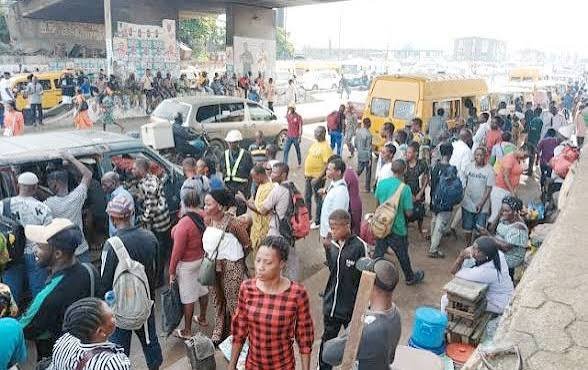
Commuters in Abuja and Ibadan are facing higher transportation costs as commercial drivers contend with rising fuel prices, vehicle maintenance expenses, park levies and other operating costs. Drivers in both cities say the increased cost of running their vehicles is making it difficult to maintain previous fares, leaving commuters with a larger share of their income going towards daily transportation.
Key Highlights
- Transport fares have increased on some routes in Abuja and Ibadan as operating costs rise.
- An Ibadan Micra driver said fares on the Akobo-Ojurin to Iwo Road route rose from about ₦200 in March to ₦300, with higher fares sometimes charged during rainfall or fuel scarcity.
- The driver estimated that a 9.3km return journey consumes about 1.4 litres of petrol.
- An Abuja transport operator said some commercial drivers now spend between ₦15,000 and ₦20,000 daily on fuel, compared with about ₦10,000 to ₦13,000 previously.
- Commuters in Abuja and Ibadan are reportedly spending more on daily transportation.
- Drivers say maintenance, tyres, engine oil, loading fees and park levies are also contributing to higher fares.
- Operators called for wider access to CNG, affordable vehicle conversion and stronger mass-transit systems to reduce transport costs.
Ibadan Transport Fares Rise
In Ibadan, a commercial Micra driver identified as Baba Fridaus, who operates on the Akobo-Ojurin to Iwo Road route, said fares had increased from about ₦200 in March to ₦300.

He said passengers could pay as much as ₦400 when it rains or when petrol becomes difficult to obtain.
“Before for March, we dey collect N200, sometimes N250. Now na N300, N400 if rain fall or fuel scarce small. If you ask passenger, dem go say we wicked,” he said.
Fridaus estimated that a one-way journey of about 9.3km consumes approximately 0.7 litres of petrol in his Micra.
Using the ₦1,380 per litre price he cited, the estimated fuel cost for the journey is about ₦966. A return trip requiring approximately 1.4 litres would therefore cost about ₦1,932 in fuel.
“To and fro na N2k daily,” he said.
The estimate represents the fuel cost for that particular return journey and does not represent a driver’s total daily fuel expenditure, which would depend on the number of trips made.
Maintenance And Park Charges Add To Costs
Fridaus said fuel was only one part of the rising cost of operating a commercial vehicle in Ibadan.
“Engine oil wey be N6k don be N9k. Tokunbo tyre na N40k now. For Iwo Road park alone, I dey pay N2,500 daily – Owo loading, chairman ticket, local government,” he said.
He added that vehicle repairs could further reduce a driver’s daily earnings.
“If motor spoil for that Akobo pothole, na my pocket. If I carry N300, after fuel and all those owo, wetin remain to take go house?” he asked.
Fridaus estimated that a commuter travelling to and from work on his route could have spent about ₦30,000 monthly on transportation in March but now spends between ₦38,000 and ₦40,000.
“That person wey dey go come daily, for March e dey spend like N30k monthly for transport if e enter Micra. Now na N38k to N40k. Extra N10k just comot for food money. Na why some people don dey trek half of the road now,” he said.
Read also:
- October 1 Transport Fare Cut: How Prepared Are FG, States for Nationwide Rollout?
- Dangote Refinery Announces Plans To Harmonise Petrol Prices Across Nigeria
- Dangote Explains Why Petrol Remains Expensive in Nigeria
Abuja Drivers Also Face Higher Fuel Costs
Commercial transport operators in Abuja are facing similar pressure.
A motor park agent who operates in Gudu told The Trumpet that some commercial drivers now spend between ₦15,000 and ₦20,000 on fuel daily, depending on their vehicle, route and number of trips.
According to the operator, some drivers previously spent between ₦10,000 and ₦13,000 per day on fuel.
The Abuja figures represent total daily fuel expenditure, unlike the Ibadan estimate, which relates specifically to the fuel required for a particular 9.3km return journey. The figures therefore cannot be directly compared.
The Abuja operator said that after fuel, maintenance, loading fees, park levies and other expenses, some drivers may be left with between ₦8,000 and ₦12,000 on an average day.
He added that earnings could be lower when passenger traffic is poor or when vehicles develop mechanical faults.
Abuja Commuters Pay More
The operator also estimated that some Abuja commuters who previously spent between ₦1,000 and ₦1,500 daily on transportation could now spend between ₦1,500 and ₦2,500, depending on their routes and the number of journeys made.
He said transport operators were not necessarily increasing fares solely because of petrol prices.
According to him, other expenses such as vehicle maintenance, park charges and loading fees had also increased.
He added that even if petrol prices declined, transport fares might not immediately return to previous levels because other operating costs would remain high.
Drivers Seek CNG, Mass Transit Support
Both operators identified wider access to Compressed Natural Gas, or CNG, and stronger government-backed mass transportation as possible ways to reduce pressure on commuters.
Fridaus questioned whether the Federal Government’s CNG programme had reached enough ordinary commercial drivers in Ibadan.
“Government talk say dem bring CNG. Where CNG for Ibadan? Dem say conversion na N400k – N600k. Where I wan see am?” he asked.
He argued that lower conversion costs would help drivers reduce their operating expenses.
“If FG fit make am N50k, my cost go drop, because CNG na N230 per litre, no be N1,400,” he said.
The Abuja operator similarly called for greater access to CNG and expanded mass transportation, saying affordable buses could provide commuters with alternatives while encouraging private transport operators to review fares.
Call For More Buses In Ibadan
Fridaus specifically called for the deployment of more mass-transit buses in Ibadan.
“Make dem do two things. One, bring CNG buses wey go dey work for real, no be for TV. Put 200 BRT for Ibadan – Akobo to Iwo Road, Ojoo to Challenge. Passengers go get choice, we self go force to reduce price,” he said.
He also called for an end to what he described as multiple daily park charges.
“Make dem stop all this multiple ticket for park. One ticket per day. If dem remove that N2,500 wey I dey pay daily, I fit carry N250 again.”
The Abuja operator also identified lower fuel costs, reduced levies and stronger mass-transit infrastructure as measures that could ease pressure on transport fares.
Further Fuel Price Increases Could Push Fares Higher
Fridaus warned that commuters could face another fare increase if petrol prices rise further before the end of the year.
“If Dangote increase again reach N1,500 for pump as dem dey talk, na N500 fare be that,” he said.
He, however, said lower-cost CNG conversion could reverse some of the pressure.
“If government do that CNG conversion truly, fare fit come down to N250. Na there we dey.”
The experiences of commuters and drivers in Abuja and Ibadan illustrate the pressure facing Nigeria’s urban transportation system as fuel, maintenance and other operating expenses increase.
While drivers say higher fares are necessary to remain in business, commuters are confronting higher daily costs that could further reduce the money available for food and other household needs.
The immediate challenge for policymakers is how to reduce the cost of operating public transportation while expanding affordable alternatives for commuters. Current pump price trends can be tracked via the NNPC.
Follow us on X for more updates on transport costs across Nigeria.