The Nigeria Democratic Congress (NDC) has said a government led by its presidential candidate, Peter Obi, would adopt measures to reduce petrol prices, including investing in government-owned refineries and increasing domestic fuel production.
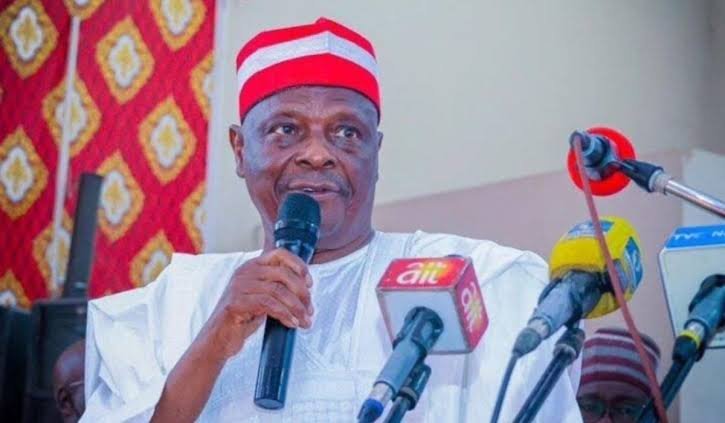
NDC Vice-Presidential candidate, Rabiu Kwankwaso, disclosed this in an interview with Arise TV on Tuesday, amid renewed debate over petrol subsidy and fuel prices ahead of the 2027 presidential election.

Key Highlights
- NDC says it would consider government investment in refineries to reduce petrol prices.
- Rabiu Kwankwaso says the party would introduce its own form of petrol subsidy.
- The NDC says increasing domestic refining could help lower the cost of petrol.
- Kwankwaso criticised the timing and implementation of petrol subsidy removal in 2023.
- The Tinubu administration has maintained that the subsidy was financially unsustainable.
- Petrol prices and the cost of living remain major issues in the political debate ahead of the 2027 elections.
NDC Proposes Government Investment In Refineries
Kwankwaso said the NDC would introduce what he described as a different form of subsidy by ensuring that petrol is produced domestically and made available to Nigerians at what the party considers a reasonable price.
u201cWe are bringing subsidy in our own way,u201d the former Kano State governor said when asked how the NDC intended to address calls for the return of petrol subsidy.
According to Kwankwaso, one of the measures would involve government investment in refineries, such as those operated by NNPC Limited, to boost domestic production and reduce the cost of petrol.
u201cNow we have a refinery built by a businessman, and Iu2019m sure more refineries would be built.
u201cNow, if individuals in this country could build refineries, I see no reason why government, under certain circumstances, will not build a refinery or refineries to the extent that we achieve the minimum requirement,u201d he said.
Kwankwaso said the objective would be to ensure that Nigerians could buy petrol at affordable prices.
u201cWhat is the minimum requirement? The minimum requirement is for the people across the country to go to the filling stations and buy fuel at a reasonable price.
u201cWe, in the NDC, will do whatever it takes, really, to put the price of oil down,u201d he said.
Read also:
- NDC Supporters Attacked During Political Rally in Warri, Delta State
- INEC Releases Final List of 18 Presidential Candidates for 2027 Election
- Removal of Petrol Subsidy Defining Pillar Of Renewed Hope Agenda – Minister
Kwankwaso Criticises Tinubuu2019s Subsidy Removal
Kwankwaso also criticised the manner in which President Bola Tinubuu2019s administration removed the petrol subsidy after taking office in May 2023.
Tinubu announced the end of the petrol subsidy during his inauguration on May 29, 2023, declaring that u201csubsidy is gone.u201d
The policy was followed by a significant increase in petrol prices, with higher transportation costs and rising prices of goods and services becoming major economic concerns.
Kwankwaso argued that although the three major presidential candidates in the 2023 election had campaigned on subsidy removal, Tinubu implemented the policy immediately after assuming office.
u201cOf course, among the three of them, Bola Tinubu decided to do so and removed the subsidy. And the consequences that we thought would happen, certainly happened,u201d he said.
He added that the policy was implemented without sufficient consideration of its potential effects.
u201cAnd not only he decided to remove the subsidy, what he did was to remove it immediately, in fact, day one, without looking at all those possible issues that were associated with that. And thatu2019s how we find ourselves in this total mess, economically,u201d Kwankwaso said.
FG Defends Petrol Subsidy Removal
The Tinubu administration has maintained that the petrol subsidy had become financially unsustainable and that its removal would allow government resources to be redirected to other areas of the economy.
Kwankwasou2019s comments come amid renewed political debate over petrol pricing, domestic refining and subsidy policy ahead of the 2027 general elections.
Opposition parties and presidential aspirants have continued to propose different approaches to reducing the impact of fuel costs on households and businesses. Follow us on X for more updates.
Related Stories: