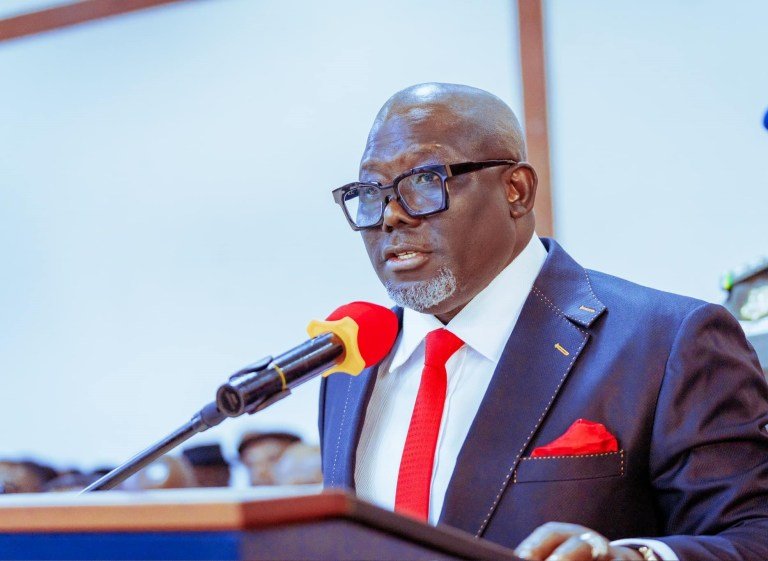
Delta Governor, Sheriff Oborevwori, has challenged tertiary institutions in the state to move beyond producing certificate holders and focus on developing competent graduates, impactful research and solutions to societal challenges.
Commissioner for Higher Education, Prof. Nyerhovwo Tonukari, gave the charge on behalf of Governor Oborevwori, while delivering a lecture titled: “Repositioning Tertiary Institutions for National Development and Institutional Responsibilities,” at the 3rd Delta State Higher Education Summit.

He said the state has witnessed remarkable expansion in tertiary education, with four state-owned universities, three polytechnics and two colleges of education, alongside federal and private institutions operating across the state.
According to him, student enrolment in state-owned tertiary institutions has risen from slightly above 50,000 in 2023 to more than 100,000, while the Oborevwori administration has employed over 1,250 academic and non-academic staff.
He said the government has also invested heavily in faculties, laboratories, administrative buildings, hostel accommodation and accreditation, while supporting selected federal and private institutions with infrastructure and other interventions.
Read also:
- Isoko Electricity Revival: Oborevwori Launches Major Power Projects to End Years of Blackout
- Governor Oborevwori, Okowa Not Opposed to Anioma State Creation – Aide
- Gov. Oborevwori attributes achievements to harmonious relationship between executive, legislature
The governor said the administration’s investment reflects Governor Oborevwori’s commitment to human-capital development, stressing that increased access must now translate into measurable impact.
He identified graduate employability as one of the major responsibilities of tertiary institutions, urging them to align curricula with the realities of the modern economy and equip students with digital, entrepreneurial, communication and critical-thinking skills.
Governor Oborevwori called for stronger partnerships between institutions and industry, saying entrepreneurship centres and the Students Industrial Work Experience Scheme (SIWES) should provide practical experience capable of preparing students for employment and enterprise.
He also urged universities and other institutions to prioritise research that addresses challenges in agriculture, environmental degradation, flooding, healthcare, fisheries, agro-processing and economic diversification.
The governor said research should no longer end on library shelves but should translate, where possible, into patents, products, technologies, services and policies capable of benefiting government, industry and communities.
He advocated institutional specialisation, saying each tertiary institution should identify areas in which it could develop national or international recognition instead of attempting to excel in every field.
The governor cited the potential of Delta State University, Abraka, to strengthen its research profile; Southern Delta University, Ozoro, to develop technology hubs; Delta State Maritime Polytechnic, Burutu, to focus on maritime and blue economy development; and the College of Education, Mosogar, to deepen sports education.
On artificial intelligence, Oborevwori said institutions must embrace digital transformation while ensuring that technology does not undermine critical thinking, creativity, ethics and academic integrity.
He urged tertiary institutions to explore additional revenue through research grants, consultancy, professional programmes, alumni endowments, intellectual property, commercial ventures and carefully structured public-private partnerships.