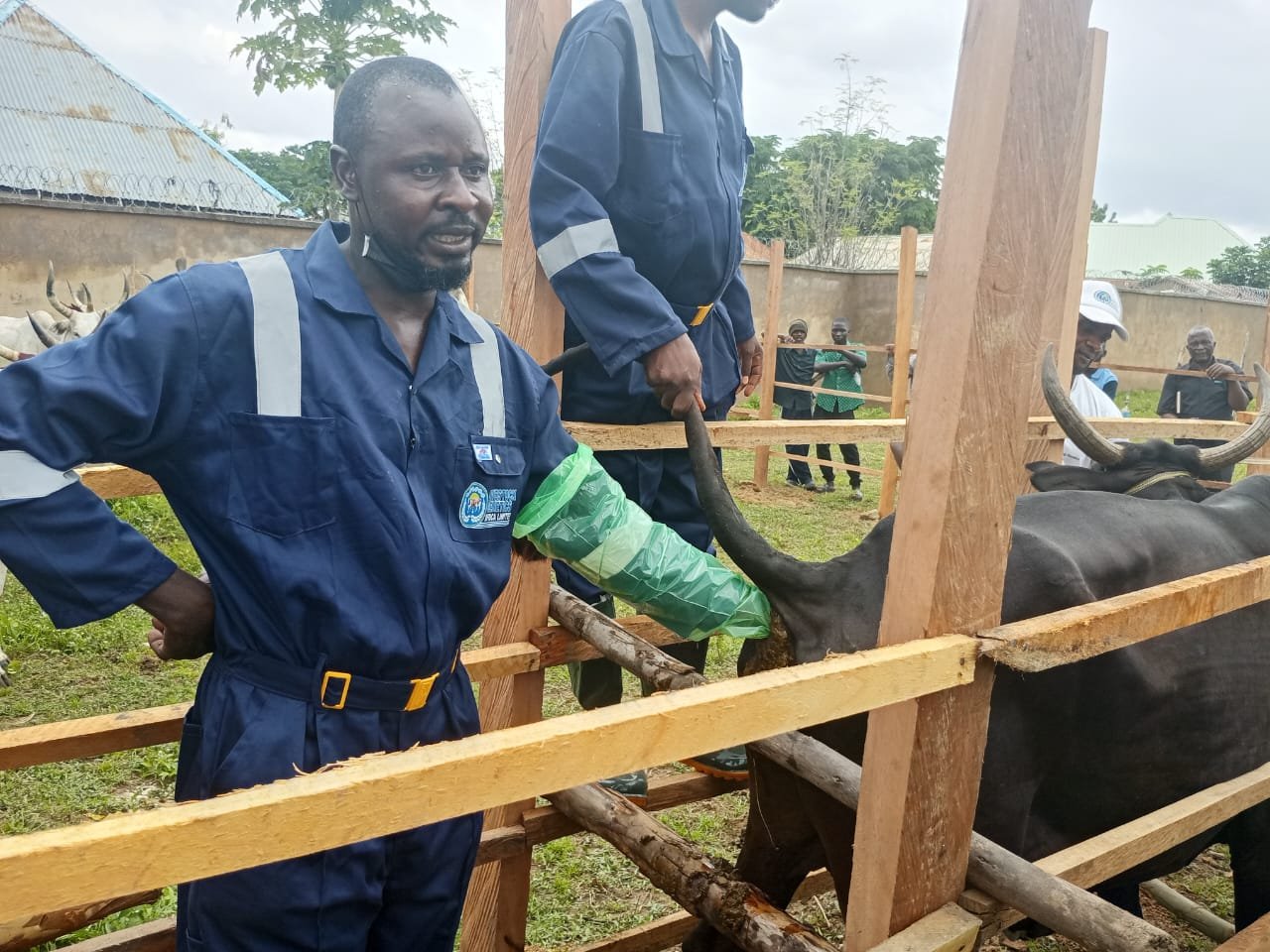
The Taraba State Government has launched a statewide artificial insemination programme aimed at improving cattle genetics, increasing livestock productivity and strengthening the resilience of the state’s livestock sector.

Key Highlights
- Taraba launches statewide artificial insemination programme for cattle.
- Initiative targets improved milk and meat production and higher farmers’ incomes.
- L-PRES and Livestock Genetic Africa are supporting the programme.
- Superior cattle genetics will be made available to livestock farmers across the state.
- TALDEC urges livestock keepers to embrace modern breeding techniques.
- Programme is expected to strengthen food security and the livestock economy in Taraba.
The programme is being implemented under the Livestock Productivity and Resilience Support Project (L-PRES), in collaboration with Livestock Genetic Africa. It was formally launched at a ceremony attended by livestock stakeholders, government officials and representatives of the Taraba State Livestock Development Commission (TALDEC).
The initiative is designed to move cattle production away from predominantly traditional breeding practices by giving livestock farmers access to superior genetics that can improve the productivity and profitability of their herds.
Artificial insemination to improve cattle genetics
Speaking at the event, the L-PRES State Project Coordinator, Hananiah G. Albert, said artificial insemination would enable livestock farmers to access the genetic potential of superior bulls without the financial and logistical burden of owning or maintaining breeding bulls.
He said the use of quality semen could improve key traits in cattle, including milk production, growth rate, fertility, disease tolerance, adaptability and overall productivity.
Albert described the programme as an important step towards transforming livestock production in Taraba into a more productive, profitable, resilient and sustainable industry.
According to him, improved cattle productivity would also have wider economic and social benefits through increased farmers’ incomes, greater availability of milk and meat, stronger household livelihoods and improved food and economic security.
Programme to cover livestock clusters across Taraba
Albert said the artificial insemination programme would be implemented through identified livestock clusters and other strategic locations across the state.
Read also:
- 2027: Unresolved Primary Grievances Test APC Unity in Taraba
- Taraba Pledges Support For Take Off Of Army’s 10 Division, Offers Land, Infrastructure
- Accord’s Guber Candidate Unveils Agriculture Development Plan To Create Jobs, Boost Taraba’s Economy
Animal husbandry and health personnel will provide technical support in collaboration with consultants to ensure the programme is properly implemented.
He urged livestock farmers to participate actively by making their animals available at the appropriate time, providing accurate information about their cattle and complying with guidance from animal health and production professionals.
Albert said the initiative was designed to establish a sustainable genetic improvement system capable of transforming Taraba’s livestock industry.
He expressed optimism that the programme would provide a foundation for continuous cattle genetic improvement and contribute to the long-term development of the state’s livestock sector.
TALDEC backs livestock modernisation
The Chairman of TALDEC, Dr Dauda Abubakar M., described the programme as an important intervention that could increase milk and meat production, improve farmers’ incomes and strengthen the livestock industry.
Abubakar commended the L-PRES Project Implementation Unit and its technical partners for introducing the programme and urged livestock keepers across Taraba to take advantage of the opportunity.
He reaffirmed TALDEC’s commitment to supporting initiatives aimed at modernising livestock production, improving animal productivity and enhancing the livelihoods of livestock-keeping communities.
The TALDEC chairman stressed that the success of the programme would depend on effective collaboration among government agencies, L-PRES, animal health and husbandry professionals, livestock associations and farmers.
Programme targets food security and economic growth
The intervention comes amid growing efforts to improve livestock productivity as part of measures to strengthen food security and create sustainable economic opportunities for farming and pastoral communities.
By improving the genetic characteristics of cattle, the programme is expected to help farmers produce animals with better milk and meat yields, fertility, growth rates, adaptability and resistance to diseases and environmental pressures.
Albert acknowledged the support of the Taraba State Government, the Federal Ministry of Livestock Development, the World Bank and other development and technical partners involved in the programme.
Other stakeholders at the launch, including the Taraba State Chairman of the Miyetti Allah Cattle Breeders Association of Nigeria, Alhaji Ya’u Ibrahim, and representatives of Livestock Genetic Africa, also urged pastoral farmers to embrace artificial insemination.
They said wider adoption of the technology would give livestock farmers an opportunity to improve the quality and productivity of their herds while increasing the economic value of cattle production across Taraba.
With the programme now underway, its success will depend on effective implementation across livestock clusters, farmer participation and the ability of technical teams to deliver the expected genetic improvements.
If sustained, the intervention could mark a significant shift in Taraba’s livestock sector, moving cattle production beyond traditional breeding practices towards a more modern, commercially viable and resilient system.