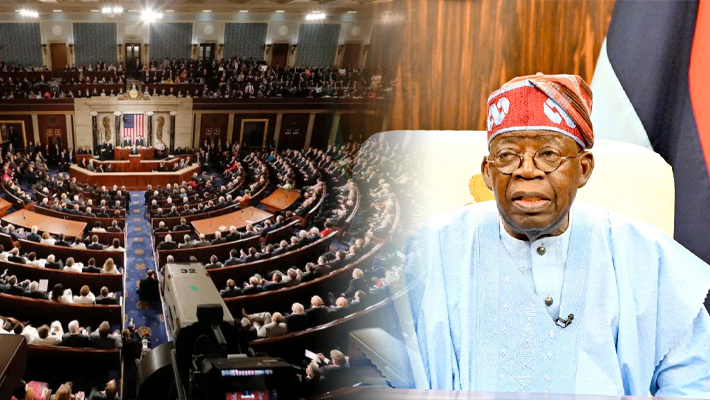

A United States federal judge has given the U.S. Department of Justice (DOJ) four additional days to comply with an order concerning records held by the DOJ, Federal Bureau of Investigation (FBI) and Drug Enforcement Administration (DEA) relating to past investigations involving President Bola Tinubu.
Key Highlights
- US Judge Beryl Howell set August 21, 2026, as the new deadline for compliance.
- U.S. Attorney for the District of Columbia Jeanine Pirro had sought an additional 10 days.
- The court reportedly granted only four additional days.
- The records are linked to past U.S. investigations involving allegations concerning Tinubu.
- Tinubu has consistently denied wrongdoing and rejected allegations linking him to drug trafficking.
- The records could reignite political debate ahead of Nigeria’s 2027 general elections.
According to Von Batten-Montague-York, a U.S.-based policy advisory and lobbying firm retained by former Vice President Atiku Abubakar, Pirro asked the federal court for additional time to comply with the disclosure order.
Judge Howell reportedly declined to grant the full 10-day extension requested by Pirro and instead set August 21 as the new deadline. The judge also noted that the case had been pending for more than three years, according to reports on the proceedings.
The lobbying firm welcomed the development and commended the U.S. Attorney’s Office and the Justice Department for moving towards compliance with the court order. It also called for the records to be made public once the deadline expires.
What the Tinubu Records Concern
The documents being sought are reportedly connected to past U.S. investigations and allegations involving Tinubu and suspected drug-trafficking activities. The records reportedly involve agencies including the DOJ, FBI and DEA.
Tinubu has consistently denied wrongdoing and rejected allegations linking him to drug trafficking.
Read also:
- Osun Election: Davido Mocks APC Over Heavyweight Mobilisation
- Osun Election: Davido Takes Fresh Swipe at Critics, Reacts to Fadahunsi Controversy
- Osun Election: Adeleke Campaign Calls for Police Investigation Over Fadahunsi’s Alleged ‘Kill’ Remark
The controversy dates back to a U.S. federal investigation in the 1990s involving a Chicago-based heroin-trafficking network. Previous reports have linked a $460,000 asset forfeiture involving Tinubu to that investigation.
According to records cited in previous reports, U.S. authorities investigated a narcotics network allegedly operated by Chicago-based traffickers Adegboyega Mueez Akande and Abiodun Agbele. The investigation concerned alleged heroin trafficking into Illinois between 1988 and 1991.
The investigation also examined funds deposited into U.S. bank accounts reportedly opened or controlled by Tinubu.
In January 1992, U.S. authorities obtained a court order freezing accounts containing more than $1.4 million allegedly connected to Tinubu. Investigators subsequently examined the source of the funds and whether they were consistent with his legitimate income at the time.
$460,000 Forfeiture Dispute
The matter was eventually resolved through an out-of-court agreement. On October 4, 1993, the U.S. District Court for the Northern District of Illinois ordered the forfeiture of $460,000 held in an account at First Heritage Bank in Tinubu’s name to the U.S. government.
Tinubu’s legal representatives and political associates have repeatedly disputed any suggestion that he was convicted of a drug offence in the United States.
They have maintained that the proceedings constituted an in rem civil forfeiture case, meaning the action was brought against the money rather than Tinubu personally, and that he was never criminally convicted of drug trafficking in the United States.
Earlier reporting has also noted that some of the underlying FBI and DEA material has previously entered the public domain.
Records Could Renew 2027 Political Debate
The anticipated release of additional DOJ, FBI and DEA records could provide further information about the investigations and the U.S. authorities’ handling of the matter.
The development is likely to attract renewed political attention in Nigeria as parties and politicians prepare for the 2027 general elections.
The records, however, should not be treated as proof of criminal wrongdoing unless their contents establish such a finding. The existing dispute includes a distinction between civil asset forfeiture proceedings and a criminal conviction.