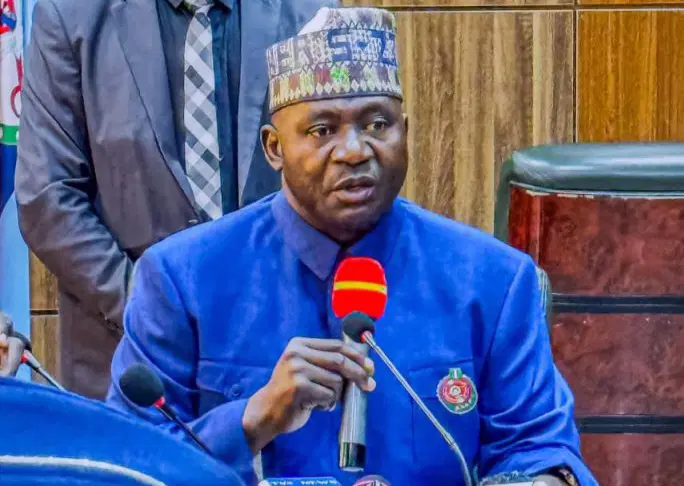
The Minister of Defence, Gen. Christopher Musa (rtd) has warned security agencies against waiting until the eve of elections before making security arrangements, saying effective protection of the electoral process requires months of intelligence-driven planning.
Musa made the call on Tuesday, while delivering the keynote address at a security seminar organised by Blueprint Newspaper.

The minister said election security must be treated as a continuous process, rather than a one-day operation, with preparations beginning long before campaigns and continuing beyond the announcement of results.
He said: “Successful election security is not achieved through last-minute deployments. It is achieved through months of planning, intelligence-led operations, inter-agency coordination, effective communication and continuous assessment of emerging threats.”
According to Musa, the changing security landscape means authorities can no longer focus solely on protecting polling units and preventing physical attacks on election day.
Read Also:
- Former Sports Minister Solomon Dalung shares his encounter with Bandit on TikTok
- Alleged N33.8bn fraud: Ex-minister made his confessional statement willingly, witness tells court
- Kuteb Elders Forum slams T.Y. Danjuma over call for armed self-defense
- FCCPC Probes Cement Prices As 50kg Bag Costs Less In Kenya, Togo
- 2Baba’s Wife Natasha Emerges Edo Assembly Minority Leader
- Oborevwori Constitutes Governing Councils for Three Delta Universities
- Bayelsa Resolves Lingering Inter-Agency Feud Among Revenue Generating MDAs
- FG, State, LG Share N3.007tn July Revenue as Federation Statutory Collections Rise 17.8%
He identified cyberspace, misinformation, economic hardship and the manipulation of ethnic and religious divisions as emerging threats capable of disrupting elections and weakening public confidence.
The minister warned that an election could be undermined without a single physical attack, as anonymous actors online could manipulate information and create distrust in electoral institutions.
To address these challenges, Musa proposed a six-pillar framework for election security, beginning with strategic intelligence.
He called for stronger threat assessments, early-warning systems and real-time information sharing among security, intelligence and electoral institutions.
He also stressed the need to protect electoral technology, communication networks and information platforms from cyberattacks, digital sabotage and other forms of interference.
Civil-military coordination was identified as another critical pillar, with Musa urging security agencies to respect their constitutional roles while improving interoperability and joint planning.
He further advocated unified strategic communication, warning that delayed or inadequate official information could create room for misinformation to thrive.
Musa said responsible information sharing and citizen engagement were equally important, stressing that the government could not tackle misinformation alone.
He urged the media, technology companies, civil society organisations, educational institutions and citizens to promote fact-based public discourse and reject narratives capable of inciting violence or undermining democratic institutions.
Former Zamfara State Governor, AbdulAziz Yari, who also spoke at the event, cautioned politicians against using insecurity as a strategy to gain public support.
Yari described insecurity as a national problem that required collective action beyond government and security agencies.
Reflecting on his tenure as governor between 2011 and 2019, he said the country has continued to grapple with security challenges under successive administrations, urging political actors to approach the issue with fairness and responsibility.