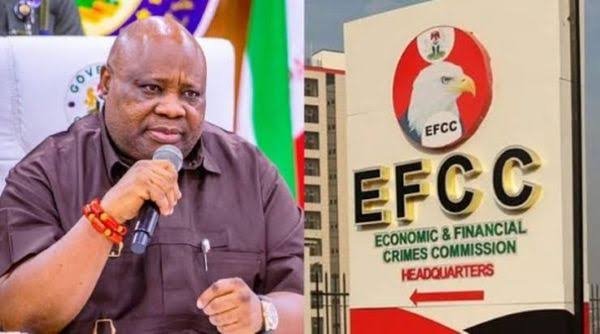
President Bola Ahmed Tinubu has ordered the Economic and Financial Crimes Commission (EFCC) to immediately approach the court to vacate an order freezing Osun State Government accounts and to discontinue related actions, citing the sensitive timing just days before the state’s governorship election. He also personally telephoned Governor Ademola Adeleke on Thursday, August 6, 2026, to inform him of the directive.

The development follows the EFCC’s move on August 5, when the anti-graft agency obtained a court order restricting the state’s accounts, reportedly including a salary account with First Bank, over an ongoing investigation into alleged fraudulent handling of about ₦11 billion in Ecology Funds, Intervention Funds, and Federation Account Allocation Committee (FAAC) allocations.
The probe, which the EFCC said began in March 2026, involved questioning of state officials, including the Accountant General. The commission stated it acted after detecting large transfers from the accounts to various corporate entities starting August 2, describing the freeze (via a Post-No-Debit order) as necessary to prevent the looting of public funds and unrelated to the election.
Read Also:
- Former Finance Minister Kemi Adeosun Loses Husband At 62
- Osun Election: Davido Urges Voters to Reject Violence, Intimidation
- EFCC Explains Why It Froze Osun State Government Accounts Amid ₦11bn Probe
- Osun State Accounts Restricted Again Over $13.9m Gamji Arbitration Award
t
Governor Adeleke strongly condemned the action as illegal and politically motivated, aimed at paralyzing government operations ahead of the August 15, 2026, governorship poll. In a press conference, he claimed the freeze occurred without a court order (a point later clarified by reports of the subsequent court order), described it as turning Nigeria’s democracy into “a huge joke,” and instructed the state’s Attorney General to challenge it at the Federal High Court in Osogbo. Adeleke also linked the move to broader alleged harassment of his supporters.
In a personally signed statement issued from Aso Rock Villa on August 6, President Tinubu expressed deep embarrassment, not over the EFCC’s exercise of its mandate under a court order, but over the timing. He noted that actions by federal institutions are often attributed to the presidency even without his prior knowledge.
While affirming his long-standing policy of allowing anti-corruption agencies to operate independently without political interference, he said the proximity of the Osun election made the action “inauspicious.”
“Osun State is only a few days away from its gubernatorial election. Therefore, nothing ought to be done to give an impression that the EFCC or indeed any other agency of the federal government is being used to interfere with the election,” Tinubu stated.
He directed the EFCC to vacate the order and discontinue the related action “in consonance with the overriding public interest in preserving public confidence and the integrity, credibility, and fairness of our democratic process.”
Special Adviser to the President on Information and Strategy, Bayo Onanuga, confirmed that Tinubu spoke with Adeleke by phone to convey the directive to lift the restriction on the Osun State Government account.
The intervention comes amid heightened political tensions in Osun, where Adeleke (running under the Accord Party after earlier PDP affiliations and reported realignments) seeks re-election.
The EFCC has maintained that its investigation and preventive measures were purely about safeguarding public funds, while critics of the freeze, including the state government, viewed the timing as potentially disruptive to governance and the electoral process.
Tinubu’s directive highlights the delicate balance between independent anti-corruption enforcement and the need to avoid perceptions of federal interference in state-level elections. As of the statement’s issuance, the EFCC was expected to comply by returning to court.