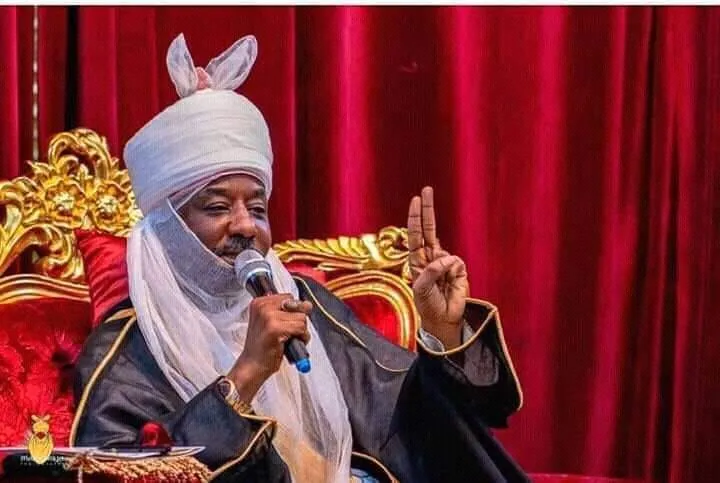
The Emir of Kano and former Central Bank of Nigeria (CBN) Governor, Muhammadu Sanusi II, has declared that Nigeria’s economy is now expanding faster than its population growth rate for the first time in years, crediting the apex bank’s monetary reforms with restoring macroeconomic stability and curbing inflation.
Sanusi made the remarks while speaking at the ongoing 31st Nigerian Economic Summit in Abuja. In comments captured in a widely circulated video, the monarch and former banker praised the CBN’s efforts to tighten monetary conditions after a period of excess liquidity and macroeconomic turbulence.

“I have nothing but positive words for what the Central Bank has done. We are coming from the background of a very high level of instability as a result of loose money and uncontrolled growth in money supply. The Central Bank has taken one year to mop up all that money,” Sanusi said. He added: “This is the first time that this economy will be growing faster than the population.”
The statement underscores a potential shift toward rising per capita income, as economic output begins to outstrip Nigeria’s population growth rate, estimated at around 2.1–2.5 percent annually. For years, population expansion had exceeded GDP growth, limiting improvements in living standards for many Nigerians.
Read also:
- CBN Unveils Real-Time Monitoring Platform For BDCs, Tightens Forex Market Regulations
- CBN Revokes Licences Of 46 Microfinance Banks Over Regulatory Breaches
- CBN Orders Banks To Freeze Accounts Linked To Terror Financing Suspects
- Nigeria’s Economic Recovery Gains Momentum As CBN PMI Rises To 53.0 In September
Sanusi’s comments come against a backdrop of sustained policy tightening under the current CBN leadership. The bank has retained its Monetary Policy Rate (MPR) at 26.50 percent for the second consecutive time, aiming to further reduce inflation, which stood at 15.91 percent in June 2026.
Earlier remarks by Sanusi in 2025 had similarly highlighted progress, including GDP growth exceeding 3 percent in the first quarter and more than 4 percent in the second quarter of that year, alongside declining inflation from previous peaks near 30–34 percent, stabilized exchange rates, and foreign reserves climbing above $40 billion. He has described these developments as pulling the economy back from the brink of collapse, while noting that high interest rates remain a necessary short-term cost of restoring order.
As a former CBN governor who oversaw major banking sector reforms during his tenure, Sanusi’s endorsement carries particular weight. He has consistently emphasized the primacy of monetary stability as a foundation for sustainable growth, while also urging broader structural reforms in areas such as fiscal discipline, governance costs, agriculture, power, and support for small and medium enterprises to ensure more inclusive benefits.
Analysts note that sustained GDP growth above population expansion could mark an early step toward reducing poverty, though challenges including still-elevated inflation, infrastructure deficits, and the need for higher double-digit growth rates to meaningfully tackle poverty remain. Recent data and independent assessments have pointed to Nigeria’s output expanding faster than population in recent periods, signaling a potential reversal of a long-standing trend.
Sanusi’s intervention at the economic summit reinforces growing recognition of the CBN’s role in the current reform agenda, even as policymakers continue navigating the difficult balance between controlling inflation and fostering broader economic recovery.
Related Stories: