The National Office for Technology Acquisition and Promotion (NOTAP) has unveiled fresh plans to accelerate the commercialisation of research and innovation in Nigeria through stronger collaboration between researchers, investors and industry stakeholders, describing the initiative as a key strategy for boosting national revenue and industrial growth.
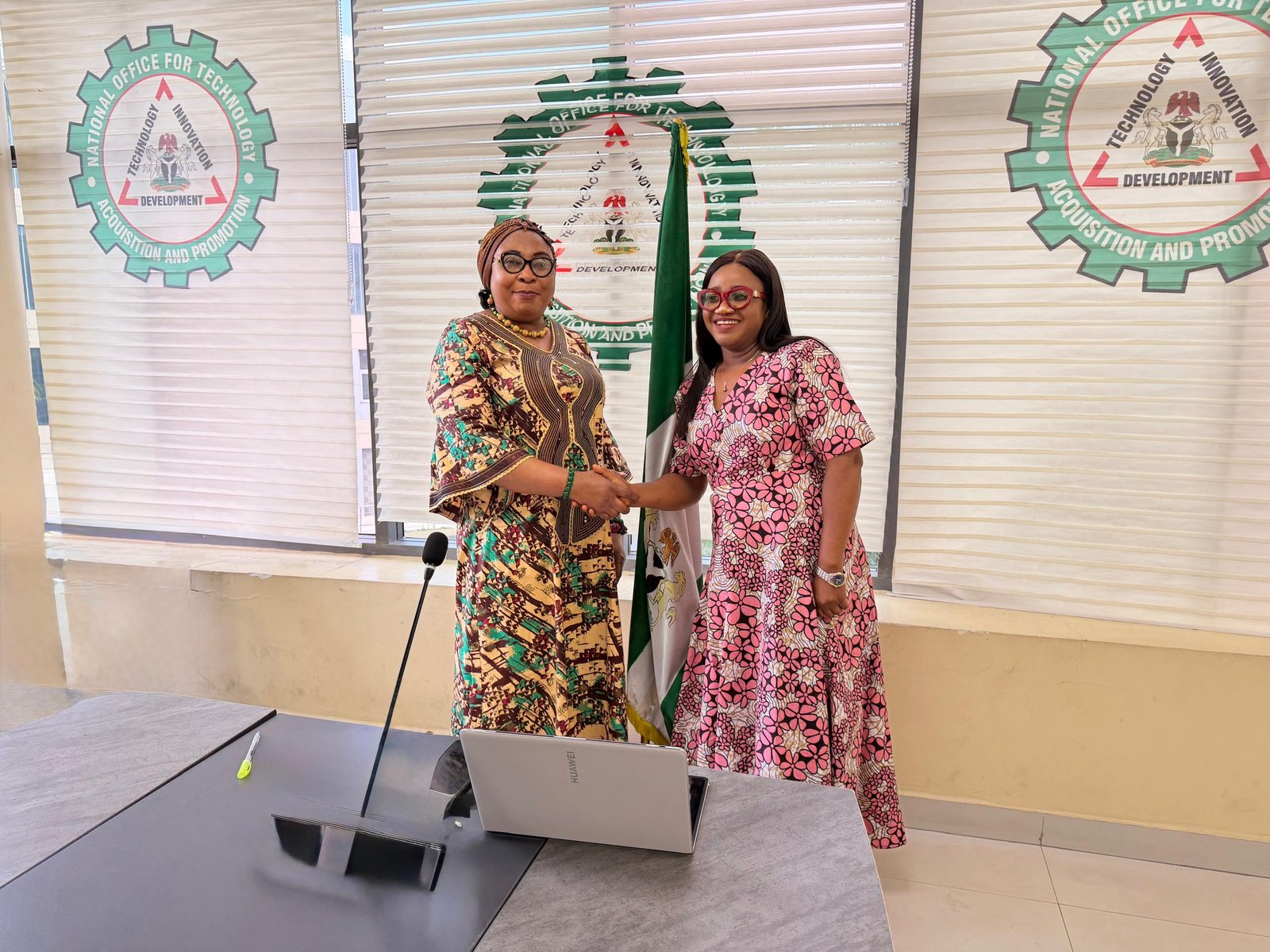
Director-General of NOTAP, Obiageli Amadiobi, disclosed this while receiving the leadership of the Nigeria Union of Journalists (NUJ), Federal Capital Territory (FCT) Council, during a courtesy visit to the agency’s headquarters in Abuja.

Key Highlights:
The meeting focused on building a strategic partnership aimed at promoting indigenous innovation, technology transfer, intellectual property awareness and public understanding of science and technology.
As part of the initiative, Amadiobi announced that NOTAP will host the National Technology and Innovation Summit on October 7 and 8, 2026, at the Civic Centre in Lagos.
She explained that the summit would bring together researchers, innovators, manufacturers, investors, financial institutions and development partners, including the Bank of Industry, to facilitate investment in locally developed technologies and research outputs.
According to her, the event will create opportunities for direct engagement between innovators and potential investors through structured matchmaking sessions designed to transform research findings into commercially viable products and services.
She noted that commercialising innovations produced by Nigerian institutions would stimulate industrial development, create employment opportunities, improve competitiveness and contribute to economic growth.
Amadiobi said the initiative aligns with NOTAP’s statutory responsibility of promoting technology acquisition, supporting indigenous innovation and ensuring scientific discoveries are translated into practical solutions with economic value.
The director-general emphasised the importance of the media in driving technological advancement, saying journalists have a crucial responsibility to educate the public on science, innovation and emerging technologies.
She explained that one of NOTAP’s long-standing objectives is to domesticate and adapt foreign technologies for local use while developing the technical expertise required to improve and sustain them.
According to her, Nigeria previously relied heavily on imported technologies because of limited indigenous capacity, but that trend has begun to change through the implementation of NOTAP’s Local Vendor Policy.
She said the policy has compelled original equipment manufacturers operating in Nigeria to invest in local capacity development by training Nigerians, particularly within the Information and Communications Technology (ICT) sector.
Read also:
- FG Commences Payment Of Outstanding Stipends To TVET Programme Beneficiaries
- Funding Woes, Economic Hardship Force Beneficiaries Out of FG’s TVET Programme
- FG begins second phase of TVET scheme, trainees to receive ₦22,500 monthly
As a result, she noted, Nigeria has witnessed the emergence of highly skilled software developers, engineers and ICT professionals who are making significant contributions both locally and internationally.
Amadiobi said the agency now intends to replicate those achievements across other sectors, including engineering, manufacturing and industrial production, through expanded technology transfer programmes and local participation.
She also revealed that NOTAP is developing a technology and innovation hub where emerging technologies, including Artificial Intelligence (AI), will be demonstrated through practical learning experiences to encourage innovation and digital skills development.
To strengthen its technical capacity, the agency has entered partnerships with major technology companies such as Huawei, MTN and Airtel to train staff and improve Nigeria’s ability to evaluate imported technologies.
On youth development, the director-general announced the National Outsourcing Value Acceleration (NOVA) Programme, an initiative designed to equip young Nigerians with practical industry skills before exposing them to real-life work environments in sectors including engineering, manufacturing and maritime services.
She said the programme would help close the country’s skills gap while preparing young people for employment opportunities within Nigeria and the global labour market.
Amadiobi further disclosed that several state governments, including Niger State, have already expressed interest in partnering with NOTAP to establish technology and innovation centres in their respective states.
Speaking during the visit, Chairman of the NUJ FCT Council, Grace Ike, described NOTAP as one of Nigeria’s most strategic institutions for driving innovation, technology transfer and economic transformation.
She said the agency’s efforts in promoting intellectual property, encouraging indigenous research and strengthening technological development would play a significant role in Nigeria’s future economic competitiveness.
According to her, sustainable national development requires stronger collaboration between institutions that generate knowledge and those responsible for communicating it to the public.
“NOTAP is helping to build a Nigeria that creates ideas rather than simply consuming them. As journalists, we recognise that technology and communication must work together if innovation is to reach the people,” she said.
Grace Ike noted that she had studied the agency’s activities before the visit and was impressed by its achievements in advancing Nigeria’s technology ecosystem.
She explained that the visit was aimed at establishing a long-term partnership between the NUJ FCT Council and NOTAP in areas such as public enlightenment, innovation advocacy, capacity development and national development.
The NUJ chairman added that the media can support NOTAP by increasing public awareness of technology policies, highlighting indigenous innovations and promoting wider understanding of scientific research.
She also proposed specialised training programmes for journalists covering science, technology and innovation to improve reporting on issues such as intellectual property, research commercialisation, patents and technology transfer.
In addition, she advocated joint public awareness campaigns to educate inventors, researchers, startups and technology developers on intellectual property protection, patents and the commercial value of innovation.