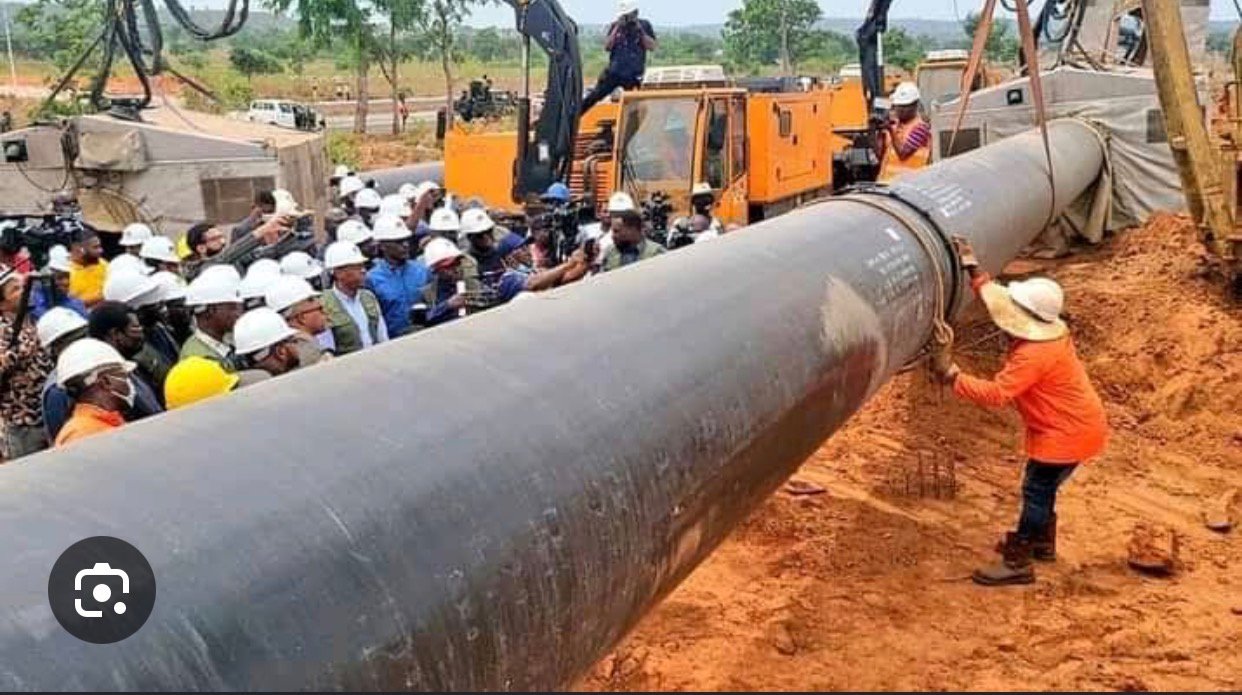
Nigeria is on the cusp of a major energy and industrial milestone. The Ajaokuta–Kaduna–Kano (AKK) Gas Pipeline Project, a flagship infrastructure initiative, has reached approximately 95% completion as of mid-2026. This long-awaited project is poised to transform the country’s energy landscape, particularly in the northern region, and accelerate broader industrialization efforts.
Project Overview
The AKK pipeline stretches approximately 614 kilometers from Ajaokuta in Kogi State, through Abuja and Kaduna, to Kano. It is a 40-inch diameter pipeline designed to transport natural gas from the southern oil and gas fields northward. Conceived in 2008 and construction formally launched in 2020, the $2.8 billion project forms the first phase of the larger Trans-Nigeria Gas Pipeline (TNGP).

Recent updates indicate strong progress: mainline welding is largely complete, including challenging river crossings, with first gas deliveries to Abuja targeted for July 2026. The pipeline has a total design capacity of up to 3.5 billion cubic feet per day (bcf/d), with an initial phase delivering around 2.2 bcf/d (roughly 23 billion cubic meters per year) to domestic markets.
Key Benefits for Industrialization
1. Reliable Energy Supply and Power Generation
Nigeria has long struggled with inadequate and unreliable electricity, a major bottleneck for industrial growth. The AKK pipeline is expected to supply gas to power plants, potentially adding thousands of megawatts to the national grid. Estimates suggest it could support an additional 3,600 MW of power generation capacity. Stable, affordable gas-fired power will reduce reliance on diesel generators, lower operating costs for businesses, and attract energy-intensive industries.
2. Boost to Northern Industrialization
Historically, industrial development has been concentrated in the south. The AKK pipeline will deliver clean, affordable natural gas to Abuja, Kaduna, Kano, and surrounding areas, enabling the growth of gas-based industries such as fertilizers, petrochemicals, cement, and manufacturing. This is expected to revitalize existing factories, spur new investments, and create thousands of direct and indirect jobs.
Kano and Kaduna, with their large populations and established industrial bases, stand to gain significantly from cheaper energy for processing, cold chains, and value-added manufacturing.
3. Economic Diversification and Non-Oil Growth
The project aligns with Nigeria’s Decade of Gas initiative and Gas Master Plan. By commercializing gas that might otherwise be flared, it reduces waste, cuts emissions, and generates new revenue streams. It supports President Tinubu’s ambitions for economic diversification and attracting substantial new investments (targeting $30 billion by 2030 in related sectors).
Read also:
- Governor Fubara Vows Swift Action On Bille Gas Pollution
- Report indicts Shell of pumping oil through pipeline despite evidence of pollution
- International study group arrives Bayelsa to investigate oil pollution-related health hazards
Fertilizer production, for instance, could receive a major boost, enhancing agricultural productivity and food security while creating export opportunities.
4. Job Creation and Local Content
Construction has already engaged numerous local subcontractors and workers. Upon completion and operation, the project will sustain employment in engineering, maintenance, logistics, and downstream industries. It also promotes skills development in the gas value chain.
5. Broader Multiplier Effects
- Reduced energy costs for households and businesses.
- Improved energy security and reduced dependence on imported fuels.
- Catalyst for ancillary infrastructure like gas processing facilities, CNG stations, and industrial parks.
- Support for regional integration, potentially feeding into wider West African gas networks in the future.
Challenges and the Road Ahead
While progress is impressive, the project has faced delays, funding hurdles, and technical challenges over the years. Successful commissioning will require robust security for the pipeline infrastructure, efficient commercial agreements, and complementary investments in power transmission and industrial estates.
Sustained policy support, transparent governance, and private sector participation will be critical to fully realizing its potential.
The near-completion of the AKK Gas Pipeline represents more than just another infrastructure project — it is a strategic enabler of Nigeria’s industrialization ambitions. By bridging the gap between the country’s vast gas reserves and underserved industrial heartlands, it promises to unlock productivity, create jobs, diversify the economy, and lay a stronger foundation for sustainable growth.
As Nigeria targets first gas flow in the coming months, the AKK project could mark the beginning of a new chapter: one where reliable energy powers factories, lights up cities, and drives inclusive prosperity across the nation. The coming years will test the country’s ability to translate this infrastructure victory into tangible industrial transformation.