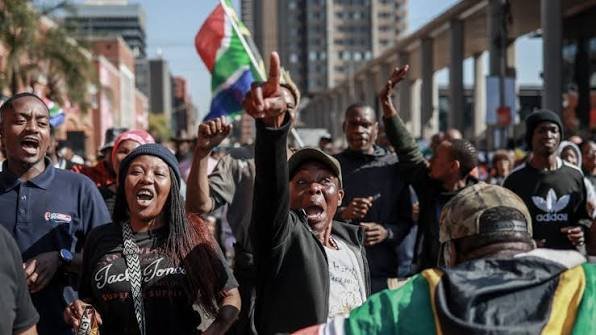
A Professor of Economics and Governance, Prof. Chiwuike Uba, has called on the South African government to take decisive responsibility for protecting foreign nationals, warning that continued inaction against xenophobic attacks could undermine the country’s legal obligations, diplomatic standing and economic stability. The appeal comes amid growing concerns over recurring violence targeting migrants in South Africa.

Key Highlights:
- Prof. Chiwuike Uba urges South Africa to protect foreign nationals.
- Warns that xenophobic attacks violate international legal obligations.
- Says continued inaction threatens South Africa’s diplomatic credibility.
- Notes that instability could hurt Africa’s economy, trade and investment.
- Calls xenophobic violence an international concern, not merely a domestic issue.
- Warns that failure to act may embolden non-state actors.
Uba, Chairman of the ACUF Initiative for Policy and Governance, made the appeal on Thursday in Enugu in a statement titled, “South Africa Is Playing with Fire, and Its Elites Are Holding the Match.”
He argued that the failure to take deliberate action against individuals and groups responsible for xenophobic attacks raises serious concerns under international law.
According to the professor, protecting foreign nationals is a legal obligation of every state and should not be treated as a matter of discretion.
Read Also:
- Ghana approves relief package for evacuated citizens of xenophobic attacks from South Africa
- South African activist Ngobese-Zuma sparks outrage, backs Xenophobic attacks
- UN condemns xenophobic attacks in South Africa as country marks Freedom Day
“Protection of non-nationals is a clear obligation, not a discretionary act,” he said.
Uba maintained that persistent failure to uphold this responsibility weakens South Africa’s legal commitments and damages its diplomatic credibility.
He warned that the consequences of recurring xenophobic violence extend beyond South Africa, with the potential to affect economic growth, political stability and diplomatic relations across the African continent.
On the economic implications, Uba described South Africa as a key driver of Africa’s economy.
“It is a continental anchor. Its financial systems, industrial base and regional linkages make it central to African growth. Prolonged instability would ripple outward, constraining trade, deterring investment and weakening regional integration,” he said.
Speaking on the political impact, the professor noted that South Africa has long been regarded as a model of democratic transition and constitutional governance.
He warned that if that reputation continues to erode, it could embolden critics who argue that democratic institutions cannot deliver effective governance while weakening reform efforts in other African countries.
Uba further stressed that xenophobic violence against foreign nationals should not be viewed solely as a domestic issue.
“It is an international concern that tests regional solidarity and diplomatic patience. Each episode forces other African governments to respond, balancing domestic outrage with the need to preserve bilateral relations,” he said.
He warned that prolonged government inaction could encourage non-state actors to commit more unlawful acts, believing that authorities lack the will to enforce the law.