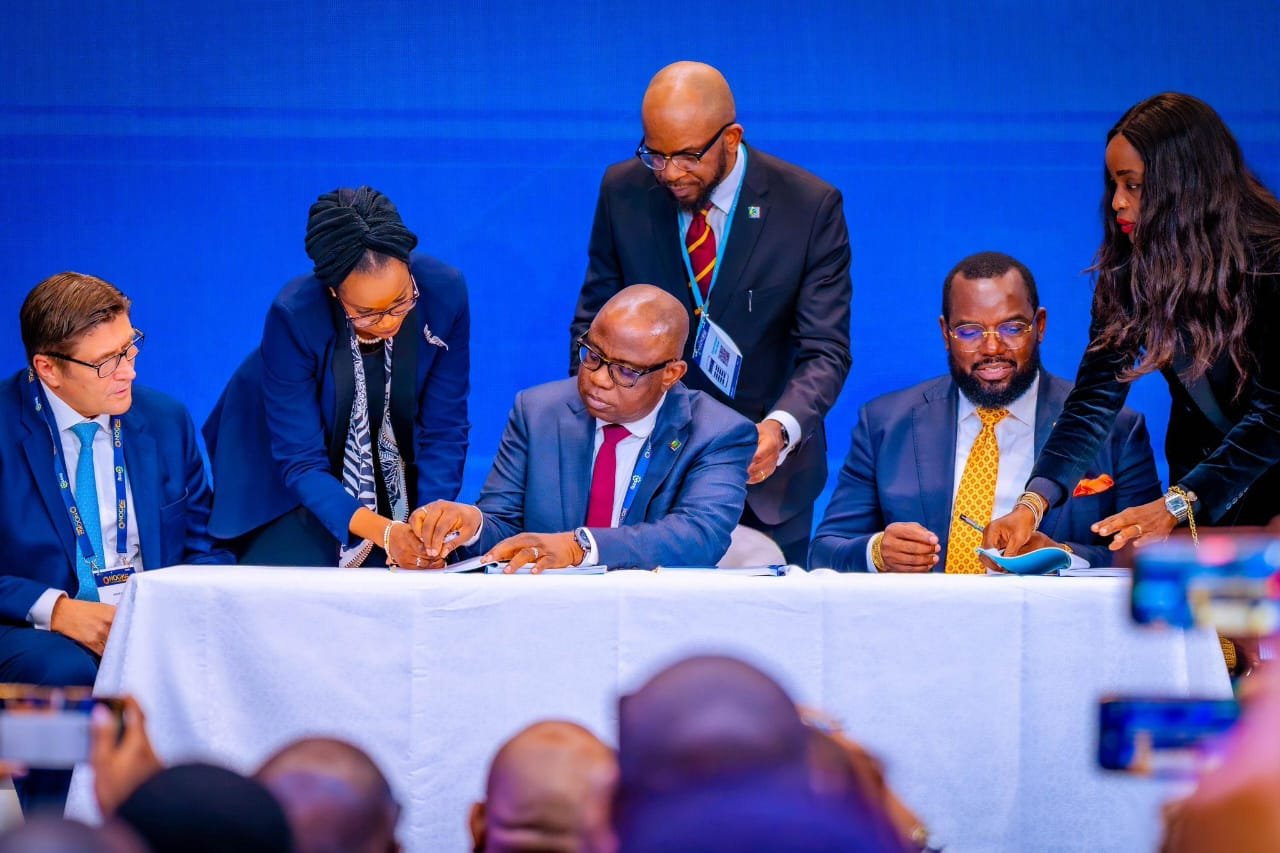
Nigeria’s push to expand its liquefied natural gas (LNG) capacity through indigenous leadership has reached a pivotal milestone. UTM Offshore Limited’s $3 billion Floating LNG (FLNG) project, the country’s first indigenous development of its kind, is set to be headquartered in Warri, following the signing of a landmark 15-year gas supply agreement.
The Wet Gas Sale and Purchase Agreement, signed during the 2026 NOG Energy Week in Abuja, commits a joint venture between the Nigerian National Petroleum Company Limited (NNPC) and Seplat Energy Producing Nigeria Unlimited to supply 200 million standard cubic feet per day (MMscfd) of gas to the project. This deal removes a critical financing obstacle and paves the way for a Final Investment Decision (FID) targeted for the fourth quarter of 2026.

Project Details and Significance
The UTM FLNG facility will produce approximately 1.8 million tonnes per annum (MTPA) of LNG, utilizing associated and non-associated gas from the Yoho field in Oil Mining Lease (OML) 104, located in deepwater offshore Akwa Ibom State. Once operational, it is expected to process around 176 million cubic feet per day.
Project equity is shared as follows: UTM Offshore holds 72%, NNPC Ltd. 20%, and the Delta State Government 8%. This structure underscores strong local participation and government backing.
Warri’s selection as the project headquarters reinforces its status as a key energy hub in the Niger Delta. The city’s strategic location, existing infrastructure, and skilled workforce position it ideally to support operations and related industries.
Read Also:
- Warri Refinery and Petrochemicals Company: NNPC Rules Out Scrap Sale, Chinese Firms Begin Technical Assessment
- Protect Public Facilities Against Vandalism, Warri Urges Stakeholders
- Teenager Missing As Boat Collides With Canoe At NPA Waterside In Warri
Boost for Nigeria’s Energy Ambitions
Nigeria, already a major LNG player through the Nigeria LNG (NLNG) facility on Bonny Island, seeks to monetize vast stranded gas reserves and reduce flaring while increasing export revenues. The UTM FLNG project diversifies export capacity beyond NLNG and aligns with national goals for industrialization, energy transition, and foreign exchange earnings.
Julius Rone, Group Managing Director and CEO of UTM Offshore Limited and promoter shareholder of UTM FLNG, described the agreement as a “defining moment” for indigenous LNG development in Nigeria.
The project is anticipated to generate significant economic benefits, including thousands of direct and indirect jobs during construction and operations, skills transfer, and increased investment inflows into Delta State and the broader Niger Delta region.
Path Forward
With the gas supply secured, attention now turns to finalizing financing, detailed engineering, and construction. The FLNG technology allows for offshore liquefaction, offering flexibility and faster deployment compared to traditional onshore plants, which is particularly advantageous for Nigeria’s offshore gas fields.
This development comes amid renewed global demand for cleaner-burning natural gas as a transition fuel, potentially strengthening Nigeria’s position in international LNG markets.
As stakeholders celebrate this milestone, the UTM FLNG project symbolizes growing indigenous capacity in Nigeria’s energy sector and a concrete step toward harnessing the country’s gas resources for sustainable economic growth. Warri’s emergence as its operational base promises to revitalize local economies and cement the city’s role in Nigeria’s energy future.