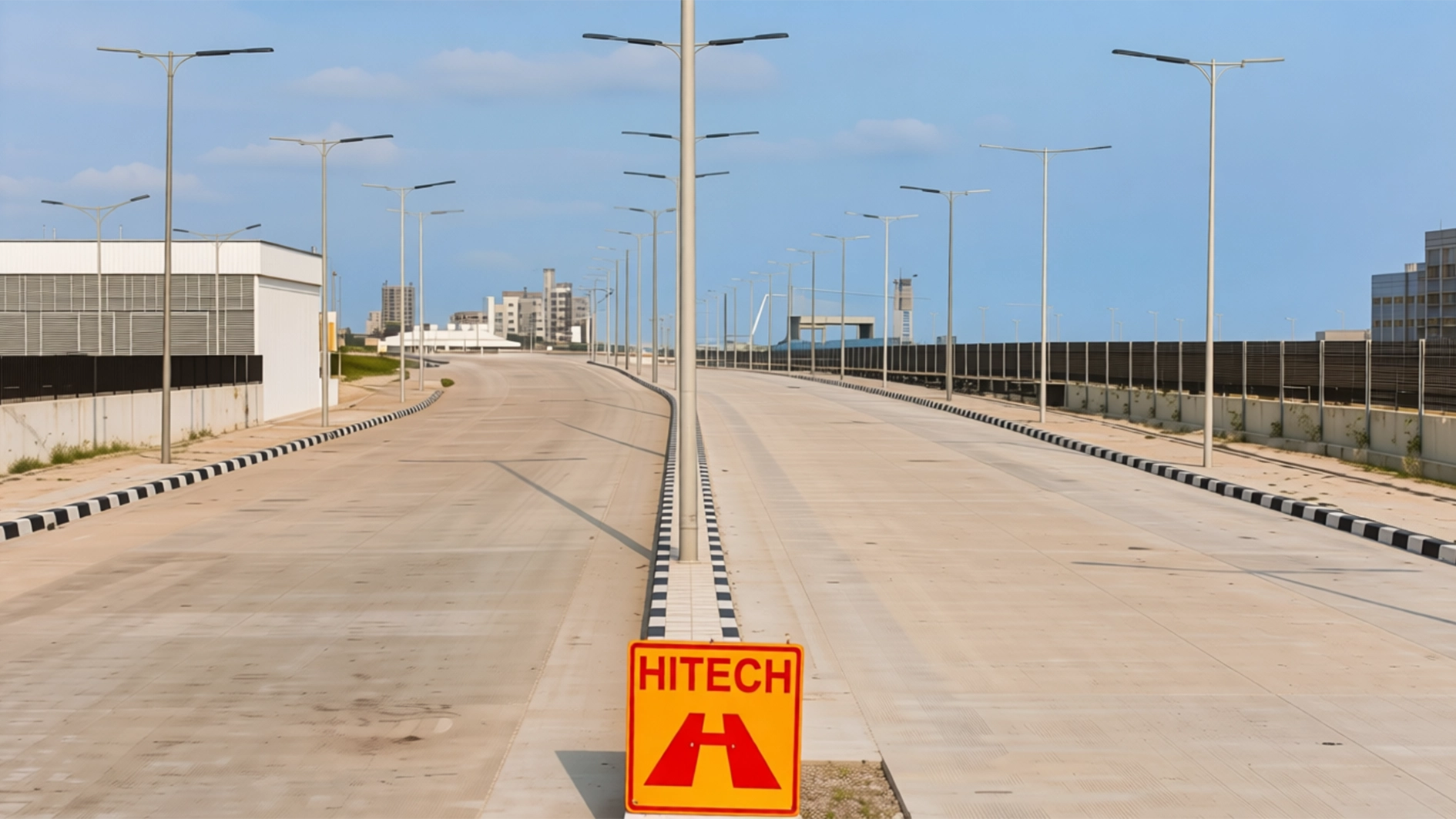
The Federal Government’s Lagos-Calabar Coastal expansion project has entered a new phase following the decision to demolish buildings within a 15-metre setback of the Lagos-Calabar Coastal Highway to create service lanes, a move that has sparked concern among property owners, developers and built environment professionals over the project’s planning and implementation.
Key Highlights

- Federal Government to demolish buildings within a 15-metre setback for service lanes.
- Between 1,700 and 2,700 buildings could be affected along the highway corridor.
- Government says affected property owners will receive compensation in line with the law.
- Experts question whether service lanes formed part of the original highway design.
- FG insists the highway did not cause recent flooding in Lagos.
- Lagos State Government blames flooding on blocked drainage and indiscriminate refuse dumping.
- Engineers and planners call for greater transparency and public disclosure of project designs.
The planned demolition is expected to affect between 1,700 and 2,700 structures, triggering apprehension among residents and investors along the corridor. While transport planners acknowledge that properly designed service lanes will improve traffic safety and accessibility, some professionals argue that introducing the additional infrastructure at this stage raises questions about the project’s original engineering design.
Minister of Works, David Umahi, disclosed that structures within the newly identified setback would be removed to make way for service roads and expanded drainage channels aimed at improving traffic flow and reducing flood risks.
According to the minister, affected property owners will receive compensation in accordance with existing laws.
Industry stakeholders estimate that about 700 buildings are located directly on the existing right-of-way, while another 1,700 structures fall within the newly designated 15-metre setback.
Estate Surveyor and Valuer, Olusola Enitan, said the total number of affected buildings could rise to about 2,700, with between 17,000 and 54,000 residents potentially impacted.
He noted that the expansion could result in significant economic losses through reduced commercial frontage, rental income and redevelopment opportunities.
Although the Federal Government maintains that the service lanes are essential for efficient traffic movement and improved access to adjoining communities, the announcement has generated debate over whether the service roads were included in the original project design or introduced after construction had commenced.
The Lagos-Calabar Coastal Highway remains one of the Tinubu administration’s flagship infrastructure projects. Construction began in March 2024, with the first phase covering 47.47 kilometres from Ahmadu Bello Way in Victoria Island to Eleko Junction in Ibeju-Lekki.
The planned highway will stretch approximately 700 kilometres, traversing Lagos, Ogun, Ondo, Edo, Delta, Bayelsa, Rivers, Akwa Ibom and Cross River States.
Government estimates place the overall project cost at between $11 billion and $12 billion, while the first phase was awarded at ₦1.068 trillion, covering bridges, interchanges, shoreline protection, drainage systems, utility relocation and compensation.
Experts Question Planning Process
Built environment experts say service roads are typically incorporated during the conceptual and detailed design stages of highway projects.
They explained that where service lanes are included in the original design, the required right-of-way should have been fully acquired before construction begins.
However, if the service roads represent a design modification introduced after work had commenced, the development could indicate shortcomings in traffic forecasting, stakeholder engagement or engineering planning.
Experts warned that such changes often increase project costs, prolong construction timelines and create uncertainty for investors and affected communities.
Former President of the Association of Town Planning Consultants of Nigeria (ATOPCON), Muyiwa Adelu, described service lanes as essential components of modern expressway design.
“In the real sense, what will make the coastal highway sustainable is the provision of service lanes. They ought to have been part of the original road design. If the government is only incorporating them now, it will cause social and economic hardship,” he said.
Adelu urged the Federal Government to provide adequate compensation, alternative land where necessary and sufficient relocation time for affected residents.
Former President of the Nigerian Institution of Structural Engineers (NiStructE), Dr. Victor Oyenuga, stated that federal highways are protected by statutory rights-of-way that should remain free from development.
He added that property owners whose buildings received valid planning approvals could be entitled to compensation or pursue legal remedies.
Enitan also called for an independent multidisciplinary review of the highway’s engineering design, hydrology and environmental impact assessment.
“The proposed service lanes are not merely a policy shift. They represent a serious test of planning integrity and public confidence,” he said.
FG, Lagos Reject Flooding Allegations
Following an inspection of flood-affected communities along the highway corridor, Umahi dismissed claims that the Lagos-Calabar Coastal Highway caused recent flooding in parts of Lagos.
The minister said investigations showed that flooding resulted largely from blocked drainage channels, indiscriminate refuse disposal, ageing drainage infrastructure and developments that ignored Environmental and Social Impact Assessment (ESIA) requirements.
He maintained that the highway’s Environmental Impact Assessment complied with international standards and that the project had actually helped reduce flood risks by elevating the carriageway above sea level.
Umahi announced that the Federal Government would strengthen drainage infrastructure, implement additional flood-control measures and collaborate with the Lagos State Government on technical assessments of vulnerable communities.
He also disclosed plans to install surveillance cameras, wind-monitoring stations, parking facilities and tourism infrastructure along the coastal corridor while enforcing stricter development controls.
Minister of State for Works, Bello Muhammad, said investigations confirmed that the flooding was not caused by the highway project.
Read also:
- Coastal Highway: Ekid women protest Akwa Ibom Govt claim over disputed Stubbs Creek Reserve
- Umahi says Lagos–Calabar Coastal Highway to get relief stations, solar lighting, CCTV for faster emergency response
- Lagos-Calabar Coastal Highway: Tinubu extends 100km route into Edo State
Lagos State Governor Babajide Sanwo-Olu also dismissed reports linking the highway to flooding, describing the claims as misleading.
According to the governor, Lagos naturally experiences flooding because of its coastal location, while indiscriminate refuse disposal remains a major contributor to blocked drainage systems.
Sanwo-Olu said the state government had intensified drainage maintenance, launched extensive environmental sanitation campaigns and contracted mechanised street-cleaning services to support the highway corridor.
He also endorsed the construction of service roads, noting that they would improve accessibility and preserve the long-term functionality of the Lagos-Calabar Coastal Highway, even though some structures may have to be removed.