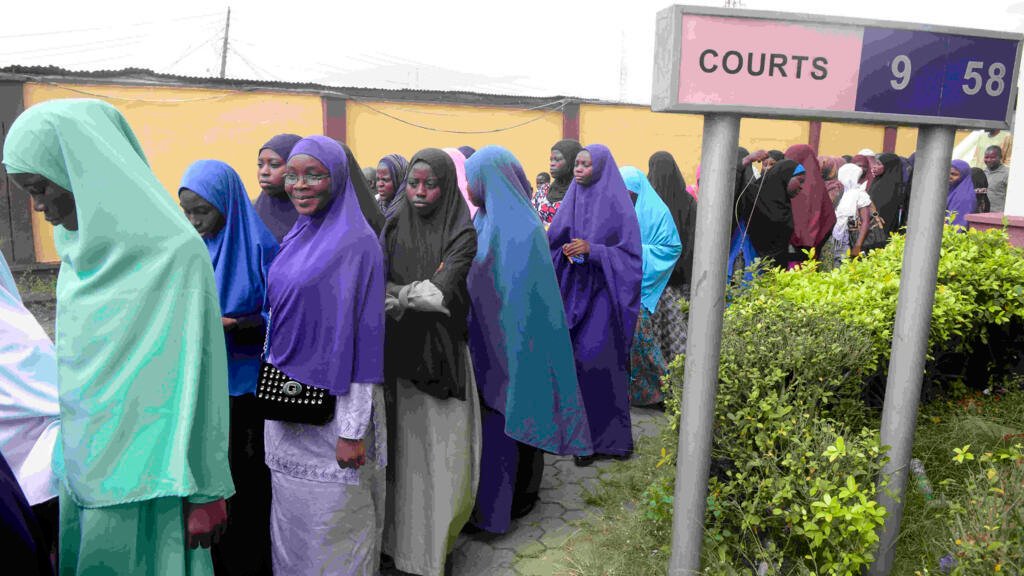
The Court of Appeal’s decision overturning a High Court judgment that recognised the right of Muslim female students at the International School, University of Ibadan (ISI), to wear the hijab has reignited the national debate over religious freedom, constitutional rights and school dress codes in Nigeria.
The judgment, delivered on Friday, by the Ibadan Division of the Court of Appeal in a split 2-1 decision, has drawn strong reactions from Muslim groups, with the Muslim Public Affairs Centre (MPAC) describing the ruling as “an assault on religious freedom” and vowing to support efforts to challenge it at the Supreme Court.
The appellate court set aside the May 22, 2024 judgment of the Oyo State High Court, which had ruled in favour of 11 Muslim female students who challenged ISI’s prohibition of the hijab as part of the school’s uniform.

The dispute began in 2018, after the management of ISI barred Muslim female students from wearing the hijab alongside their school uniform.
The affected students, with the backing of the Muslim Rights Concern (MURIC), approached the Oyo State High Court, arguing that the policy infringed on their constitutional rights to freedom of religion and protection from discrimination.
Justice Moshood Ishola ruled in their favour in 2024, holding that the ban violated the students’ fundamental rights guaranteed under the constitution.
However, the Court of Appeal reversed that decision on Friday.
The majority held that ISI qualifies as a private institution because it does not receive government funding and therefore is not bound by previous Supreme Court decisions permitting the use of the hijab in publicly funded schools.
The appellate court also ruled that the students had accepted the school’s code of conduct upon admission, and by doing so, had effectively waived the right to challenge the institution’s dress policy.
Justice Fadawu Umar dissented, maintaining that the appeal lacked merit and that the students’ constitutional rights should remain protected.
Reacting to the judgment, MPAC argued that the decision conflicts with Section 38 of the 1999 Constitution, which guarantees every Nigerian the right to freedom of thought, conscience and religion.
According to the organisation, constitutional rights should not be determined by whether a school receives government funding.
MPAC maintained that ISI remains closely affiliated with the University of Ibadan, a federal institution, and should therefore be subject to constitutional protections applicable to public educational institutions.
The group also criticised the court’s conclusion that the students had waived their religious rights by accepting the school’s admission conditions.
It argued that allowing institutions to require individuals to surrender constitutional rights as a condition for education could have far-reaching implications beyond the present case.
MPAC further contended that the ruling departs from an earlier Supreme Court decision affirming the right of Muslim female students to wear the hijab, warning that the latest judgment could encourage similar restrictions in private and mission-owned schools across the country.
The organisation welcomed the dissenting opinion of Justice Fadawu Umar and praised both the ISI Muslim Parents Forum and MURIC for filing a notice of appeal and applications seeking a stay of execution pending the determination of the case by the Supreme Court.
MPAC also called on the Court of Appeal to expedite hearing of the application for a stay of execution to preserve the status quo while the appeal is pending.
Beyond the courts, the group urged the National Assembly to enact legislation explicitly protecting the right of students to wear religious attire in both public and private schools.
It also appealed to the Federal Ministry of Education, state education authorities, civil society organisations and religious bodies to oppose policies it considers discriminatory against students on religious grounds.
Read also:
- World Hijab Day: MPAC chairman advocates end to discrimination
- Oyedepo slams Muslim groups over demand for hijab in Christian institutions
- Supreme Court overrules Lagos on Hijab ban in schools g 14
The Appeal Court’s decision has once again brought into focus the balance between institutional autonomy and constitutionally guaranteed rights in Nigeria’s education sector.
Legal observers say the expected appeal to the Supreme Court could provide further clarification on whether constitutional protections relating to freedom of religion extend equally to students in privately managed educational institutions, particularly those with historical or administrative links to public universities.
For MPAC, however, the issue extends beyond school uniforms.
The organisation insists that freedom of religion cannot be surrendered as a condition for access to education and says it will continue to support the affected students until the country’s apex court delivers a final verdict.