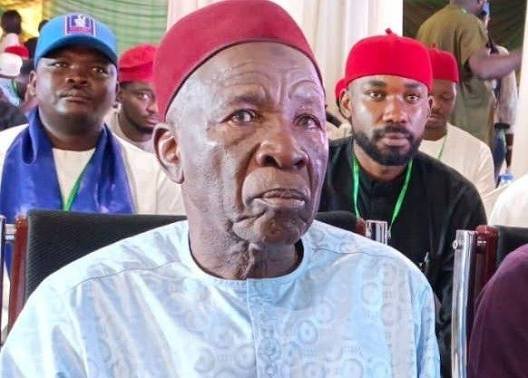
A chieftain of the Nigeria Democratic Congress (NDC), Buba Galadima, has opposed the proposed creation of state police, warning that it could be used as a political tool to intimidate opponents, disrupt elections and weaken Nigeria’s democracy.
Key Highlight:

- Galadima opposes state police: NDC chieftain Buba Galadima warned that creating state police could undermine Nigeria’s democracy.
- Raises political concerns: He alleged that state police could be used by presidents and governors to intimidate opposition parties and influence elections.
- Questions effectiveness: Galadima argued that if the police and military have not fully solved insecurity, state police are unlikely to perform better.
- Cites historical precedent: He referenced the Native Authority Police, claiming it was used to harass opposition politicians during election periods.
- Warns of ethnic divisions: Galadima said state police could worsen ethnic and religious tensions, threatening national unity instead of improving security.
Speaking during an interview with journalist on Tuesday, Galadima argued that the campaign for state police is not genuinely aimed at addressing insecurity.
He said that if the Nigeria Police Force and the military have not been able to completely tackle the country’s security challenges, there is little reason to believe state police would perform better.
Galadima alleged that both the President and state governors are pushing for the establishment of state police ahead of future elections for political reasons.
He claimed the proposed security outfit could be used to harass opposition parties, interfere with the electoral process and silence political rivals.
Read also:
Passage of State Police Bill, A Historic Security Milestone, Police Commissioner Declare
Police Intensify Protection of Public Infrastructure, Nab 2 Alleged Cable Vandals In Delt
Disu Pledges Police Sponsorship Of Volleyball Competitions, Other Sports
He further claimed that the abuse of the Native Authority Police forced many people to flee states, such as Kano and Katsina, saying many Hausa people scattered across different parts of Nigeria and Africa after being targeted by the system.
Galadima also warned that state police could fuel ethnic and religious tensions if recruitment and operations were controlled by a dominant group within a state.
According to him, rather than solving Nigeria’s security problems, state police could create deeper divisions, increase suspicion among citizens and threaten the country’s unity.