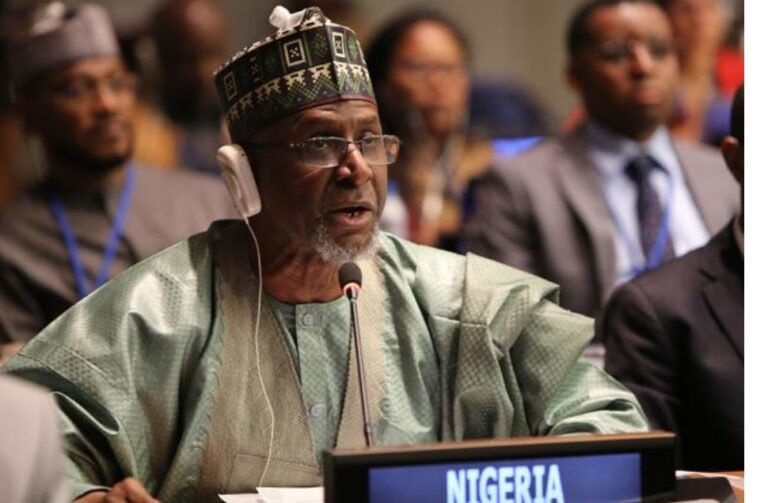
The NAGGW Headquarters Relocation to Kano has officially commenced, with the Director-General of the National Agency for the Great Green Wall (NAGGW), Sale Abubakar, declaring the agency’s Kano operational office fully capable of serving as its new headquarters.
Key Highlights
- NAGGW begins headquarters relocation from Abuja to Kano.
- Director-General Sale Abubakar describes Kano facility as suitable for headquarters operations.
- Relocation follows a directive from the Presidency through the supervising minister.
- Agency plans immediate renovation, furnishing, and deployment of equipment.
- Move expected to improve coordination across Great Green Wall states.
- FAO and United Nations partnership to support agency programmes from Kano.
- DG warns against illegal encroachment and sale of agency land.
Abubakar made the disclosure during a high-level management visit to the Afforestation Programme Coordinating Unit (APCU) in Kano as part of activities marking the implementation of the NAGGW Headquarters Relocation.

According to the Director-General, the decision to move the agency’s headquarters was in line with a directive from the Presidency conveyed through the supervising minister.
He explained that relocating the headquarters to Kano would enhance the agency’s effectiveness by bringing its leadership and operations closer to states within the Great Green Wall corridor.
“We are here to officially take over and report to the office here. We have been given directives by the Honourable Minister through the Presidency that we should relocate to Kano Operational Office, from where we will be working henceforth,” Abubakar stated.
The NAGGW chief noted that the Kano office has long served as a key operational hub for the agency due to its strategic location and accessibility to frontline states affected by desertification and environmental degradation.
He said an assessment of the facility confirmed its suitability for headquarters activities, revealing that residential quarters within the complex are already occupied by staff while some sections require renovation and additional furnishing.
“We have been in the office together with you and you have seen how the office is. It is very good. It is a very strong edifice,” he said.
Abubakar disclosed that the agency would immediately begin the procurement and installation of office furniture, equipment, and other infrastructure needed to support full-scale operations from Kano.
Read Also:
- Kano Assembly drops impeachment proceedings against Ex-Deputy Governor
- Kano Assembly seeks extension of streetlights to Local Government Areas
- Kano Assembly establishes LG Service Commission, amends Assembly Commission Law
He expressed confidence that the NAGGW Headquarters Relocation would improve service delivery, strengthen coordination with beneficiary states, and accelerate environmental restoration programmes across northern Nigeria.
The Director-General emphasized that the agency’s presence in Kano would facilitate quicker responses to ecological challenges while enhancing engagement with local communities directly impacted by desertification.
“We are going to be here fully and we are going to be very operational,” he assured.
Abubakar also announced that NAGGW had secured additional funding support through partnerships with the Food and Agriculture Organization of the United Nations and other international development partners.
According to him, the resources will be deployed to strengthen afforestation, land restoration, and climate resilience programmes coordinated from the Kano headquarters.
Addressing concerns over alleged encroachment on agency property, the Director-General warned land speculators and unauthorized occupants against attempts to sell or claim ownership of government land belonging to NAGGW.
“This is government property. Nobody is going to sell government property while it is in use,” he said.
The relocation marks a significant milestone for the agency as it seeks to deepen its environmental sustainability efforts and strengthen implementation of the Great Green Wall initiative aimed at combating desertification, restoring degraded land, and improving livelihoods across affected communities.