
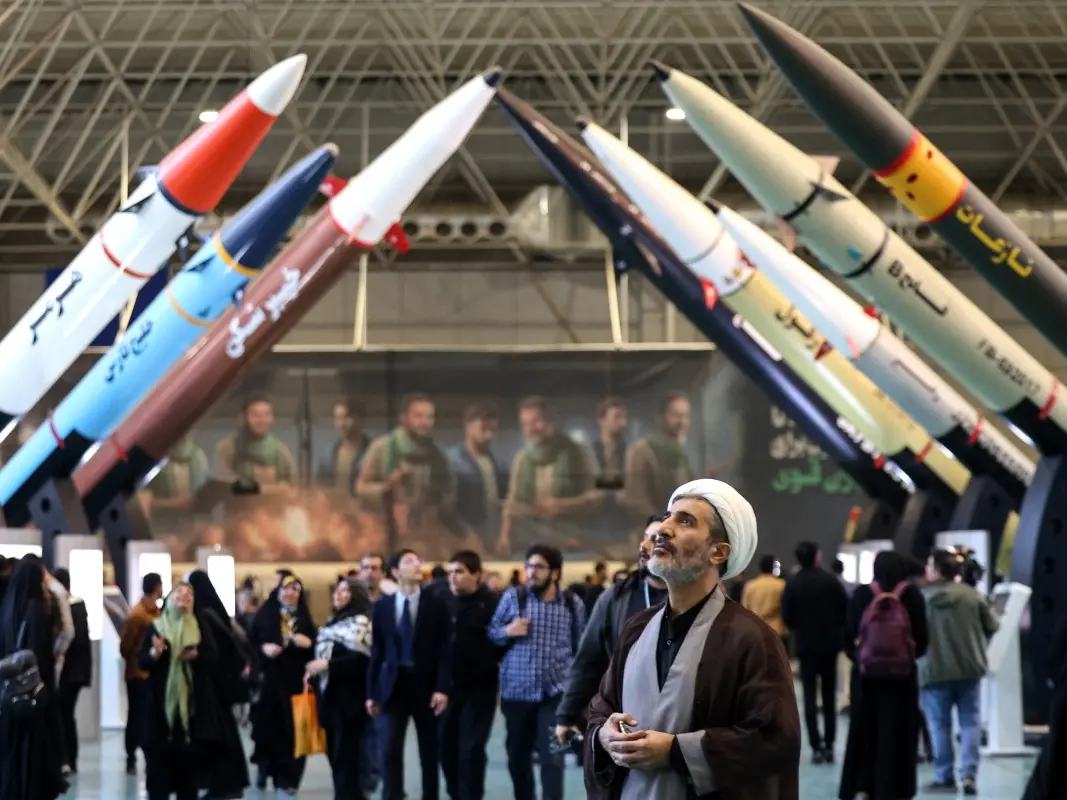
Iran has firmly ruled out any future negotiations over its missile programme, insisting that its defence capabilities are non-negotiable despite a newly signed framework agreement with the United States aimed at ending months of conflict and reopening diplomatic talks.
Key Highlights:

- Iran says its missile programme is non-negotiable and will not be discussed in future talks.
- The statement came after a new agreement between Donald Trump and Masoud Pezeshkian aimed at ending conflict and restarting diplomacy.
- Iran insists its missile arsenal is a core part of its national defence and sovereignty.
- The U.S. and Israel have long pushed for limits on Iran’s missile capabilities.
- Iran’s stance remains a major obstacle to broader peace and nuclear negotiations.
The declaration was made by Iranian Foreign Ministry spokesman Esmaeil Baqaei on Thursday following the signing of a Memorandum of Understanding (MoU) between U.S. President Donald Trump and Iranian President Masoud Pezeshkian. The agreement is intended to end the conflict that began in February and establish a framework for negotiations on Iran’s nuclear programme and the possible easing of sanctions imposed on Tehran.
While welcoming the prospect of renewed diplomacy, Baqaei stressed that Iran’s missile programme would remain outside the scope of any future discussions.
According to him, Iran’s missiles form a vital part of the country’s national defence strategy and are not open for negotiation under any circumstances.
He reiterated that Tehran would not discuss its defence systems with any foreign government, maintaining the Islamic Republic’s long-standing position that its military capabilities are a matter of national sovereignty.
Iran’s missile programme has long been a major point of contention for the United States and its ally, Israel, both of which have repeatedly demanded limits on Tehran’s ballistic missile capabilities.
Read also:
- It’s My Life’s Mission To Prevent Iran From Acquiring Nuclear Weapons, Netanyahu Declares
- Oil Prices Drop As US-Iran Peace Deal Raises Hopes
- Finally Iran bows to US pressure, agrees to nuclear curbs, reopening Strait of Hormuz
During the recent conflict, U.S. and Israeli forces targeted several Iranian missile facilities in coordinated strikes. Despite the attacks, Iran continued launching ballistic missiles and drones in retaliation.
Before hostilities erupted, U.S. Secretary of State Marco Rubio had argued that Iran’s missile arsenal should be included in any future negotiations between Washington and Tehran.
However, President Trump appeared to soften that stance this week, saying it would be unfair to prevent Iran from possessing missiles while other countries maintain similar military capabilities.
Although the newly signed agreement has raised hopes for a lasting ceasefire and renewed diplomatic engagement, Iran’s categorical refusal to negotiate its missile programme highlights one of the most significant obstacles facing both sides as they seek a broader and more durable peace agreement.