
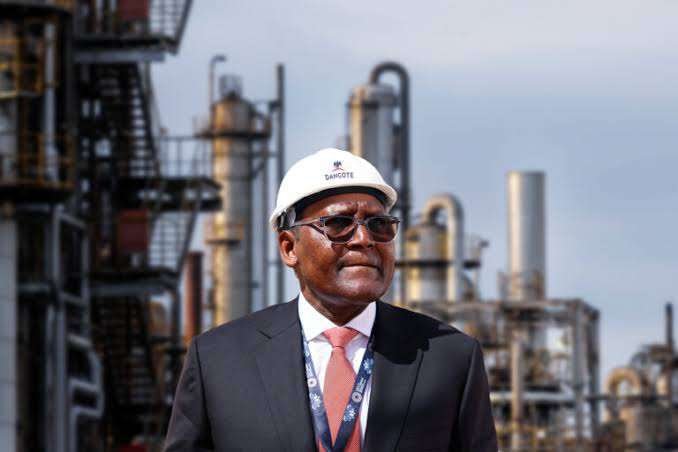
The Africa Finance Corporation (AFC) has committed $600 million towards a $7 billion fertiliser expansion programme by the Dangote Group, aimed at significantly boosting Africa’s fertiliser production capacity and strengthening food security across the continent.
Key Highlights:
- AFC is investing $600m in Dangote’s fertiliser expansion.
- Nigeria’s urea capacity will triple from 3m to 9m tonnes.
- A new 3m-tonne fertiliser plant will be built in Ethiopia.
- The project aims to boost food security and cut imports.
- It will strengthen Africa’s role in global fertiliser production.
The financing will be channelled through the Greenview Fertiliser Corporation, the Dangote Group’s fertiliser holding company, as part of a broader strategy to reduce Africa’s dependence on imported agricultural inputs and enhance local manufacturing.

Under the expansion plan, Dangote Fertilizer will increase its urea production capacity in Nigeria from three million metric tonnes per annum, to nine million metric tonnes per annun.
The company also plans to establish a new three-million-tonne-per-annum urea fertiliser plant in Ethiopia.
When completed, the project is expected to create one of the largest fertiliser production platforms globally and significantly expand Africa’s role in the international fertiliser market.
The investment comes at a critical time as African countries seek to improve food security, boost agricultural productivity and reduce reliance on imported fertiliser products amid growing populations and climate-related challenges.
Despite possessing abundant natural gas reserves and vast arable land, Africa remains heavily dependent on fertiliser imports, a situation experts say has hindered agricultural output across the continent.
AFC said the expansion project would help close this gap by ensuring a more reliable supply of fertiliser for farmers while supporting industrialisation and economic growth.
President and Chief Executive Officer of Dangote Industries Limited, Aliko Dangote, described the investment as another milestone in the partnership between both organisations.
Read Also:
- Dangote Refinery cuts aviation fuel price to N1,650 per litre
- Dangote refinery reverses petrol price hike hours after increase
- Dangote Refinery recalls sacked engineers, issues fresh warning on conduct
“This investment marks another important milestone in our long-standing partnership with AFC as we embark on the next phase of Dangote Fertilizer’s growth,” Dangote said.
“Expanding our fertiliser production capacity in Nigeria and developing a new plant in Ethiopia will strengthen Africa’s food security, support agricultural productivity and deepen the continent’s industrial base.”
AFC President and Chief Executive Officer, Samaila Zubairu, said the project addresses one of Africa’s most pressing development concerns—feeding a rapidly growing population.
“The question before Africa is simple: how will we feed 2.5 billion people by 2050?” Zubairu said.
He noted that Africa’s fertiliser consumption remains significantly below global averages despite having a population comparable to countries such as India and China.
The latest transaction further strengthens AFC’s relationship with the Dangote Group. AFC previously participated in the $3 billion syndicated financing package for the Dangote Petroleum Refinery and recently received full repayment of a $300 million senior loan linked to the refinery project.
Dangote Fertilizer, which commenced operations in 2022, is currently among Africa’s largest granulated urea producers, exporting products to markets across Africa, Europe and the Americas.
Industry analysts believe the expansion will enhance regional food security, support higher crop yields and help African economies reduce exposure to disruptions in global fertiliser supply chains.
The investment also aligns with AFC’s broader strategy of financing large-scale infrastructure and industrial projects that drive long-term economic transformation across the continent.
If successfully implemented, the Nigeria-Ethiopia fertiliser expansion programme is expected to substantially increase Africa’s agricultural capacity and contribute to sustainable food production for decades to come.