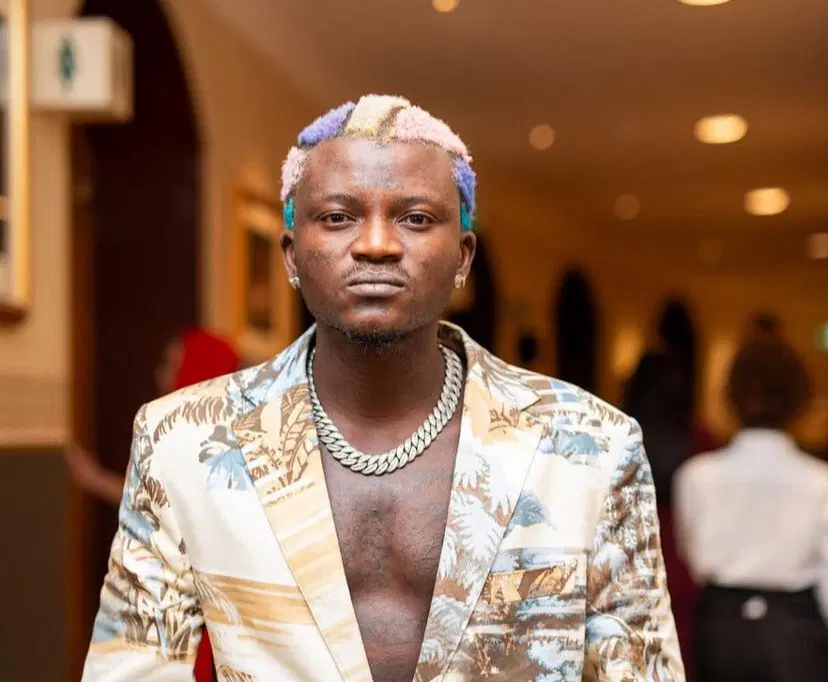
Controversial Nigerian singer Habeeb Okikiola, popularly known as Portable, has urged Nigerians to avoid associating criminal activities with any particular ethnic group, stressing that not all Fulani people are involved in banditry.
Key Highlights:
The singer made the remarks while reacting to growing concerns over insecurity in parts of the country, warning against the tendency to label individuals as criminals based solely on their appearance, ethnicity, or mode of dressing.

According to Portable, many innocent people are unfairly stereotyped because they look or dress like Fulani herders.
Read Also:
- Portable rejects EFCC invitation over alleged naira abuse, cites security concerns
- Carter Efe cries out over unpaid ₦50m prize money from boxing bout with Portable
- Portable accuses Davido Zlatan of mocking him after losing to Carter Efe in celebrity boxing match
“Please, let’s stop making mistakes by labelling all Fulani as bandits,” he said. “Because you see a group of Fulani people inside a bus, you will just conclude that they are bandits. They are not bandits.”
The singer noted that Fulani communities, like other ethnic groups in Nigeria, consist of people engaged in various lawful occupations, including cattle rearing, trading, farming, and other businesses.
He further pointed out that Nigeria’s ethnic groups are spread across different regions of the country, adding that many Fulani people live in the South-West just as Yoruba and Igbo people reside and conduct business in northern states.
Portable emphasized that security efforts should be directed at criminals rather than innocent citizens who may share cultural or ethnic characteristics with offenders.
“Let’s fight bandits. Let’s face bandits. It’s not about beating anyone you see that looks like Fulani,” he stated.
He added that criminal elements can come from any ethnic background, arguing that insecurity should not be viewed through an ethnic lens.
“Yoruba is among them, Igbo is among them, Hausa is among them, Fulani is among them. All tribes are among them,” he said.
The singer’s comments have generated mixed reactions on social media, with some users supporting his call against ethnic profiling, while others debated the broader issues surrounding insecurity and crime in Nigeria.
His remarks come amid ongoing national conversations about kidnapping, banditry, and the need to balance security concerns with the protection of innocent citizens from discrimination based on ethnicity or appearance.