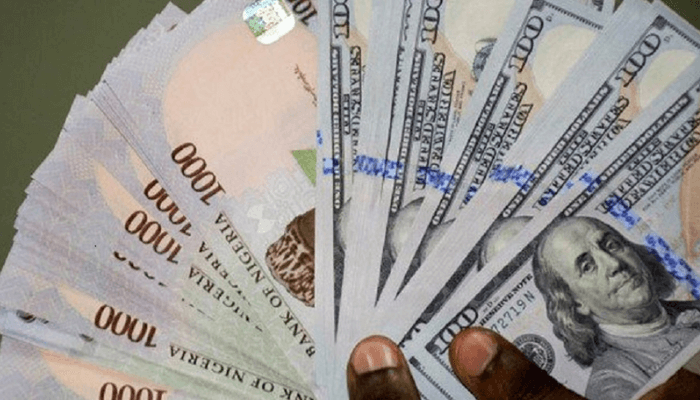
The naira remained largely stable against the United States dollar on Wednesday, June 3, 2026, amid sustained calm in the foreign exchange market and improved liquidity conditions.
Key Highlights:
- The naira traded steadily at about NGN₦1,373/$ in the official Nigerian Foreign Exchange Market (NFEM).
- Stability was supported by improved forex liquidity and ongoing economic reforms by the Central Bank of Nigeria.
- The official exchange rate has stayed within a narrow ₦1,370–₦1,375 range in recent weeks.
- In the parallel market, the dollar traded higher, between about ₦1,375 and ₦1,400.
- Analysts say reduced gap between official and black-market rates reflects better access to foreign exchange, though risks remain.
According to data from the Nigerian Foreign Exchange Market (NFEM), the local currency traded at approximately ₦1,373.25 per dollar, maintaining the same level recorded in recent trading sessions.

The exchange rate, which represents the volume-weighted average recognized by the Central Bank of Nigeria (CBN) for official transactions, reflects a period of reduced volatility in the formal forex market.
Market analysts attributed the stability to ongoing reforms aimed at enhancing transparency, improving liquidity, and boosting investor confidence.
Read Also:
- Naira trades mixed against US Dollar as official, parallel FX rates stabilise
- Naira remains stable at official market as Dollar trades above ₦1,400 at parallel market
- Naira gains slightly against dollar at official market
The official exchange rate has largely traded within the ₦1,370 to ₦1,375 per dollar range in recent weeks, suggesting a balance between foreign exchange demand and supply.
Economic observers noted that increased confidence among businesses and investors has contributed to the relatively stable trading environment, while the CBN continues efforts to improve market efficiency and reduce distortions across foreign exchange segments.
In the parallel market, commonly known as the black market, the dollar was purchased at about ₦1,375 and sold between ₦1,385 and ₦1,400, depending on location, transaction size, and dealer quotations.
The gap between official and parallel market rates remained relatively narrow, a trend that analysts say reflects improved access to foreign exchange and greater convergence between both markets.
Experts believe the reduced disparity is a positive development, as wider gaps in the past often encouraged speculative trading and arbitrage activities.
At the prevailing official exchange rate, $100 would exchange for approximately ₦137,325. In the parallel market, the same amount could fetch between ₦138,500 and ₦140,000.
Despite the current stability, forex analysts cautioned that exchange rates remain vulnerable to shifts in demand, global economic conditions, oil revenue performance, and foreign capital inflows.
For now, however, the naira continues to trade within a relatively stable range, providing some relief for businesses and individuals involved in foreign currency transactions.