
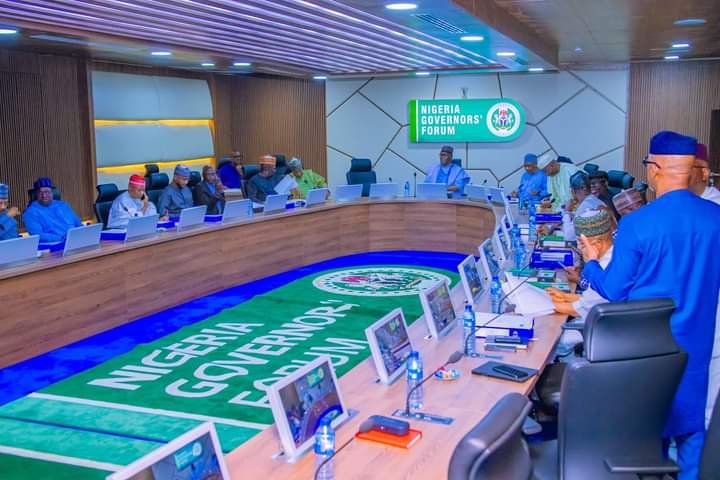
The Nigeria Governors’ Forum (NGF) has disclosed that discussions are ongoing on the possibility of raising the national minimum wage to N100,000 in response to the rising cost of living and persistent inflation across the country.
key Highlights:
Chairman of the NGF and Governor of Kwara State, AbdulRahman AbdulRazaq said state governments are considering the proposal as part of efforts to improve workers’ welfare amid growing economic challenges.

According to him, governors are engaging with the federal government and organised labour to arrive at a wage structure that reflects current economic realities, while remaining financially sustainable for states.
He noted that the discussions are aimed at striking a balance between enhancing workers’ purchasing power and ensuring governments can continue funding critical infrastructure and social services.
“Governments at all levels recognise the need to improve the welfare of workers in light of prevailing economic conditions,” he said, adding that consultations were still underway to determine a practical framework for implementation.
The NGF chairman stressed that any adjustment to the minimum wage must take into account the financial capacities of individual states to avoid creating unsustainable fiscal burdens.
Read also:
- NGF mourns the passing of Ondo Governor
- Insecurity: NGF establishes a committee to work with security agencies
- Nwoko petitions NGF for defamation, demands $40m compensation
The proposed review comes as many Nigerians continue to grapple with rising food prices, transportation costs and other household expenses, prompting renewed calls for salary increases.
Labour unions have consistently argued that workers require a living wage capable of meeting present-day economic demands rather than merely covering basic survival needs.
Nigeria’s current national minimum wage stands at N70,000 monthly.
However, some states, including Lagos State, Rivers State and Imo State, reportedly pay above the benchmark in an effort to cushion the impact of economic hardship on workers.
If approved, the proposed N100,000 minimum wage is expected to spark further national debate on workers’ welfare, inflation management and broader economic reforms.