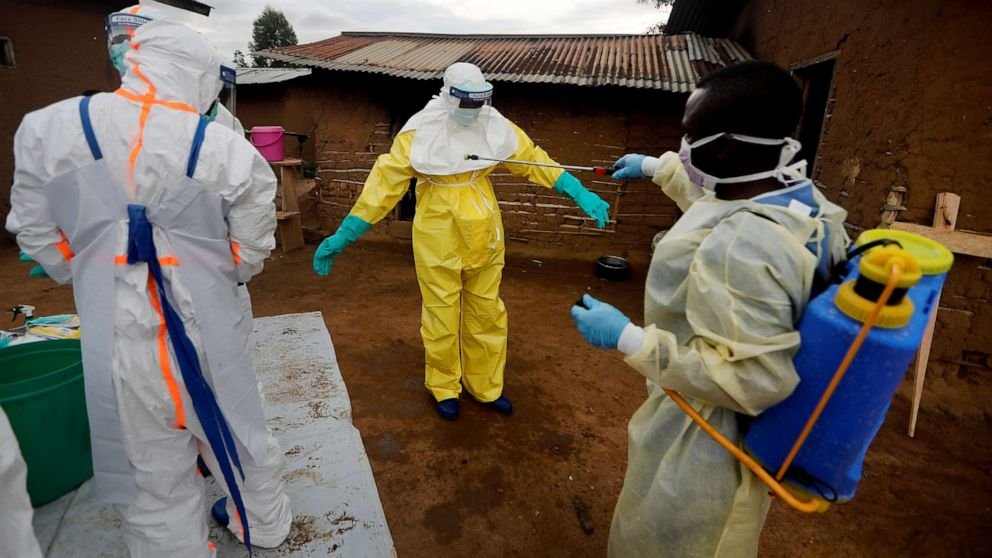
The World Health Organization (WHO) has declared the latest Ebola outbreak in the Democratic Republic of the Congo, a public health emergency of international concern following the rapid spread of infections in the country’s eastern Ituri province.
According to the global health agency, the outbreak has so far recorded about 246 suspected cases and 80 deaths, while fears continue to grow over the possibility of wider regional transmission into neighbouring countries, including Uganda.

Key highlights:
- WHO declared the Ebola outbreak in DR Congo a global health emergency after dozens of deaths and hundreds of suspected cases.
- The outbreak involves the rare Bundibugyo strain of Ebola, which has no approved vaccine or treatment.
- Cases have spread across eastern DR Congo and into Uganda, increasing fears of regional transmission.
- WHO warned that conflict, migration, and weak healthcare systems could make the outbreak worse.
- Health authorities are strengthening surveillance, isolation, and contact tracing to contain the disease.
Health officials said the outbreak is linked to the Bundibugyo strain of the Ebola virus, a rare variant for which there are currently no approved vaccines or specific treatments.
The WHO, however, clarified that the situation has not yet reached the level of a pandemic emergency, although it warned the outbreak could become significantly larger than the current figures suggest due to underreporting and limited surveillance in affected communities.
Laboratory tests have confirmed eight cases across three health zones, including Bunia, the capital of Ituri province, and the gold-mining towns of Mongwalu and Rwampara.
Authorities also confirmed one infection in the Congolese capital, Kinshasa, involving a patient who recently travelled from Ituri.
The virus has already crossed borders into Uganda, where two confirmed cases have been reported.
Ugandan authorities disclosed that a 59-year-old Congolese man who died on Thursday tested positive for Ebola before his remains were returned to DR Congo.
Reports also indicate that another confirmed case has emerged in the eastern Congolese city of Goma, an area currently under the control of M23 rebels.
The WHO warned that the ongoing conflict and humanitarian crisis in eastern DR Congo, combined with heavy cross-border movement and the presence of informal healthcare facilities, could accelerate the spread of the disease across the region.
The agency urged both DR Congo and Uganda to activate emergency response centres, strengthen contact tracing, and enforce infection-prevention measures to contain the outbreak.
Read also:
- NCDC, LUTH partner against infectious diseases
- New suspected Marburg outbreak in Tanzania kills eight – WHO
- Permanent secretary urges civil servants to detest corrupt practices
Health officials advised that infected persons should be isolated immediately and treated until they test negative twice, at least 48 hours apart.
The WHO also urged neighbouring countries to intensify disease surveillance and health reporting systems but advised against border closures or restrictions on trade and travel, insisting such measures are not scientifically justified.
WHO Director-General Tedros Adhanom Ghebreyesus said there remain “significant uncertainties” regarding the true number of infections and the geographical spread of the outbreak.
Ebola, first identified in DR Congo in 1976, spreads through direct contact with bodily fluids and can cause severe bleeding, organ failure, and death.
The disease has an average fatality rate of around 50 percent, according to the WHO.
This marks the 17th Ebola outbreak recorded in DR Congo. The country’s deadliest outbreak occurred between 2018 and 2020, when nearly 2,300 people lost their lives.
Related Stories: