• Advert Rates
  • Careers
  • About Us
  • Contact Us
  • Digital Store
Thursday, June 4, 2026
The Trumpet Newspaper Nigeria
No Result
View All Result
  • Home
  • News
    • Breaking News
    • Headlines
    • Metro
    • Health
  • Politics
  • Business
    • Ecommerce
    • Economy
    • Start-up
  • Entertainment
  • Sports
  • Opinion
    • Religion
    • Columnists
    • Contributors
    • Editorial
  • Global
    • Climate
    • Culture
    • Tourism
    • Technology
    • Weather
    • Social Media
  • e-Edition
  • Home
  • News
    • Breaking News
    • Headlines
    • Metro
    • Health
  • Politics
  • Business
    • Ecommerce
    • Economy
    • Start-up
  • Entertainment
  • Sports
  • Opinion
    • Religion
    • Columnists
    • Contributors
    • Editorial
  • Global
    • Climate
    • Culture
    • Tourism
    • Technology
    • Weather
    • Social Media
  • e-Edition
No Result
View All Result
The Trumpet Newspaper Nigeria
No Result
View All Result
ADVERTISEMENT
Home News

IMF raises concern over rising budget deficits in Nigeria, other African countries

Paul Joseph by Paul Joseph
May 14, 2026
in News
Reading Time: 3 mins read
0
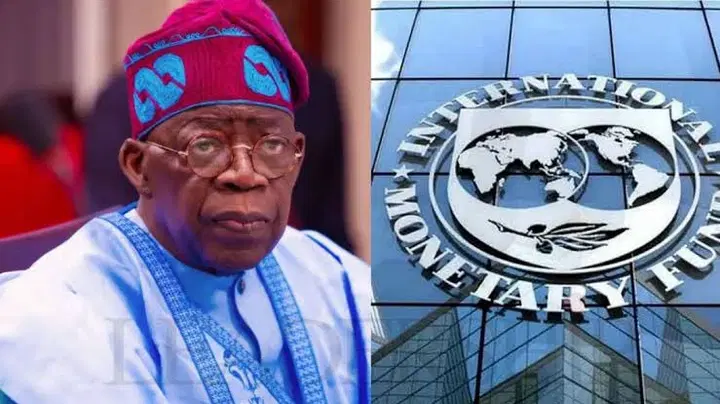
IMF raises concern over rising budget deficits in Nigeria, other African countries
0
SHARES
9
VIEWS
Share on FacebookShare on TwitterShare on LinkedinShare on WhatsAppShare on Pinterest
The International Monetary Fund (IMF) has raised concerns over growing budget deficits across Nigeria and several Sub-Saharan African countries, warning that unrealistic fiscal projections and weak budget discipline are worsening public finance challenges in the region.

In a recently released research paper titled Budget Credibility in Sub-Saharan Africa, the IMF said many governments continue to rely on ambitious revenue targets while spending above approved budget limits, resulting in persistent fiscal imbalances.

The report, which examined fiscal performances in 39 Sub-Saharan African countries between 2021 and 2024, found that the gap between approved budgets and actual fiscal outcomes remains widespread and deeply rooted.

ADVERTISEMENT

According to the Fund, many countries consistently record higher-than-projected deficits because anticipated revenues often fall short, while recurrent expenditures continue to rise beyond planned levels.

The IMF noted that capital projects are usually the first to suffer whenever governments experience revenue shortfalls, delayed grants or disruptions in external financing.

“Capital spending is typically under-executed, especially when tax revenues fall short or grants are delayed,” the report stated.

It added that budget deficits frequently exceed initial projections due to overly optimistic revenue expectations and overspending on recurrent expenditures.

Key Highlights:

  • The International Monetary Fund warned that many Sub-Saharan African countries, including Nigeria, are facing worsening budget deficits due to unrealistic revenue projections and weak fiscal discipline.
  • In its report “Budget Credibility in Sub-Saharan Africa,” the IMF found that governments often overspend on recurrent expenses while actual revenues fall below expectations, creating persistent fiscal imbalances.
  • The Fund noted that capital projects such as roads, schools, and hospitals are usually affected first during revenue shortfalls, leading to delays, scaling down, or abandonment of development programmes.
  • The IMF stated that countries with stronger fiscal institutions and IMF-supported programmes generally manage budgets more effectively, while fragile and low-income states face larger fiscal slippages.
  • In Nigeria, the warning comes as Bola Tinubu seeks approval for a larger 2026 budget and increased borrowing, with the proposed borrowing plan rising from N17.89 trillion to N29.20 trillion.

The Fund further explained that spending on salaries, subsidies, social transfers, goods and services often surpasses approved budget ceilings, increasing pressure on already strained public finances.

As a result, infrastructure projects including roads, schools, hospitals and other development programmes are often delayed, reduced in scope or abandoned during periods of fiscal pressure.

The report described fiscal slippages across the region as “persistent and often large,” noting that the trend reflects deeper institutional and governance weaknesses rather than temporary economic shocks or isolated forecasting errors.

According to the IMF, countries with stronger fiscal institutions and tighter expenditure controls generally perform better in aligning actual spending with approved budgets.

The Fund also observed that nations operating under IMF-supported programmes tend to record lower fiscal slippages due to stronger policy oversight and fiscal discipline.

Conversely, low-income and fragile states were found to experience larger budget deviations because of weaker administrative systems and limited financing options.

The IMF further stated that fiscal discipline often weakens during election periods as governments face increasing political pressure to spend outside approved fiscal plans.

It stressed that budget credibility goes beyond accurate forecasting and depends heavily on transparency, institutional quality, fiscal governance and effective policy implementation.

The warning comes amid earlier IMF projections that fiscal conditions across Sub-Saharan Africa may weaken further in 2026 despite improved commodity prices in some countries.

The Fund projected that the region’s median fiscal deficit could widen to 3.2 per cent of Gross Domestic Product (GDP).

In Nigeria, the concerns come as the Federal Government plans increased borrowing for the 2026 fiscal year.

Read also:

  • IMF endorses Nigeria’s bank recapitalisation as capital buffers strengthen financial system
  • Edun rules out seeking IMF bailout, expresses confidence in success of economic reforms
  • Edun meets IMF director in Abuja, pushes for stronger ECOWAS economic coordination

The government recently raised its borrowing plan to N29.20 trillion following an expansion of the proposed national budget and fiscal deficit.

The revised borrowing estimate represents an increase of N11.31 trillion from the earlier projection of N17.89 trillion.

President Bola Tinubu had also asked the Senate to approve an upward review of the 2026 Appropriation Bill by N9 trillion, increasing the proposed budget from N58.4 trillion to N67.4 trillion.

Economic analysts say the IMF’s latest warning underscores growing concerns about debt sustainability, fiscal transparency and the long-term economic outlook of many African economies facing rising public expenditure and weak revenue growth.


Previous Post

2027: Bomadi/Patani stakeholders back Ganagana for Reps seat

Next Post

Another alleged ponzi scheme ‘XM future music group’ crashes, traps Nigerians’ investments

Paul Joseph

Paul Joseph

Next Post
Another alleged ponzi scheme ‘XM future music group’ crashes, traps Nigerians’ investments

Another alleged ponzi scheme ‘XM future music group’ crashes, traps Nigerians’ investments

About The Trumpet

The Trumpet is a Nigerian based national news media, owned, trademarked and operated by Elomaz Communications Limited with headquarters in FCT-Abuja and regional offices in Lagos and Delta States

Follow Us

Resources

  • Home
  • News
    • Breaking News
    • Headlines
    • Metro
    • Health
  • Politics
  • Business
    • Ecommerce
    • Economy
    • Start-up
  • Entertainment
  • Sports
  • Opinion
    • Religion
    • Columnists
    • Contributors
    • Editorial
  • Global
    • Climate
    • Culture
    • Tourism
    • Technology
    • Weather
    • Social Media
  • e-Edition

Recent News

Portable condemns ethnic profiling, says not all Fulani people are Bandits

Portable condemns ethnic profiling, says not all Fulani people are Bandits

June 4, 2026
Meta slams Australia’s proposed news payment law, calls it unfair, discriminatory

Meta slams Australia’s proposed news payment law, calls it unfair, discriminatory

June 4, 2026
  • Cookie Policy
  • Disclaimer
  • Contact us
  • About Us
  • Cookie Policy
  • Disclaimer
  • Contact us
  • About Us

© 2025 The Trumpet News Papers - Developed by VIS Nigeria.

No Result
View All Result
  • Home
  • News
    • Breaking News
    • Headlines
    • Metro
    • Health
  • Politics
  • Business
    • Ecommerce
    • Economy
    • Start-up
  • Entertainment
  • Sports
  • Opinion
    • Religion
    • Columnists
    • Contributors
    • Editorial
  • Global
    • Climate
    • Culture
    • Tourism
    • Technology
    • Weather
    • Social Media
  • e-Edition

© 2025 The Trumpet News Papers - Developed by VIS Nigeria.

We use cookies on our website to give you the most relevant experience by remembering your preferences and repeat visits. By clicking “Accept All”, you consent to the use of ALL the cookies. However, you may visit "Cookie Settings" to provide a controlled consent.
Cookie SettingsAccept All
Manage consent

Privacy Overview

This website uses cookies to improve your experience while you navigate through the website. Out of these, the cookies that are categorized as necessary are stored on your browser as they are essential for the working of basic functionalities of the website. We also use third-party cookies that help us analyze and understand how you use this website. These cookies will be stored in your browser only with your consent. You also have the option to opt-out of these cookies. But opting out of some of these cookies may affect your browsing experience.
Necessary
Always Enabled
Necessary cookies are absolutely essential for the website to function properly. These cookies ensure basic functionalities and security features of the website, anonymously.
CookieDurationDescription
cookielawinfo-checkbox-analytics11 monthsThis cookie is set by GDPR Cookie Consent plugin. The cookie is used to store the user consent for the cookies in the category "Analytics".
cookielawinfo-checkbox-functional11 monthsThe cookie is set by GDPR cookie consent to record the user consent for the cookies in the category "Functional".
cookielawinfo-checkbox-necessary11 monthsThis cookie is set by GDPR Cookie Consent plugin. The cookies is used to store the user consent for the cookies in the category "Necessary".
cookielawinfo-checkbox-others11 monthsThis cookie is set by GDPR Cookie Consent plugin. The cookie is used to store the user consent for the cookies in the category "Other.
cookielawinfo-checkbox-performance11 monthsThis cookie is set by GDPR Cookie Consent plugin. The cookie is used to store the user consent for the cookies in the category "Performance".
viewed_cookie_policy11 monthsThe cookie is set by the GDPR Cookie Consent plugin and is used to store whether or not user has consented to the use of cookies. It does not store any personal data.
Functional
Functional cookies help to perform certain functionalities like sharing the content of the website on social media platforms, collect feedbacks, and other third-party features.
Performance
Performance cookies are used to understand and analyze the key performance indexes of the website which helps in delivering a better user experience for the visitors.
Analytics
Analytical cookies are used to understand how visitors interact with the website. These cookies help provide information on metrics the number of visitors, bounce rate, traffic source, etc.
Advertisement
Advertisement cookies are used to provide visitors with relevant ads and marketing campaigns. These cookies track visitors across websites and collect information to provide customized ads.
Others
Other uncategorized cookies are those that are being analyzed and have not been classified into a category as yet.
SAVE & ACCEPT