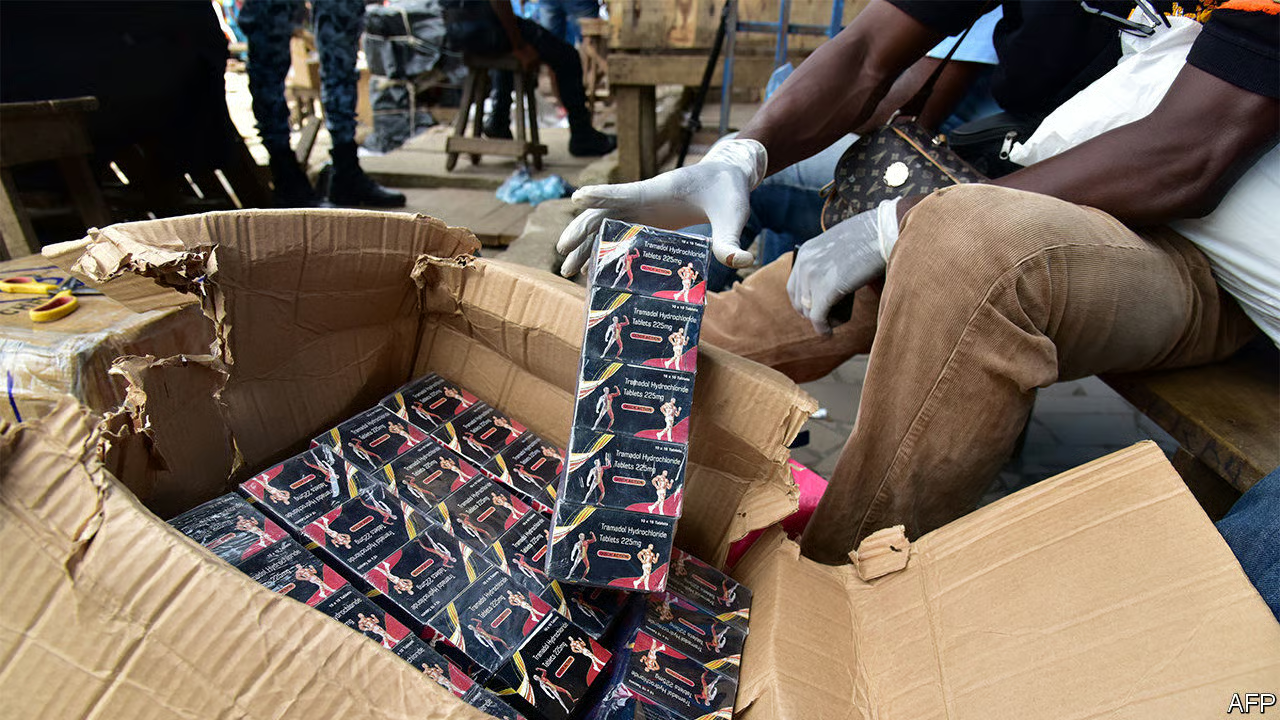
Indian pharmaceutical companies are reportedly exporting millions of dollars worth of powerful opioid drugs to West Africa despite an earlier crackdown pledge by Indian authorities, according to an investigation by AFP. Officials and health experts across the region say the drugs are worsening a deadly addiction crisis linked to the dangerous street drug known as “kush.”
Key Highlights:
•AFP investigation links Indian-made opioids to West Africa’s growing kush epidemic
•High-strength tapentadol tablets reportedly traced through export licence numbers
•Sierra Leone and Liberia battling rising deaths linked to kush abuse
•Health officials warn opioids are now widely mixed into the addictive street drug
•India had earlier announced crackdown on illegal opioid exports in 2025
•Experts say tapentadol is replacing tramadol across several West African countries
•Sierra Leone reports hundreds of deaths linked to kush abuse
According to the report, AFP investigators matched seized high-dose tapentadol tablets recovered in at least four West African countries with Indian export records using manufacturers’ licence numbers.

Researchers and public health officials say the opioid tablets are increasingly being mixed into kush, a highly addictive synthetic drug blamed for a growing public health emergency across parts of West Africa, particularly in Sierra Leone and Liberia.
Ansu Konneh, Director of Mental Health at Sierra Leone’s Ministry of Social Welfare, described the trend as “very alarming,” warning that bodies of drug victims were being recovered daily from streets, markets, and slum areas in Freetown and other communities.
Konneh disclosed that more than 400 corpses were reportedly collected in Sierra Leone’s capital within a three-month period, while about 90 percent of patients admitted into rehabilitation centres were linked to kush mixed with tapentadol or other potent opioids.
The report noted that India’s drug regulator, the Central Drugs Standard Control Organisation (CDSCO), had announced a “zero-tolerance” crackdown on illegal drug exports in February 2025 following international concerns over opioid trafficking to Africa.
Authorities had banned exports of tablets containing a mixture of tapentadol and carisoprodol after investigations exposed the growing abuse of the substances in Ghana and other countries.
However, researchers cited in the AFP investigation argued that the major trade has shifted toward pure tapentadol tablets, with shipment records allegedly showing that large volumes of the drugs are still being exported from India into West African markets every month.
Read also:
- NDLEA uncovers ₦16.9bn worth of tramadol, codeine in Lagos
- Customs intercept N1.05bn worth of tramadol, other illicit drugs in Edo
- NDLEA seizes N3.9bn worth of tramadol in Lagos, apprehends Indian businessman, 3 others
Experts say tapentadol is significantly stronger than tramadol and is increasingly sold on the streets as a cheaper alternative for individuals engaged in physically demanding labour. The drug has also reportedly become a major driver of addiction across the region.
Medical researchers warned that the widespread availability of the opioids is deepening substance abuse problems, increasing overdose risks, and placing additional pressure on already fragile healthcare systems in several African countries.
The CDSCO reportedly told AFP that it had “no record” of approving export consignments involving certain high-dose tapentadol shipments, though follow-up inquiries were not answered.
Public health advocates are now calling for stronger international cooperation, tighter pharmaceutical export monitoring, and tougher enforcement measures to curb the growing flow of dangerous opioids into vulnerable African communities.