The Federal Government has announced June 17, 2026, as the official date for the nationwide rollout of Nigeria’s long-delayed Digital Switch Over (DSO) project, describing it as a major breakthrough for the country’s broadcasting industry.
The announcement was made on Wednesday by the Minister of Information and National Orientation, Mohammed Idris, after a facility tour of the headquarters of Nigerian Communications Satellite Limited (NigComSat) in Abuja.

Key Highlights:
- Nigeria will officially begin nationwide digital TV broadcasting on June 17, 2026.
- The new system will improve TV quality, advertising, and audience tracking.
- The platform is expected to offer around 100 channels and HD broadcasting.
- Government said the new service will be more affordable and flexible for users.
- Nigerian Communications Satellite Limited plans to expand services with two new satellites.
According to Idris, the transition from analogue to digital broadcasting will transform television broadcasting, advertising, and audience measurement across Nigeria and sub-Saharan Africa.
“The promise that President Bola Ahmed Tinubu made that he is going to reform all sectors, we are seeing this reform in action in the broadcast industry,” the minister said.
He noted that Nigerians had waited for years for the digital migration project to become operational.
“You recall that for many years, Nigerians have been grappling with this idea of the DSO, the digital switchover. In other words, removing our transmissions from analogue to digital. Now this has happened, and it is ready to be commissioned by the 17th of June this year,” he stated.
Idris explained that the new digital system would improve audience measurement for broadcasters and advertisers by providing accurate data on viewing patterns and demographics.
Read Also:
- Henkel Navigates Nigerian Challenges: A Balancing Act Of Innovation And Efficiency
- Nigeria mulls regulatory roadmap for Internet of Things
- How Grok AI’s competitive advantage outsmarts other models
“Now science is at play. If you are now viewing any particular station, you know who is viewing what and how many people are viewing,” he said.
The minister added that the rollout became possible through collaboration among NigComSat, the National Broadcasting Commission (NBC), the Ministry of Communications, and the Ministry of Information and National Orientation.
He further revealed that the digital platform would eventually migrate fully to high-definition broadcasting.
“The most important thing is that we are now moving to HD. After the launch, we will be fully in HD,” Idris added.
Addressing concerns about previous DSO failures, the minister explained that earlier set-top boxes were encrypted and limited consumer flexibility, making services more expensive.
“In the past, the set-top boxes provided under earlier Digital Switch Over efforts were encrypted. Now, this service is free, and the government has already absorbed some of these costs,” he said.
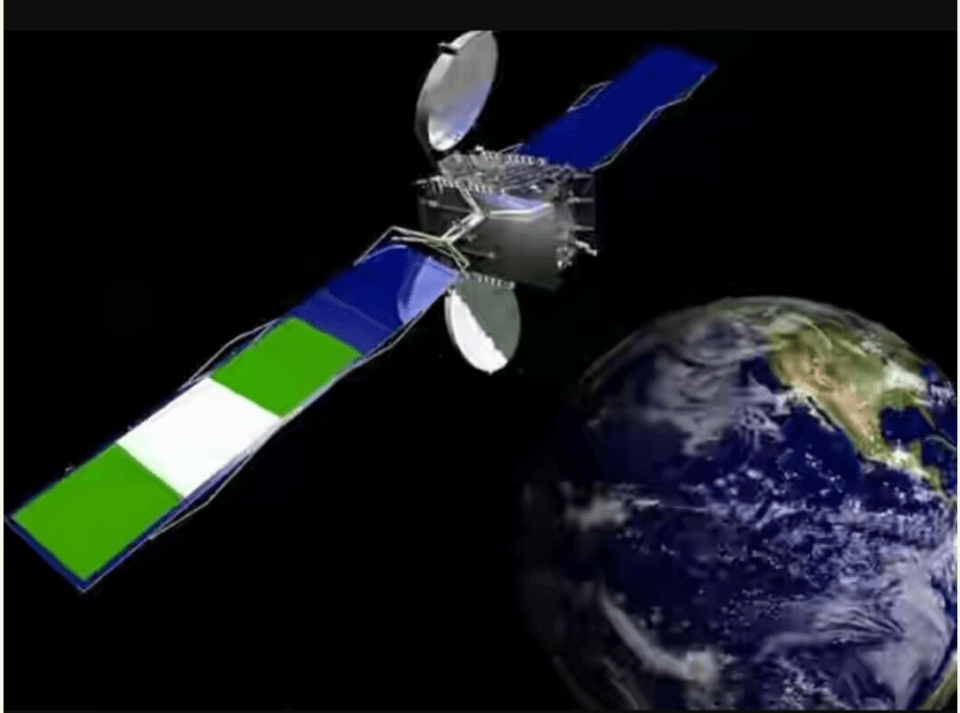
Managing Director and CEO of NigComSat, Jane Egerton-Idehen, disclosed that the agency plans to launch two additional satellites to strengthen service delivery nationwide.
“The president has given us the ability to even launch two more satellites. So the work has only just started,” she stated.
Also speaking, Director-General of the NBC, Charles Ebuebu, said the new DSO platform would support emerging technologies and mobile accessibility.
He revealed that the platform is expected to launch with about 100 television channels and six regional studios to support content creators across the country.
“We want to create the market for Nigeria. One platform for Nigeria,” Ebuebu said.
The NBC had earlier disclosed in 2024 that President Tinubu approved a N10 billion grant to support the nationwide expansion of digital television coverage after years of delays in the DSO implementation process.