President Bola Tinubu has revealed that Nigeria is projected to spend about $11.6 billion on debt servicing in 2026, raising concerns over the impact of rising repayment obligations on the country’s economic growth and development plans.
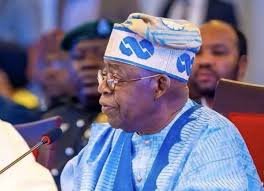
He made the disclosure on Wednesday, while speaking at the Africa Forward Summit held in Nairobi, Kenya, where he criticized the global financial system for what he described as unfair treatment of African economies.

Key Highlights:
- Bola Tinubu says Nigeria will spend $11.6bn on debt servicing in 2026.
- Debt payments could take almost half of government revenue.
- Less money may go to infrastructure, education, and industry.
- He criticises high borrowing costs for African countries.
- Says reforms (subsidy removal, FX changes) are improving stability.
According to Tinubu, nearly half of Nigeria’s expected revenue for 2026 would be used to service debts, leaving limited resources for critical sectors such as infrastructure, energy, manufacturing, education and industrial expansion.
“Every single dollar that leaves our treasury to pay punitive interest rates is a dollar that did not go into our steel sector, our textile mills, our agro-processing, or our digital industries,” the president stated.
Read Also:
- President Bola Tinubu arrives at National Assembly to present N47.96tn 2025 budget proposal amid tight security
- Breaking: Former Lagos State Governor Bola Tinubu wins APC presidential Primaries
- Actor Bolanle Ninalowo reacts to Jos killings amid links to pro-Tinubu group
“It is a dollar that did not train a young Nigerian engineer or provide affordable power for our factories,” he added.
Tinubu argued that despite implementing major economic and fiscal reforms, African countries continue to face high borrowing costs in international financial markets, making industrialisation and long-term development difficult.
He questioned why African nations are still regarded as high-risk borrowers compared to countries in Europe, Asia and North America.
“How can an African manufacturer compete with a competitor in Europe, Asia, or North America when the cost of borrowing in our nations is five to ten times higher?” the President asked.
Tinubu said the current global financial structure places African economies at a disadvantage by limiting access to affordable capital needed for investment, industrial production and economic transformation.
He also defended key economic reforms introduced by his administration since assuming office, including the removal of fuel subsidy, unification of foreign exchange windows, recapitalisation of banks and Nigeria’s exit from the Financial Action Task Force grey list.
According to him, the reforms are beginning to produce positive economic outcomes, including stronger external reserves, improved investor confidence and a projected decline in Nigeria’s debt-to-GDP ratio to 32.3 percent in 2026.
Tinubu maintained that Nigeria and other African countries are not seeking handouts or financial charity from the international community, but rather a fair and balanced financial system that supports sustainable development.
“We are not asking for charity. We are asking for fairness,” the President said while calling for reforms that would make global financing more accessible and affordable for developing economies.
The Africa Forward Summit brought together African leaders, policymakers, investors and development experts to discuss economic growth, industrialisation, trade and financing challenges facing the continent.