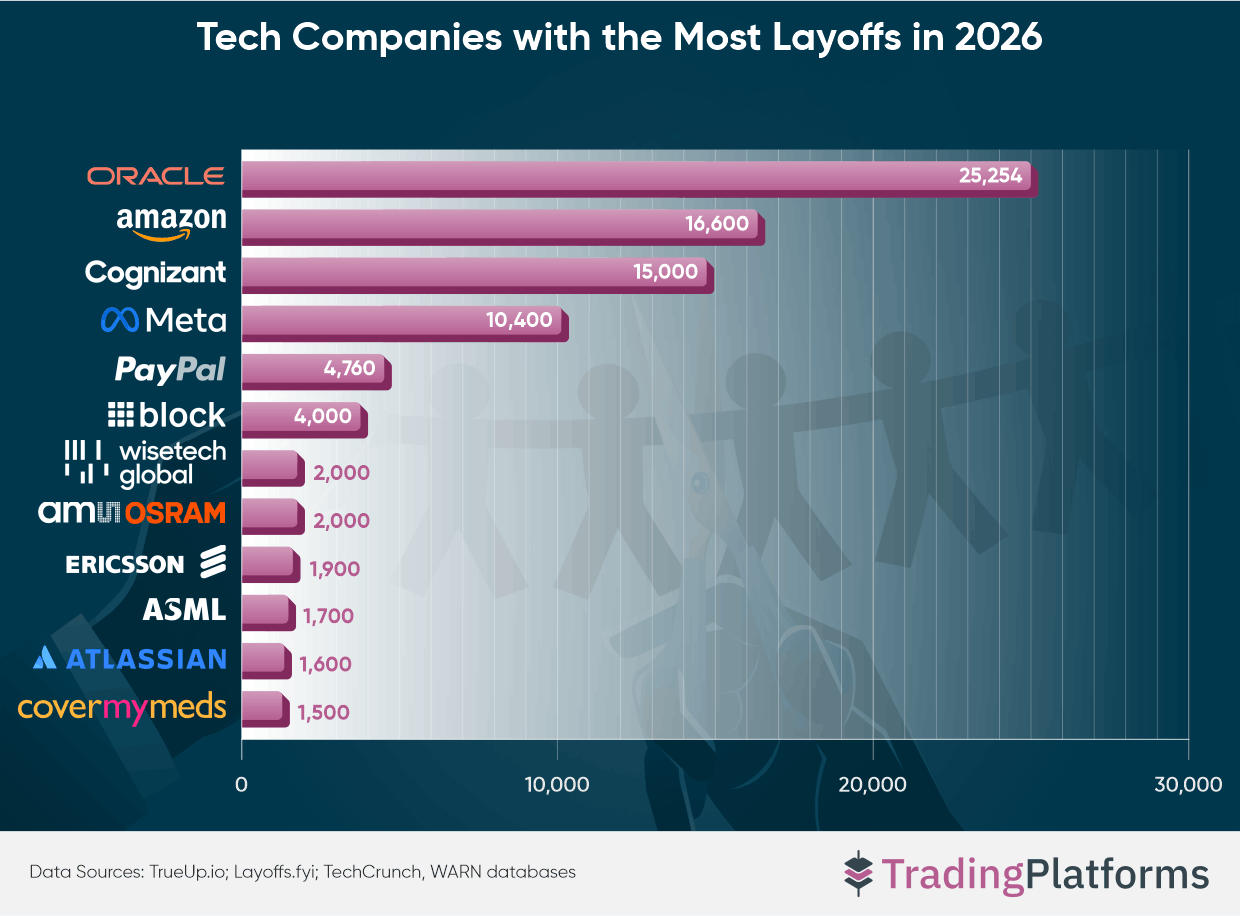
Fresh workforce cuts across major global technology companies including Meta, Cognizant and Cloudflare have intensified concerns over the growing impact of artificial intelligence on employment, as a new report reveals that more than 118,000 tech workers have already lost their jobs globally in the first four months of 2026.
Key Highlights:
- Over 118,000 tech jobs lost globally in 2026 so far
- More than 58% of layoffs linked to AI restructuring
- Oracle Corporation announces largest job cuts with over 25,000 layoffs
- Amazon cuts about 16,600 jobs amid AI expansion
- Cloud and SaaS sector records highest layoffs globally
- Analysts warn AI investment race is reshaping global workforce structures
According to a new report released by TradingPlatforms, at least 118,473 employees across the global technology industry have been laid off since January 2026, with approximately 69,408 of those job cuts directly tied to artificial intelligence investments, automation projects and AI-driven corporate restructuring.

The report, compiled using data from TrueUp, TechCrunch and multiple WARN filings, stated that if the current trend continues, global tech layoffs could exceed 340,000 by the end of 2026, surpassing figures recorded in 2025.
Read Also:
- Zulum advocates AI-driven security reforms at Kogi summit
- CAC launches new AI-driven business registration portal
- Energy, Tech Firms lead global profit race as companies generate millions per employee — Report
Oracle recorded the highest number of layoffs in the technology sector so far this year after cutting more than 25,000 jobs as part of a major restructuring programme focused on artificial intelligence infrastructure and data centre expansion.
Despite reporting a 95 per cent increase in net income, the company reportedly redirected significant resources toward AI investments rather than workforce growth.
Amazon followed with approximately 16,600 job cuts linked to internal restructuring, operational efficiency measures and organisational simplification, even as the e-commerce and cloud giant continues investing heavily in AI technologies and cloud infrastructure.
Cognizant ranked third among the most affected firms, with reports indicating that between 12,000 and 15,000 positions could be impacted under its ongoing “Project Leap” restructuring initiative.
The report noted that many companies are not yet replacing workers directly with AI systems. Instead, firms are cutting payroll costs to free up billions of dollars for investments in AI infrastructure, automation tools and large-scale data centres.
Cloud and Software-as-a-Service companies suffered the highest impact, accounting for nearly 30,000 layoffs globally. E-commerce firms followed with more than 20,600 job cuts, highlighting how restructuring is heavily concentrated in enterprise software and online retail sectors.
Meta, PayPal and Cloudflare were also identified among companies openly linking operational restructuring and workforce reductions to increased AI adoption.
Cloudflare drew particular attention after laying off more than 1,100 employees while simultaneously reporting strong revenue growth and expanding internal AI deployment.
Analysts said artificial intelligence has rapidly become the dominant narrative behind the latest wave of tech layoffs, although the reality remains more complex than simple human replacement by machines.
Stanislava Savisheva, analyst at TradingPlatforms, said much of the current restructuring is being driven by expectations about AI’s future capabilities rather than what existing systems can fully achieve today.
She explained that many executives are aggressively reducing operational costs in order to finance AI infrastructure, automation systems and advanced computing technologies.
The report also warned that the psychological impact of AI-driven restructuring on workers is already significant, particularly as some companies openly suggest that AI could eventually replace entire job functions and workflows.
Experts believe the long-term effects of artificial intelligence on global employment will largely depend on how quickly AI systems evolve and whether expected productivity gains materialise over time.